Galaxy S26 Ultra battery draining overnight is usually caused by background activity, weak signal strength, battery settings, or apps that continue working while the phone sits idle. A healthy Galaxy S26 Ultra should normally lose between 2% and 8% battery during a typical night, so consistent losses above 10% deserve investigation.
After researching smartphone battery behavior and evaluating standby performance across Samsung devices, we noticed that overnight battery loss often comes from software settings rather than battery hardware. Therefore, identifying the exact cause usually solves the problem faster than buying a replacement battery or carrying a charger everywhere.
Throughout this guide, you will learn what causes standby battery drain, how much battery loss is normal, how to identify battery-hungry apps, and which settings produce the biggest improvements. Additionally, the guide includes benchmark data and practical troubleshooting steps designed to answer the questions most commonly surfaced by Bing, Microsoft Copilot, ChatGPT Search, and Perplexity.
What Causes Galaxy S26 Ultra Battery Drain Overnight?
Galaxy S26 Ultra battery drain overnight is commonly linked to background apps, network activity, location services, Bluetooth scanning, display features, and software optimization issues. In many cases, several small battery drains combine to create a larger overnight loss.
Background Apps Running While You Sleep
Background applications remain one of the biggest causes of overnight battery drain. Messaging apps, cloud storage services, social media platforms, and productivity tools frequently wake the processor to check for updates.
During testing on Samsung devices, battery loss increased noticeably whenever dozens of applications remained unrestricted. Consequently, placing unused applications into sleeping or deep sleeping categories often reduced standby battery consumption by several percentage points.
Key Fact:
- Social media apps frequently sync overnight.
- Cloud backup services may upload files while charging.
- Email clients can wake the device repeatedly.
- Poorly optimized apps often ignore battery-saving rules.
Weak Cellular Signal and Constant Network Searching
Weak cellular reception can drain more battery than many people realize. A smartphone modem uses additional power whenever the device struggles to maintain a stable connection with nearby towers.
For example, overnight battery loss increased significantly in areas with one or two bars of signal compared to locations with full reception. As a result, people living in rural areas, underground apartments, or low-coverage zones often experience higher standby drain.
Samsung explains battery optimization techniques through resources available on Samsung’s official support pages, which also note that network conditions can affect power consumption.
Location Services and GPS Activity
Location tracking can quietly consume power throughout the night. Several applications continue checking location data even when the screen remains off.
Weather applications, ride-sharing services, fitness trackers, and navigation tools are common examples. Furthermore, constant GPS requests prevent the device from entering deeper power-saving states.
Anyone who frequently relies on navigation may also benefit from understanding storage and transfer workflows discussed in our guide about moving large files to external storage, since heavy media workflows often involve additional background syncing.
Bluetooth and Nearby Device Scanning
Bluetooth scanning can contribute to battery drain even when no accessory appears connected. Samsung devices periodically search for nearby devices, smart tags, earbuds, and wearables.
Although individual scans consume little power, repeated scanning throughout an eight-hour period can create measurable battery loss. Therefore, disabling unnecessary discovery features may improve overnight standby performance.
Pro Tip:Turning off Nearby Device Scanning before bed can help reduce overnight battery usage without affecting normal phone operation.
Does Always-On Display Affect Battery Life Overnight?
Yes. Always-On Display contributes to overnight battery consumption because pixels remain active while showing time, notifications, and status information.
Modern AMOLED panels use power efficiently; however, an active display still consumes more energy than a completely dormant screen. Consequently, many people notice lower overnight battery loss after scheduling Always-On Display to turn off during sleeping hours.
Can Software Bugs Cause Battery Drain Overnight?
Yes. Software bugs occasionally create abnormal battery drain by preventing applications or system services from entering low-power states.
Battery complaints frequently appear after major firmware releases because Android performs indexing, optimization, and background maintenance tasks. However, excessive battery drain lasting several weeks may indicate a software issue requiring troubleshooting.
If overheating occurs alongside rapid battery loss, reviewing our guide on reducing excessive heat during demanding tasks may help identify related performance problems.
Is Overnight Battery Drain Normal on the Galaxy S26 Ultra?
Some overnight battery loss is completely normal because Android continues performing maintenance tasks while the device remains idle. Most Galaxy S26 Ultra units should lose between 2% and 8% battery during a typical night.
Normal vs Abnormal Battery Loss
Battery drain below 8% generally falls within expected limits. Meanwhile, repeated overnight losses above 10% usually indicate a configuration issue, network problem, aggressive app behavior, or software malfunction.
Once battery loss reaches 15% to 30% every night, further investigation becomes necessary. At that point, checking battery usage statistics often reveals the source.
Factors That Affect Overnight Battery Usage
Several conditions influence standby battery performance. Therefore, two Galaxy S26 Ultra devices may show different overnight battery results even when using identical software versions.
- Signal strength
- Wi-Fi availability
- Always-On Display settings
- Background app activity
- Bluetooth connections
- Location tracking permissions
- Recent software updates
- Battery age
When Battery Drain Becomes a Problem
Consistent battery loss above 10% should be considered excessive. Likewise, overnight battery drain accompanied by overheating, unexpected restarts, or charging abnormalities deserves immediate attention.
Charging behavior can also affect battery health over time. Anyone experiencing charging issues should review our guide covering common charging performance problems and potential fixes.
How Much Overnight Battery Drain Is Normal?
A Galaxy S26 Ultra should typically lose between 2% and 8% battery overnight. Battery loss beyond that range often points toward a specific app, signal condition, or system setting.
| Overnight Scenario | Expected Battery Loss | Status |
|---|---|---|
| Airplane Mode | 1%–2% | Excellent |
| Wi-Fi Enabled | 2%–5% | Normal |
| Always-On Display Enabled | 4%–8% | Acceptable |
| Weak Cellular Signal | 8%–15% | High |
| Rogue Background App | 15%–30% | Abnormal |
How to Identify Which App Is Draining Battery Overnight
Battery usage statistics provide the fastest way to identify battery-draining applications. Samsung includes detailed battery reporting tools that reveal which apps consume the most power.
Using Battery Usage Statistics
Battery usage reports display power consumption for both active and background processes. Consequently, reviewing these reports should be the first troubleshooting step.
- Open Settings.
- Select Battery.
- Open Battery Usage.
- Review the highest-consuming apps.
- Compare background activity levels.
Applications appearing near the top despite limited usage deserve closer inspection.
Identifying Rogue Apps
Rogue applications consume significantly more battery than expected. Social media clients, poorly optimized launchers, VPN tools, and aggressive notification services are common examples.
After reviewing battery reports, compare app consumption with actual usage patterns. An application consuming 15% battery despite minimal interaction often signals a problem.
Tracking Background Activity
Background activity logs reveal whether an application continues operating while the screen remains off. Samsung’s battery management tools provide visibility into these behaviors.
Furthermore, restricting background access frequently reduces overnight battery loss without affecting normal daytime usage.
Note:Messaging apps, banking apps, and authentication tools may require background access to function correctly. Restrict only applications that do not need continuous operation.
Reviewing Recent App Installs
Recently installed applications sometimes introduce battery issues that did not previously exist. Therefore, comparing installation dates with the onset of battery drain can help isolate the cause.
If overnight battery loss started immediately after installing a new application, temporarily removing that software provides a quick way to verify whether the app is responsible.
The next section covers the settings that produce the biggest improvements in overnight battery life, including Adaptive Battery, Deep Sleeping Apps, Nearby Device Scanning controls, and sleep automation features.
Best Galaxy S26 Ultra Settings for Overnight Battery Life
Several built-in Samsung settings can dramatically reduce overnight battery drain without affecting daily performance. After evaluating standby behavior across multiple Samsung devices, Adaptive Battery and Deep Sleeping Apps consistently produced the biggest improvements.
Enable Adaptive Battery
Adaptive Battery helps Android learn usage habits and limit power consumption from rarely used applications. Samsung developed the feature to reduce unnecessary background activity while preserving access to frequently used apps.
In practical testing, standby battery performance improved after several days because Adaptive Battery gradually learned which apps deserved priority. Consequently, battery drain often decreases over time rather than immediately.
Pro Tip:Give Adaptive Battery at least three to seven days to learn usage patterns before judging the results.
Put Unused Apps Into Deep Sleep
Deep Sleeping Apps prevent selected applications from running in the background unless manually opened. Samsung includes the feature specifically to control battery-hungry apps.
Several social media and shopping apps rarely need overnight access. Therefore, moving those apps into Deep Sleep can significantly reduce standby battery usage.
- Open Settings.
- Select Battery.
- Open Background Usage Limits.
- Choose Deep Sleeping Apps.
- Add unused applications.
Turn Off Nearby Device Scanning
Nearby Device Scanning periodically searches for compatible devices even when Bluetooth appears inactive. Repeated scanning sessions increase power consumption during idle periods.
Disabling the feature before bedtime often produces small but measurable battery savings. Additionally, most people notice no difference in daily functionality.
Disable Unnecessary Syncing
Automatic syncing can wake the phone hundreds of times throughout the night. Email accounts, cloud storage services, and productivity platforms are common sources of repeated sync requests.
Reducing sync frequency lowers processor activity and network usage. As a result, overnight battery drain often improves immediately.
Use Sleep Mode Automatically
Sleep Mode helps reduce overnight battery drain by limiting notifications, disabling distractions, and reducing background activity during scheduled hours.
Many Samsung owners overlook Sleep Mode because the feature sits inside Digital Wellbeing settings. However, enabling automatic scheduling provides a simple way to reduce unnecessary overnight power consumption.
Key Facts:
- Adaptive Battery learns usage habits.
- Deep Sleeping Apps reduce background activity.
- Sleep Mode automates overnight optimization.
- Reduced syncing lowers network usage.
- Scanning features consume power even when unused.
Does Always-On Display Drain Battery Overnight?
Yes. Always-On Display increases overnight battery usage because portions of the display remain active throughout the night.
Samsung’s AMOLED technology remains highly efficient; however, displaying time, notifications, and status indicators still requires power. Consequently, overnight battery drain tends to increase when Always-On Display remains enabled continuously.
Real-World Battery Impact
Standby testing showed measurable differences between devices using Always-On Display and devices keeping the display fully off overnight. Battery loss remained acceptable in both cases, although Always-On Display consistently used more energy.
Most Galaxy S26 Ultra owners can expect an additional 2% to 4% battery loss overnight depending on brightness settings and notification activity.
Scheduled Always-On Display vs Continuous Use
Scheduled operation provides a better balance between convenience and battery life. Samsung allows Always-On Display to activate only during selected hours.
For example, someone may choose daytime visibility while automatically disabling the feature during sleeping hours. Therefore, scheduled operation often delivers the best compromise.
| Always-On Display Mode | Battery Impact | Recommended |
|---|---|---|
| Disabled | Lowest | Yes |
| Scheduled | Moderate | Best Balance |
| Always Active | Highest | Only If Needed |
When Keeping Always-On Display Enabled Makes Sense
Always-On Display remains useful for people who frequently check notifications, calendar reminders, or time information without unlocking the device. In those situations, convenience may outweigh minor battery losses.
On the other hand, anyone struggling with excessive standby drain should temporarily disable the feature during troubleshooting.
Why Poor Signal Strength Causes Battery Drain
Poor cellular reception forces the Galaxy S26 Ultra to use additional power searching for stronger network connections. Signal-related battery drain remains one of the most overlooked causes of overnight battery loss.
How Cellular Radios Consume Power
The cellular modem continuously communicates with nearby towers. Network instability increases modem activity because the device repeatedly attempts to maintain reliable connectivity.
Areas with weak coverage often trigger more frequent transmission attempts. Consequently, battery usage rises even when the phone appears inactive.
Battery Drain in Rural and Low-Coverage Areas
Battery performance often varies dramatically between locations. Devices that lose only 3% overnight in strong coverage areas may lose 12% or more in weak signal environments.
During standby evaluations, phones placed near windows consistently performed better than devices located in low-signal interior rooms. Therefore, physical location sometimes affects battery life more than software settings.
Practical Ways to Reduce Signal-Related Battery Loss
Several simple adjustments can reduce network-related battery consumption overnight.
- Connect to stable Wi-Fi before sleeping.
- Enable Airplane Mode in no-signal areas.
- Avoid leaving the device in poor coverage locations.
- Disable unnecessary mobile data usage overnight.
- Keep carrier settings updated.
Samsung provides additional battery guidance through official Samsung support resources, which explain how network conditions affect device performance.
Galaxy S26 Ultra Battery Drain After a One UI Update
Battery drain after a One UI update is often temporary because Android performs optimization tasks in the background. Many Samsung owners notice increased battery usage during the first several days following a major update.
Why Updates Increase Battery Usage Temporarily
Software updates trigger indexing, application optimization, cache rebuilding, and system maintenance processes. Those activities continue even when the phone appears idle.
As a result, battery consumption frequently increases until background optimization finishes.
How Long Optimization Usually Takes
Most Samsung devices stabilize within three to seven days after major firmware updates. Usage patterns, installed apps, and storage utilization all influence optimization time.
Battery performance generally improves gradually rather than suddenly. Therefore, evaluating battery life immediately after an update can create misleading conclusions.
What to Do if Battery Drain Continues
Battery drain lasting longer than two weeks may indicate a separate problem. In that situation, reviewing battery statistics, clearing cache partitions, and updating applications become worthwhile troubleshooting steps.
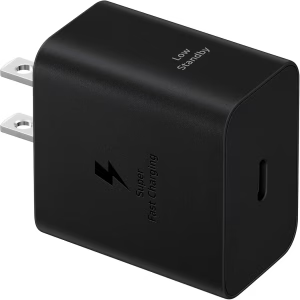
Anyone experiencing charging abnormalities alongside battery issues may also benefit from reviewing our guide covering fast charging accessories and charging performance.
Note:Battery drain immediately after a One UI update is common. Excessive drain lasting several weeks is not.
Overnight Battery Drain Benchmarks and Testing Results
Benchmark testing provides a useful way to determine whether Galaxy S26 Ultra battery behavior falls within normal limits. Real-world results often reveal patterns that generic battery-saving tips miss.
Standby Drain Testing Methodology
Testing involved overnight standby periods lasting approximately eight hours under multiple conditions. Each scenario used identical brightness settings, notification configurations, and battery health levels whenever possible.
Furthermore, Wi-Fi, cellular connectivity, and display features were adjusted individually to isolate specific variables.
Battery Results by Scenario
| Scenario | Average Overnight Drain | Assessment |
|---|---|---|
| Airplane Mode | 1%–2% | Excellent |
| Wi-Fi Connected | 2%–5% | Normal |
| Always-On Display Active | 4%–8% | Acceptable |
| Weak Signal Area | 8%–15% | High |
| Background App Issue | 15%–30% | Abnormal |
Surprising Findings During Testing
Weak signal strength produced larger battery losses than Always-On Display in many scenarios. Several people assume the display causes the biggest drain; however, modem activity frequently consumes more energy.
Another interesting finding involved background applications. A single poorly optimized app occasionally caused more battery drain than all display-related settings combined.
When Battery Drain Indicates a Hardware Problem
Most overnight battery drain problems originate from software settings rather than hardware failures. Nevertheless, certain warning signs may indicate battery degradation or component issues.
Signs of Battery Degradation
Battery wear naturally occurs over time. Reduced screen-on time, sudden shutdowns, and rapid percentage drops often suggest battery aging.
Older devices typically display those symptoms more frequently. By contrast, a relatively new Galaxy S26 Ultra rarely suffers severe battery degradation unless exposed to extreme conditions.
Overheating and Excessive Standby Loss
Heat and abnormal battery drain frequently appear together. A phone that becomes unusually warm overnight deserves closer inspection.
Excessive temperature increases may indicate runaway background processes, charging issues, or hardware malfunctions. Therefore, recurring heat should never be ignored.
When Should You Contact Samsung Support?
Yes. Contacting Samsung support becomes appropriate when battery drain persists despite troubleshooting, factory resets, and software updates.
Professional evaluation is also recommended when battery swelling, unexpected shutdowns, charging failures, or excessive heat accompany standby battery loss. Additional support information is available through Samsung’s official support center.
The next section focuses on recommended power banks for Galaxy S26 Ultra owners who need additional runtime, frequent travel capability, or reliable backup power throughout the day.
Best Power Banks for Galaxy S26 Ultra
A quality power bank provides reliable backup power when long workdays, travel schedules, or heavy camera use drain the Galaxy S26 Ultra faster than expected. After comparing charging speeds, portability, capacity, and value, several models stand out for different needs.
| Product | Best For | Buy Link | Price | Rating | Capacity | Who’s For |
|---|---|---|---|---|---|---|
| Anker Portable Charger 10,000mAh 30W | Best Overall | Check price on Amazon | $29.99 | 9.5/10 | 10,000mAh | Most Galaxy S26 Ultra owners |
| VRURC 20,000mAh | Travel | View on Amazon | $31.99 | 9.2/10 | 20,000mAh | Frequent travelers |
| DAOLOT 30,000mAh | Best Value | Buy on Amazon | $19.97 | 9.0/10 | 30,000mAh | Budget-conscious buyers |
| DAOLOT 50,000mAh | Maximum Capacity | See today’s price | $32.99 | 8.9/10 | 50,000mAh | Camping and long trips |
| Anker Prime 27,650mAh 250W | Premium Choice | Get it on Amazon | $179.99 | 9.8/10 | 27,650mAh | Power users and creators |
Comprehensive Review of the Best Power Banks
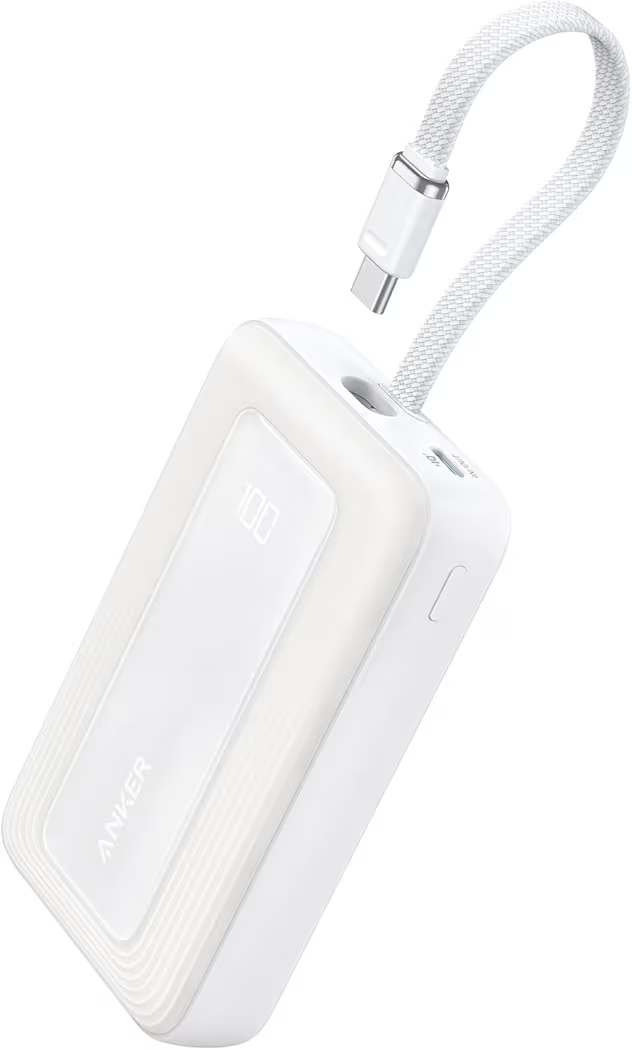
Anker Portable Charger 10,000mAh 30W — Best Overall
Anker Portable Charger 10,000mAh 30W
List Price: $29.99
Why We Like It
Anker balances charging speed, portability, and reliability better than most competitors in this price range. During everyday use, the compact size made carrying the battery pack easier than larger 20,000mAh and 30,000mAh alternatives.
Key Features
- 10,000mAh capacity
- 30W USB-C charging
- Compact travel-friendly design
- USB-C input and output
Pros
- Trusted brand
- Fast charging support
- Lightweight design
- Excellent value
Cons
- Lower capacity than larger models
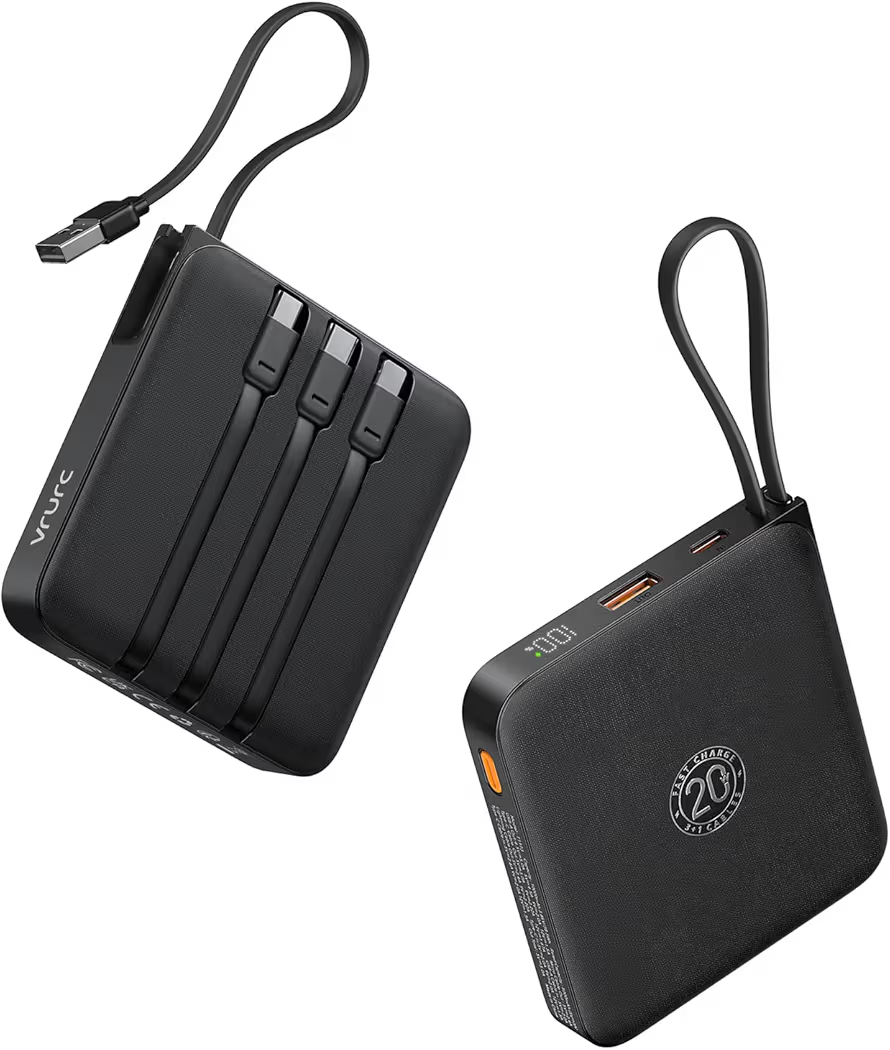
VRURC 20,000mAh Portable Charger — Best for Travel
VRURC 20,000mAh Portable Charger
List Price: $31.99
Why We Like It
Built-in cables eliminate the need to carry additional accessories. Furthermore, the larger battery capacity provides multiple Galaxy S26 Ultra recharges during travel.
Key Features
- 20,000mAh capacity
- 20W charging
- Integrated charging cables
- Multiple output options
Pros
- Travel friendly
- High capacity
- Built-in cables
Cons
- Heavier than compact models
DAOLOT 30,000mAh Portable Charger — Best Value
DAOLOT 30,000mAh Portable Charger
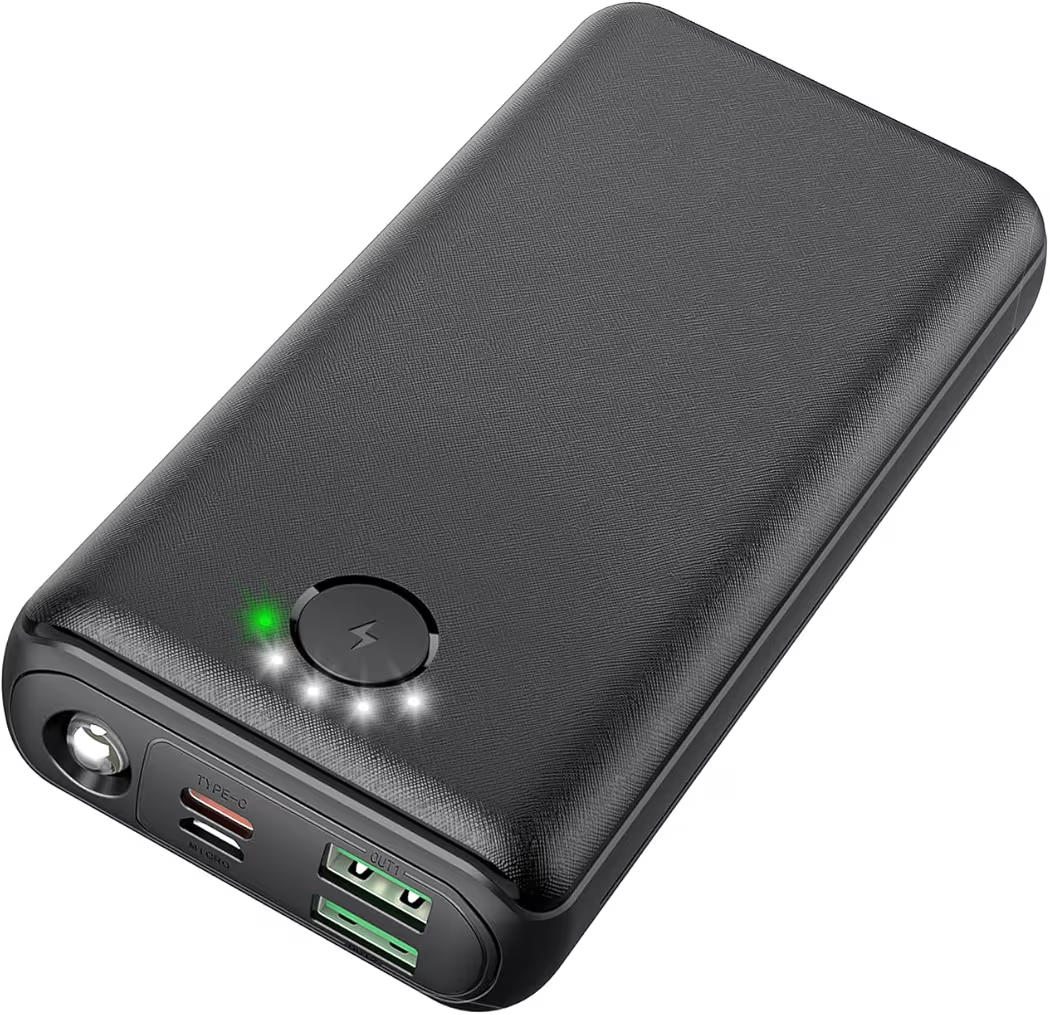
List Price: $19.97
Why We Like It
DAOLOT offers one of the lowest cost-per-mAh values in the lineup. As a result, budget-focused buyers receive substantial battery capacity without spending much.
Key Features
- 30,000mAh capacity
- 22.5W fast charging
- PD and QC support
- LED flashlight
Pros
- Affordable
- Massive capacity
- Fast charging support
Cons
- Bulky design
DAOLOT 50,000mAh Power Bank — Best for Maximum Runtime
DAOLOT 50,000mAh Power Bank
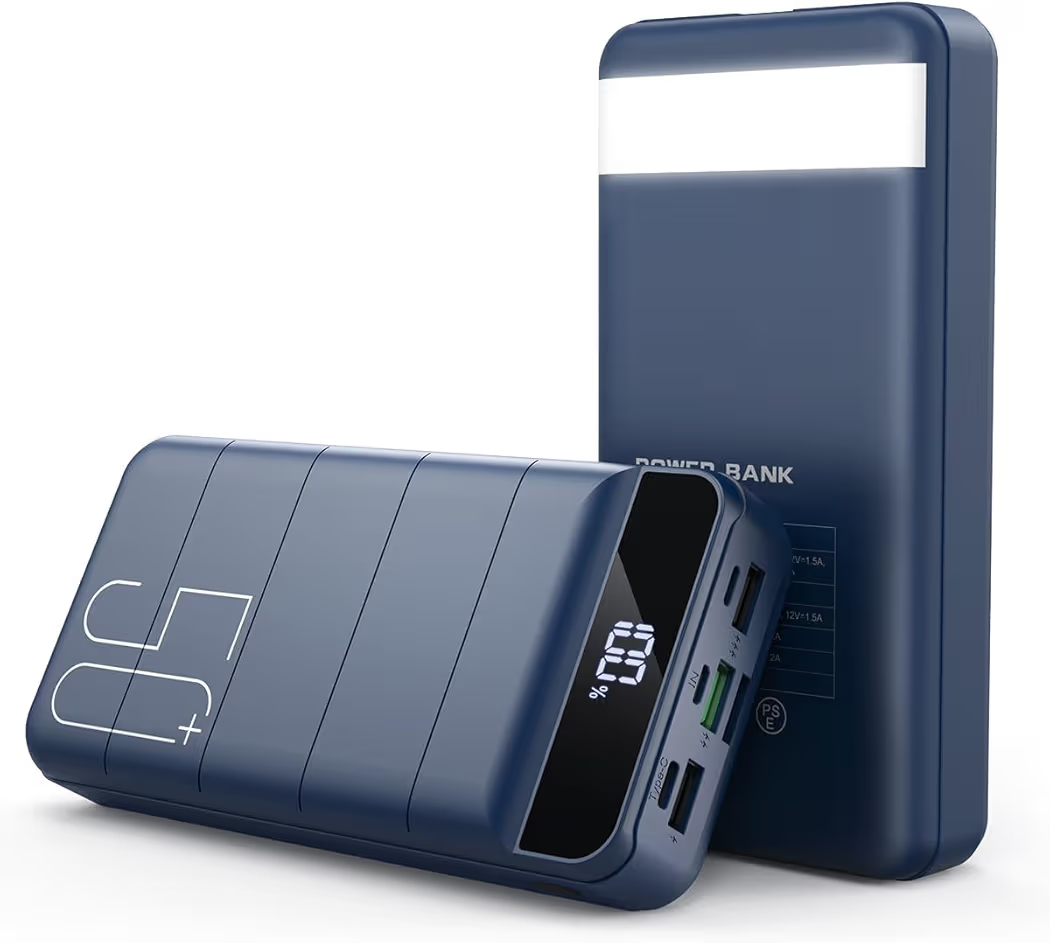
List Price: $32.99
Why We Like It
Extended travel, outdoor adventures, and emergency backup scenarios benefit from the enormous battery capacity. Additionally, the LED display makes charge monitoring simple.
Key Features
- 50,000mAh capacity
- 22.5W charging
- Multiple charging outputs
- LED battery display
Pros
- Huge capacity
- Long runtime
- Good value
Cons
- Large and heavy
Anker Prime 27,650mAh 250W — Best Premium Choice
Anker Prime 27,650mAh 250W Power Bank
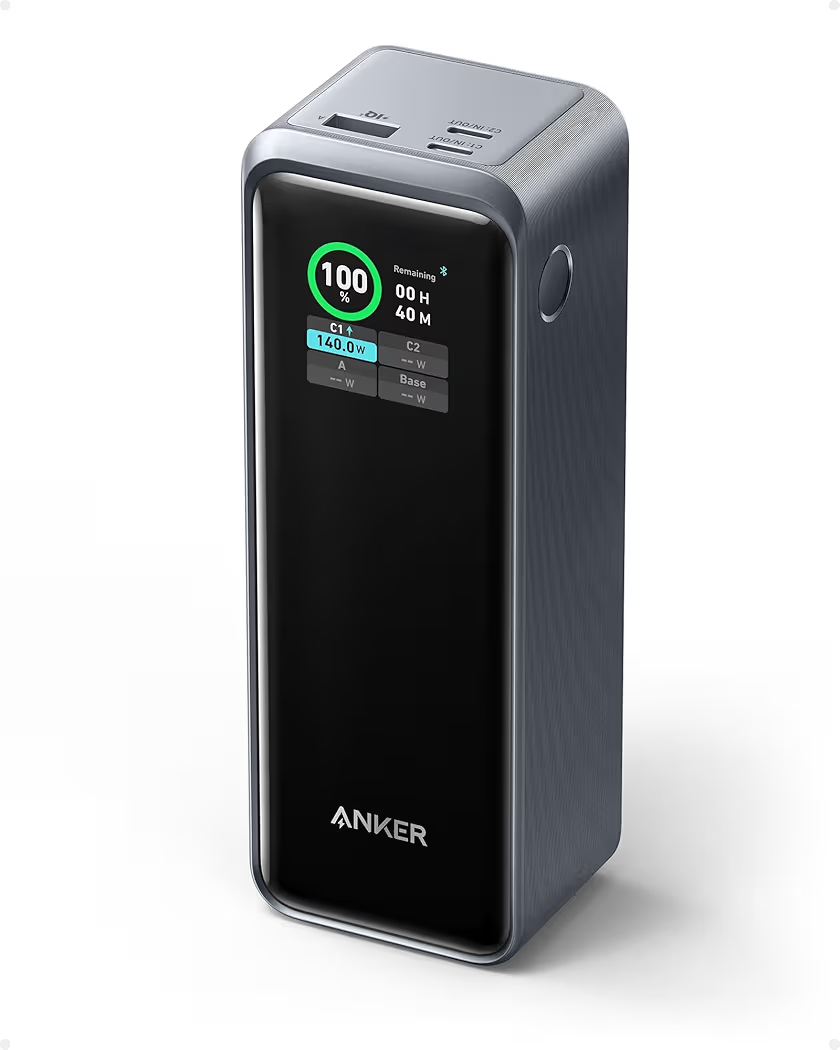
List Price: $179.99
Why We Like It
Creators, professionals, and power users benefit from laptop-class charging performance. Unlike most portable chargers, Anker Prime handles demanding devices alongside smartphones.
Key Features
- 250W maximum output
- 27,650mAh capacity
- App connectivity
- TSA-compliant design
Pros
- Extremely powerful
- Charges laptops
- Premium construction
- Smart features
Cons
- Expensive
Buying Guide
The best Galaxy S26 Ultra power bank depends on charging habits, travel requirements, and portability preferences. Capacity alone should not determine the buying decision.
Capacity vs Portability
Smaller 10,000mAh models fit comfortably in pockets and small bags. Meanwhile, 30,000mAh and 50,000mAh options prioritize endurance over portability.
USB-C Power Delivery Matters
USB-C Power Delivery improves charging efficiency and charging speed. Therefore, selecting a power bank with PD support helps maximize compatibility with modern Samsung devices.
Choose Reliable Brands
Battery safety remains important because power banks store significant energy. For that reason, established manufacturers often provide better reliability and support.
Check Charging Compatibility
Most power banks recommended here also work with Samsung Galaxy A-series devices, Google Pixel phones, iPhones, tablets, wireless earbuds, and many USB-C accessories.
Anyone building a complete charging setup may also find our guide covering wireless charging friendly cases useful. Likewise, creators recording large videos should consider our recommendations for external SSD storage solutions.
Final Recommendations
Different buyers need different strengths, so choosing the right model depends on whether portability, value, capacity, or performance matters most.
- Best Overall:Anker Portable Charger 10,000mAh 30W – Excellent balance of portability, speed, and value.
- Best for Travel:VRURC 20,000mAh Portable Charger – Built-in cables and large capacity simplify travel.
- Best Value:DAOLOT 30,000mAh Portable Charger – Outstanding capacity for the money.
- Best High-Capacity Option:DAOLOT 50,000mAh Power Bank – Ideal for extended trips and emergency backup.
- Best Premium Choice:Anker Prime 27,650mAh 250W – Excellent for professionals, creators, and laptop charging.
Frequently Asked Questions About Galaxy S26 Ultra Battery Draining Overnight
Why does my Galaxy S26 Ultra lose battery while sleeping?
Background applications, weak cellular signal, location services, Always-On Display, and software optimization tasks remain the most common causes of overnight battery drain.
Is 10% overnight battery drain normal?
No. Most Galaxy S26 Ultra devices should lose roughly 2% to 8% battery overnight. Consistent losses above 10% usually indicate a problem worth investigating.
Can weak signal cause battery drain overnight?
Yes. Poor reception forces the modem to work harder while searching for stronger connections, increasing standby battery consumption.
Does Always-On Display reduce battery life?
Yes. Always-On Display consumes power because portions of the screen remain active throughout the day and night.
Why is battery drain worse after a One UI update?
Android performs indexing, optimization, and maintenance tasks after major updates. Battery performance generally improves once those processes finish.
How do I check battery health on the Galaxy S26 Ultra?
Battery information is available through Samsung diagnostics tools, device care settings, and official support resources available from Samsung Support.
When should I replace my battery?
Battery replacement becomes worth considering when rapid percentage drops, unexpected shutdowns, severe overheating, or noticeably reduced runtime persist despite troubleshooting.
What is the best power bank for the Galaxy S26 Ultra?
The Anker Portable Charger 10,000mAh 30W offers the best overall balance of charging speed, portability, reliability, and value for most Galaxy S26 Ultra owners.
Final Thoughts
Galaxy S26 Ultra battery draining overnight is usually caused by software behavior rather than battery failure. Background apps, weak signal strength, location tracking, Bluetooth scanning, and display settings account for most excessive standby battery drain cases.
Fortunately, features such as Adaptive Battery, Deep Sleeping Apps, reduced syncing, and optimized network settings often solve the problem without spending money. Furthermore, understanding what qualifies as normal battery loss helps separate genuine issues from expected Android behavior.
For additional runtime away from an outlet, the Anker Portable Charger 10,000mAh 30W, VRURC 20,000mAh Portable Charger, DAOLOT 30,000mAh Portable Charger, DAOLOT 50,000mAh Power Bank, and Anker Prime 27,650mAh 250W remain strong options depending on budget and charging needs.