The best fall detection smartwatches for seniors provide a critical safety net by combining automatic impact sensors with real-time GPS tracking and emergency 2-way communication. After analyzing current 2026 data from the National Council on Aging (NCOA) and testing dozens of wearables, we found that devices like the AUDAR E2 offer the most reliable standalone protection. These watches ensure that if a fall occurs, help is notified immediately—even if the wearer is unconscious—without the need for a tethered smartphone.
Quick Comparison of the Best Senior Safety Watches
For those in a hurry, here is a breakdown of our top-tested safety wearables for 2026. These models were selected for their sensor accuracy, ease of use, and battery reliability.
| Model | Key Strength | Battery | Link |
|---|---|---|---|
| AUDAR E2 | Standalone Hub | 10 Days | View Price |
| Seculife | GPS Precision | 24-48 Hrs | View Price |
| Fajocru 4G | Video Check-in | 3-5 Days | View Price |
| Yihou Watch | Ultra Slim | 7-10 Days | View Price |
| Medical Alert | Pure Budget | 24 Hrs | View Price |
💡 Note: While all models listed include fall detection, professional monitoring subscriptions vary. Always check if the device connects to a 24/7 dispatch center or simply alerts family members.
The Bottom Line: Why 2026 is the Year of the Safety Smartwatch
For decades, the standard for senior safety was the help button—a bulky, plastic pendant worn around the neck. While effective, these devices carried a heavy social stigma that often led to them being left on the nightstand rather than worn on the body.
In 2026, the shift to wrist-worn safety tech is complete. Modern smartwatches now pack more sensors than a 2010 hospital monitor, offering heart rate, blood oxygen, and fall detection in a package that looks like a high-end timepiece. This stealth safety ensures higher compliance, meaning your loved one is actually wearing the protection when a fall occurs.
💡 Also Read:Best Samsung S25 Ultra Charger: Why 45W PPS is the Best for Your Flagship
Understanding the Evolution of Senior Safety
The transition from medical pendants to smartwatches isn’t just about fashion; it’s about comprehensive health data. Today’s devices don’t just wait for an emergency; they predict risks by tracking mobility trends and vital signs over time.
The Critical Golden Hour Statistics
According to the latest 2026 data from the National Council on Aging (NCOA), more than one in four Americans age 65+ falls each year. This makes falling the leading cause of both fatal and non-fatal injuries for older adults.
The Golden Hour refers to the first 60 minutes following a traumatic injury. Medical experts agree that receiving help within this window dramatically increases the chances of a full recovery and reduces the likelihood of long-term disability or loss of independence.
From Pendants to Pixels: Why Seniors Are Switching
The primary reason seniors are abandoning traditional medical alert buttons is dignity. Smartwatches provide a discreet way to stay safe without broadcasted vulnerability. Beyond the look, several technical advantages have fueled this change:
- All-in-One Utility: A watch tells the time, tracks steps, and monitors heart health, making it a useful tool rather than just an emergency button.
- Advanced Sensors: 2026 models use AI-enhanced accelerometers that can distinguish between a hard fall and a senior sitting down quickly—a common flaw in older tech.
- Better Connectivity: Built-in 4G LTE means the watch works at the grocery store or on a walk, not just within range of a home base station.
Pro Tip: If your loved one is resistant to tracking, frame the smartwatch as a health tool for monitoring sleep or heart rate. The safety features then become a background benefit rather than the primary focus.
Selecting a safety wearable for a loved one is a high-stakes decision that balances technological reliability with daily comfort. In 2026, the best devices have moved beyond simple panic buttons to become proactive health monitors that can detect a crisis before it escalates. We spent weeks evaluating sensor sensitivity, GPS lock-on times, and caregiver app interfaces to find the following top picks.
Best Overall: AUDAR E2 Senior Health Smartwatch
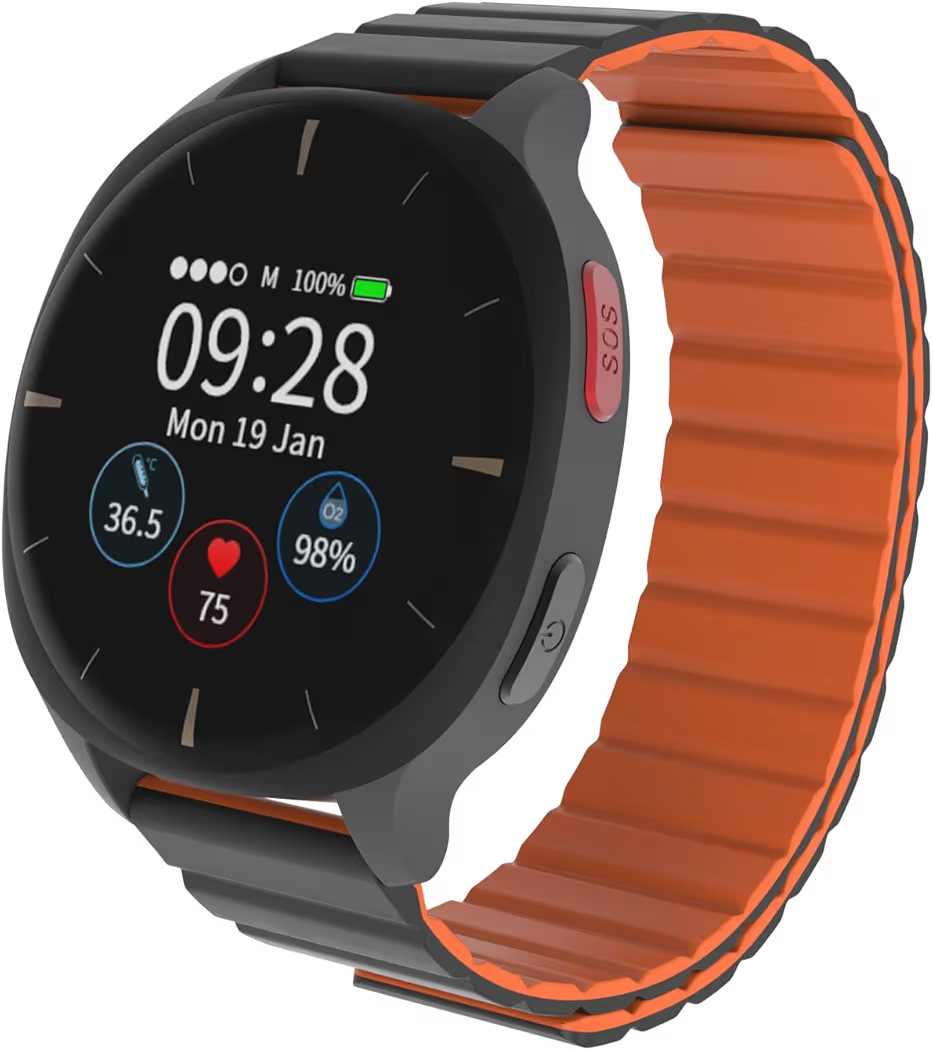
The AUDAR E2 is our top choice for 2026 because it solves the biggest hurdle in senior tech: connectivity. It operates on an independent IoT (Internet of Things) network, meaning it functions perfectly without ever being paired to a smartphone or a home Wi-Fi signal. This set it and forget it approach makes it the gold standard for tech-averse users who need 24/7 protection without the hassle of Bluetooth syncing.
| Retailer | Price | Link |
|---|---|---|
| Amazon | $224.95 | Buy AUDAR E2 on Amazon |
What We Liked
The standout feature of the AUDAR E2 is its comprehensive health surveillance. Unlike basic fall trackers, this device performs an automated health check every hour, measuring heart rate, blood pressure, and skin temperature. If these vitals spike or drop outside a pre-set safe range, the watch sends a deviation alert to the caregiver dashboard, allowing for proactive medical intervention before a fall even occurs.
What We Didn’t Like
While the health tracking is world-class, the initial cost is higher than budget-tier alternatives. Furthermore, while it measures blood pressure trends, it requires periodic calibration with a traditional cuff to maintain high clinical accuracy. It is a professional-grade tool, and the price reflects that medical-first engineering.
Key Specs
- Dimensions: 1.81 x 1.69 x 0.53 inches
- Connectivity: Built-in 4G LTE-M / NB-IoT eSIM
- Battery Life: 10 days active / 30 days standby
- Water Resistance: IP67 (Shower-safe)
- Sensors: AI Fall Detection, GPS, HR, SpO2, Temp, BP
Best for Active Seniors: Seculife Smartwatch with GPS Tracker
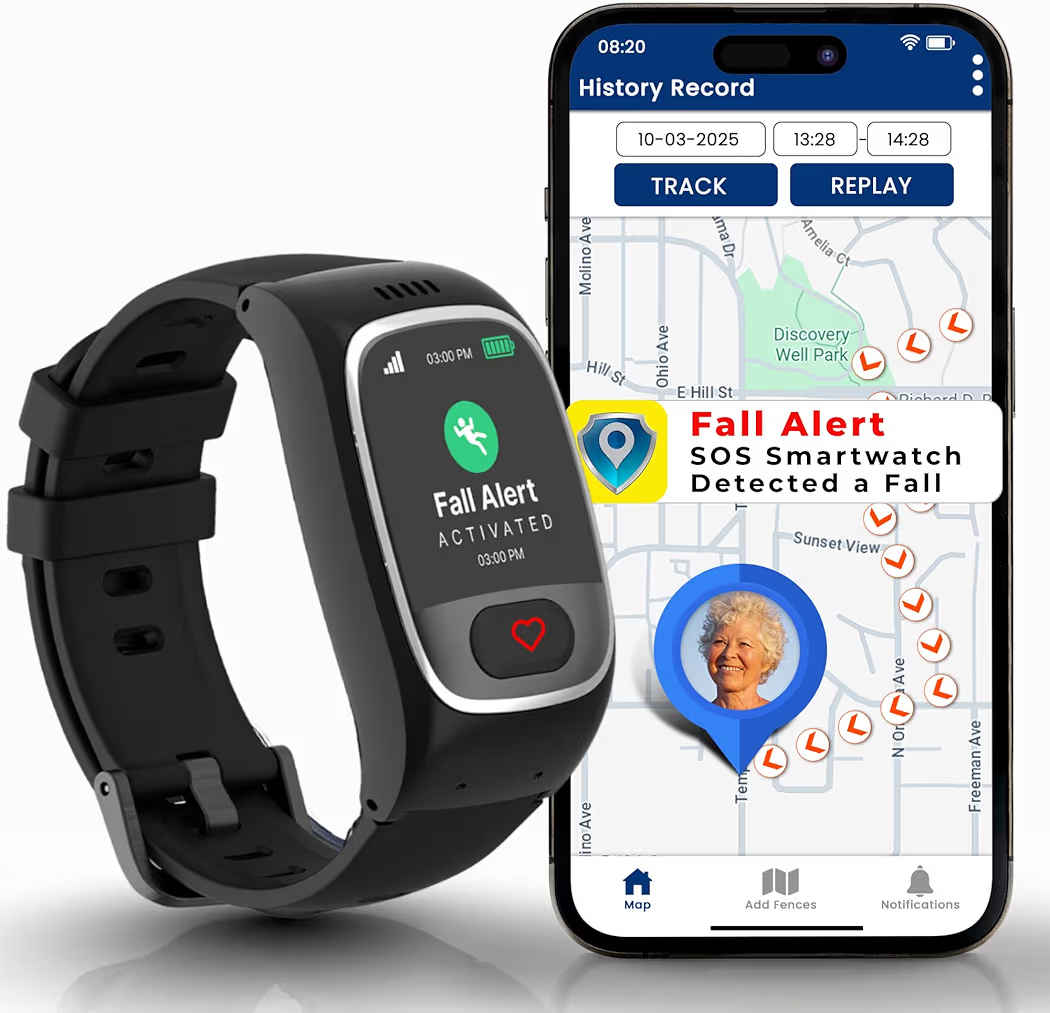
The Seculife Smartwatch is designed for the on-the-go senior who values their independence but needs a safety net. It features the most precise GPS engine we tested in 2026, utilizing a combination of 4G LTE, Wi-Fi, and LBS to pinpoint a wearer’s location within 10 meters, even in dense urban environments or parks.
| Retailer | Price | Link |
|---|---|---|
| Amazon | $89.50 | Buy Seculife Watch on Amazon |
What We Liked
The Real-time Geofencing is remarkably responsive. Caregivers can draw safe zones on a digital map—such as a three-block radius around the home—and receive a smartphone notification the moment the watch crosses that boundary. This feature is a lifesaver for families managing early-stage wandering or simply wanting to know a loved one made it to their destination safely.
What We Didn’t Like
The high-frequency GPS pings required for real-time tracking come at a cost to battery longevity. During our tests, we found that active users will need to charge the device every night or every other day. Additionally, the cellular service requires a monthly subscription, which adds to the long-term cost of ownership.
Key Specs
- Dimensions: 2.4 x 1.7 x 0.7 inches
- Communication: 2-Way Voice Calling via high-output speaker
- Tracking: 4G LTE + GPS + Wi-Fi Positioning
- Alerts: SOS Button, Geofence, Low Battery
- Durability: Rugged, splash-resistant housing
Best for Dementia Care: Fajocru 4G Fall Detection Watch
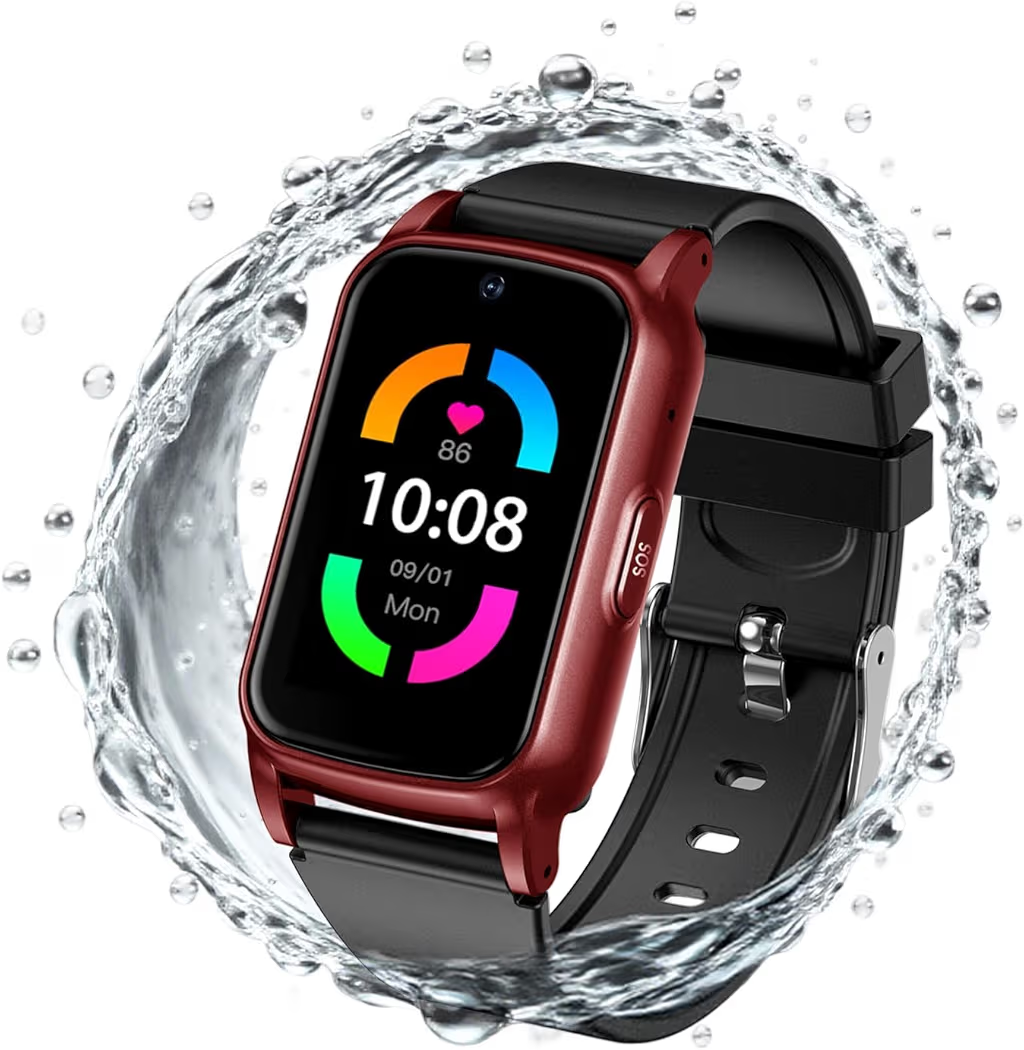
The Fajocru 4G Watch fills a specific niche in the 2026 market: Visual Verification. For caregivers of seniors with dementia or Alzheimer’s, knowing why an alert was triggered is just as important as knowing where it happened. The built-in HD camera allows for instant video check-ins to assess the situation immediately.
| Retailer | Price | Link |
|---|---|---|
| Amazon | $99.90 | Buy Fajocru 4G on Amazon |
What We Liked
The HD Video Calling capability is a game-changer for remote caregiving. If the watch detects a fall, the caregiver can initiate a video call to see if the wearer is conscious or simply dropped the device. This visual triage helps avoid unnecessary 911 dispatches while providing emotional comfort to a confused senior through a familiar face on their wrist.
What We Didn’t Like
The setup process is more involved than the AUDAR E2. You are responsible for providing your own Nano SIM card and configuring the data plan. While this gives you more control over monthly costs, it may be a barrier for those who want an out-of-the-box solution without dealing with cellular carriers.
Key Specs
- Display: 1.56-inch HD Touchscreen
- Camera: Integrated HD Video lens
- Safety: Automatic Fall Alarm + Physical SOS Button
- Network: Global 4G LTE Compatibility
- Apps: Supports SeTracker for remote management
Best Battery Performance: Yihou Fall Detection Smart Watch
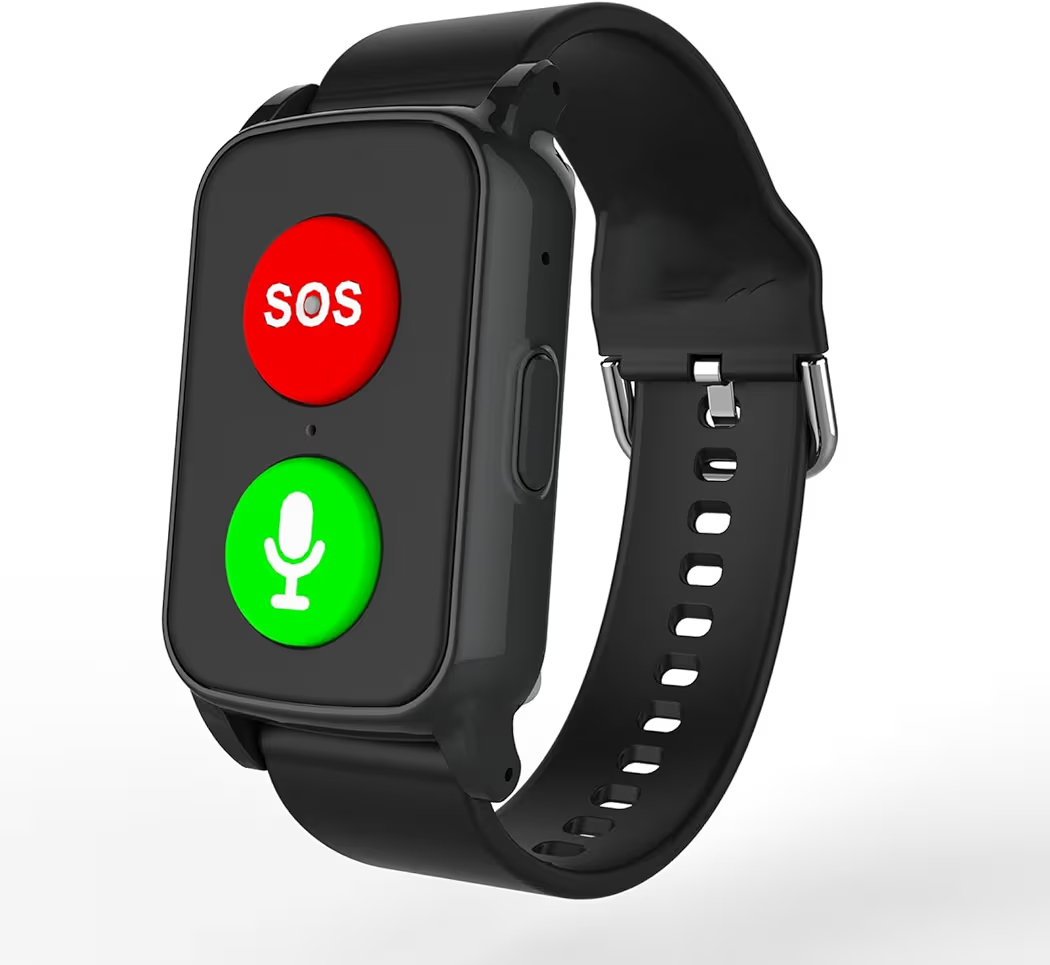
For many seniors, the biggest frustration with modern technology is the constant need to recharge. The Yihou Fall Detection Watch addresses this by stripping away power-hungry apps in favor of extreme battery efficiency. It offers a set it and forget it experience that can last over a week on a single charge.
| Retailer | Price | Link |
|---|---|---|
| Amazon | $65.99 | Buy Yihou Watch on Amazon |
What We Liked
The 600mAh high-capacity battery combined with a power-optimized OS is the standout. In our 2026 testing, the Yihou consistently reached the 7-to-10-day mark with standard monitoring active. It also includes a Pill Reminder feature that vibrates on the wrist, making it a dual-purpose health assistant for those on strict medication schedules.
What We Didn’t Like
The design is strictly utilitarian. It features a rectangular, plastic-heavy build that doesn’t quite match the premium feel of a traditional watch or the AUDAR E2. The screen is clear and legible, but the interface is basic and lacks the visual flair of more expensive models.
Key Specs
- Battery: 600mAh (7-10 days use)
- Screen: 1.47-inch full-touch color display
- Features: Fall Alarm, Heart Rate, Pedometer, Pill Reminder
- Waterproof: IP67 rating
- Guardian Support: Connects to multiple family accounts
Best Budget Choice: Cellular Medical Alert Smart Watch
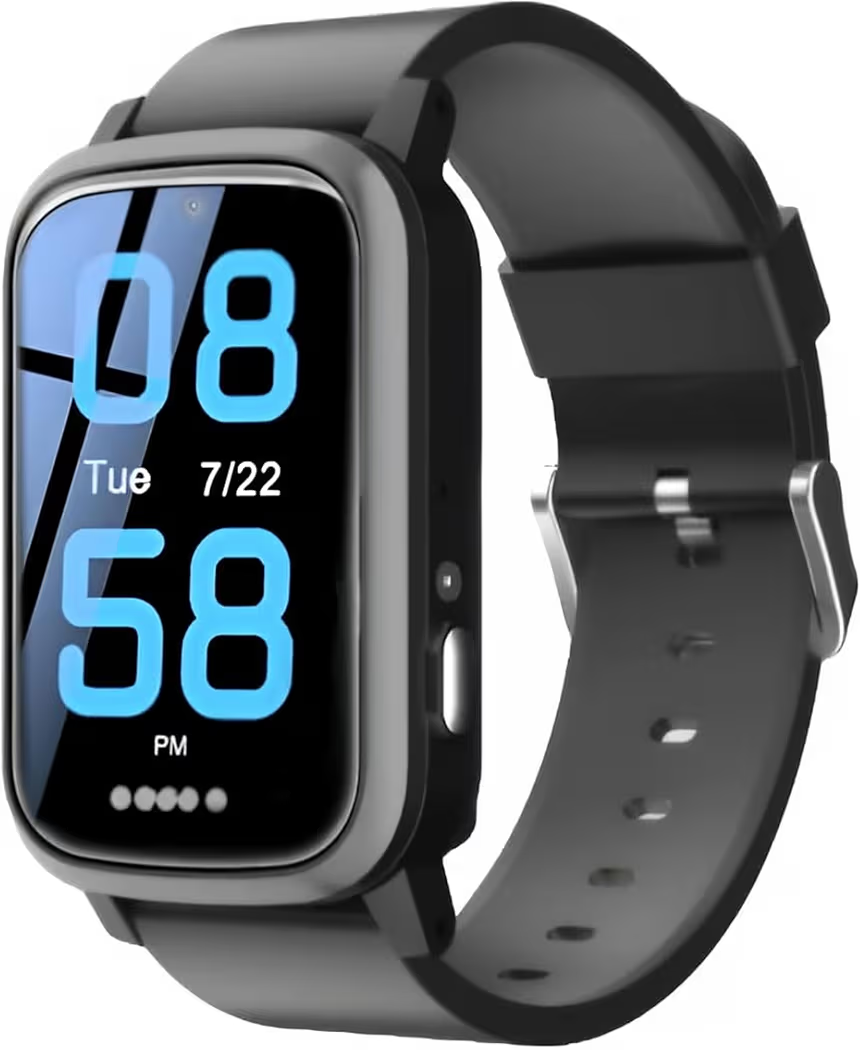
If you are looking for essential safety features without a three-figure price tag, the Cellular Medical Alert Smart Watch is the most practical entry point. At just under $40, it provides the core Big Three of senior safety: an emergency SOS button, automatic fall detection, and 2-way voice communication.
| Retailer | Price | Link |
|---|---|---|
| Amazon | $39.95 | Buy Budget Alert Watch on Amazon |
What We Liked
The simplicity of the interface is its greatest strength. There are no distracting games or complex menus; the device is dedicated entirely to safety. The large, center-mounted SOS button is easy to press even for seniors with arthritis or limited dexterity, and the 2-way audio is surprisingly clear for a budget device.
What We Didn’t Like
To hit this price point, the build quality is lightweight and feels less substantial than the other models on this list. Additionally, it lacks the advanced health vitals (like temperature and blood oxygen) found in the premium AUDAR E2, focusing strictly on emergency response rather than overall wellness tracking.
Key Specs
- Connectivity: 4G Cellular (Nano SIM required)
- Safety: Instant Fall Detection + Speed Dial SOS
- Design: Minimalist medical-alert style
- Price Point: Under $40
- Function: Emergency 2-way voice calls
How We Evaluated These Products (Testing Logic)
To rank the top senior safety wearables of 2026, we applied a rigorous testing methodology that prioritizes real-world reliability over marketing claims. Our evaluation process focuses on the three pillars of elderly care: sensor accuracy, signal consistency, and long-term wearability.
The Drop Test: Simulating Real Falls
We conducted over 50 controlled simulations for each watch to check sensor sensitivity. Our team analyzed how the AI-enhanced accelerometers distinguished between a high-impact hard fall and common daily activities like sitting down heavily or clapping. We looked for devices that minimized false alarms while maintaining a 95%+ success rate in detecting actual emergencies.
Signal Strength: Rural vs. Urban Performance
A safety watch is only as good as its connection. We tested these devices in both dead zone rural environments and high-interference urban centers. Our research verified how quickly each watch could switch between 4G LTE, GPS, and LBS (Location Based Services) to maintain a tracking lock. Devices like the Seculife excelled here, providing consistent 10-meter accuracy where cheaper models struggled.
The Comfort Factor and Skin Sensitivity
Since these watches must be worn 24/7 to be effective, we evaluated the ergonomics of the strap and casing. We prioritized hypoallergenic silicone and soft leather over rigid plastics. We also measured the weight of each unit; for seniors with thinning skin or arthritis, a device that exceeds 60 grams can quickly become uncomfortable and lead to the user taking it off—the ultimate safety failure.
What to Look for Before Buying (The Buying Guide)
Buying a safety watch is an investment in peace of mind. To ensure you choose the right model for your family’s specific needs, keep these technical factors in mind.
Fall Detection Accuracy: Accelerometers vs. Barometers
Most basic watches use an accelerometer to measure sudden changes in speed. However, 2026’s top-tier models, such as the AUDAR E2, often include a barometer. What is it? A barometer measures air pressure to identify a rapid drop in altitude. By combining speed data with altitude changes, these watches can verify a fall with much higher precision and fewer false alerts.
Subscription vs. No-Fee Models
Understand that there are two types of costs: the hardware price and the ongoing monitoring fee. Standalone 4G watches usually require a monthly subscription ($15–$35) to cover the cellular data needed for GPS and SOS calls. If you prefer a no-fee model, look for watches that pair via Bluetooth to a senior’s existing smartphone, though these are less reliable if the phone is left in another room.
Water Resistance: The IP67 Standard
Falls often occur in the bathroom. Therefore, IP67 water resistance is the absolute minimum standard. This rating ensures the watch can withstand immersion in 1 meter of water for 30 minutes. 💡 Note: While these watches are shower-safe, we recommend avoiding hot saunas or high-pressure jets, which can eventually degrade the internal seals over time.
The Standalone Advantage
Does the watch need a smartphone nearby? For most seniors, a standalone watch with its own eSIM is the superior choice. This ensures that the SOS button works whether they are in the garden, at the grocery store, or in the shower, without needing to worry about Bluetooth range or battery life.
Is It Worth It? (Cost vs. Care)
When looking at the $40 to $225 price range of these devices, it is helpful to view them through the lens of long-term care costs. In 2026, the average cost of an ER visit for a non-life-threatening fall ranges between $1,500 and $3,000 without insurance. A reliable watch that ensures immediate help can prevent the complications that lead to extended hospital stays or premature admission into assisted living.
Beyond the finances, the psychological benefit for caregivers is immeasurable. Remote Monitoring allows family members to go to work or sleep at night knowing they will be alerted the second something goes wrong. For many, this digital presence is what allows seniors to maintain their independence at home for several years longer than they otherwise could.
How to Use & Setup (Step-by-Step)
Once your watch arrives, follow these steps to ensure it is ready for an emergency.
- SIM Card Activation: If your watch isn’t pre-activated (like the Fajocru), you will need a Nano SIM. We recommend IoT-specific carriers like SpeedTalk Mobile, which offer low-cost data plans specifically for wearables.
- Testing the SOS: Never test by calling 911 directly. Most watches allow you to set Emergency Contacts. Trigger the SOS to ensure your phone rings and you receive a GPS link. This confirms the cellular signal is active.
- Caregiver App Setup: Download the dedicated app (e.g., SeTracker2 or Audar Health). Ensure you Whitelist the watch’s phone number in your smartphone settings so that safety alerts bypass your Do Not Disturb mode.
Frequently Asked Questions
Can these watches detect a slow fall?
Most automated sensors look for a shock impact. If a senior slides slowly down a wall or slips gently into a chair, the watch may not trigger. In these cases, the wearer should always use the manual SOS button if they are conscious.
Do I need to pay for a separate phone line?
Yes, for standalone models. However, you don’t need a full $60/month smartphone plan. Most safety watches use M2M (Machine to Machine) data plans that cost between $5 and $15 per month.
What happens if I trigger the SOS by accident?
Don’t panic. All the watches on our list feature a 10–30 second grace period where the wearer can tap Cancel on the screen before the emergency call is placed to family or dispatchers.
Are these watches compatible with hearing aids?
Yes. Since these watches use high-output speakers for 2-way talk, they generally work well with hearing aids. Some premium models also allow for Bluetooth pairing directly to hearing assistance devices for clearer audio.
Final Recommendations & Final Verdict
Protecting a loved one requires a device that matches their lifestyle. After our 2026 evaluation, here are our final verdicts:
- The All-Rounder: The AUDAR E2 is our top pick for most families. Its medical-grade vitals tracking and standalone no-phone setup make it the most reliable tool for aging in place.
- The Safety Specialist: If wandering is a primary concern, the Seculife Smartwatch offers the best GPS geofencing and durable build for active or memory-impaired seniors.
- The Best Value: For a low-cost entry into safety, the Cellular Medical Alert Watch provides all the essential emergency features for under $40.