Choosing the best fall detection smart watch for seniors can make a meaningful difference during emergencies because modern smartwatches can automatically detect a hard fall, notify emergency contacts, and in some cases place an SOS call. The right watch also combines health monitoring, GPS tracking, and simple controls that older adults can use confidently every day.
Additionally, this guide compares the best fall detection smart watch for seniors based on safety features, ease of use, battery life, value, and ongoing costs. If you’re also comparing rugged wearable options, our guide to durable military smartwatches explains how outdoor-focused watches differ from medical and senior-friendly models.
Quick Comparison: Best Fall Detection Smart Watches for Seniors
| Product | Image | Amazon | Best For | Fall Detection | GPS | Monthly Fee | Price |
|---|---|---|---|---|---|---|---|
| Apple Watch Series 9 |  🔍 Click image to enlarge | View Now at Amazon | Best Overall | Yes | Yes | No | $247.70 |
| Apple Watch SE (2nd Gen) |  🔍 Click image to enlarge | View Now at Amazon | Best Value for iPhone | Yes | Yes | No | $181.33 |
| Audar E2 | 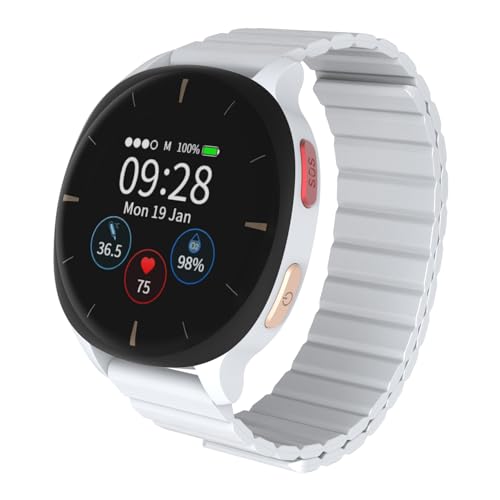 🔍 Click image to enlarge | View Now at Amazon | Best Medical Alert Watch | Yes | Yes | No | $182.45 |
| SecuLife Cellular Medical Alert Smartwatch |  🔍 Click image to enlarge | View Now at Amazon | Best Cellular Medical Alert | Yes | Yes | Yes | $89.00 |
| Fajocru Fall Detection Smart Watch | 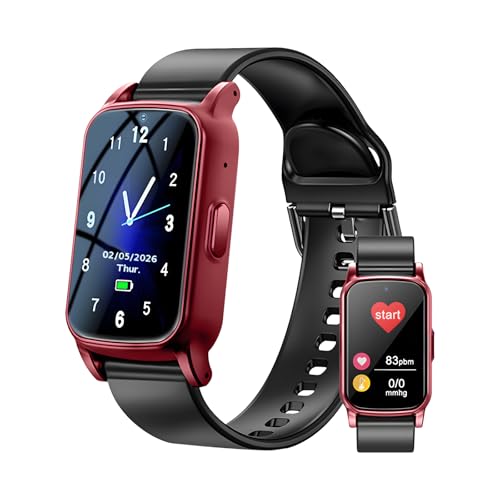 🔍 Click image to enlarge | View Now at Amazon | Best Budget | Yes | Yes | No | $79.99 |
| SkyAngelSPORT Mobile Medical Alert Watch |  🔍 Click image to enlarge | View Now at Amazon | Best Without Monthly Fee | Yes | Yes | No | $169.77 |
A smartwatch with reliable fall detection should also provide emergency SOS, accurate GPS location sharing, and an interface that seniors can use without frustration. Battery life and ongoing subscription costs are equally important when comparing long-term value.
Our Top Picks for the Best Fall Detection Smart Watch for Seniors
The best fall detection smart watch for seniors depends on whether the wearer uses an iPhone, needs continuous caregiver monitoring, or prefers a dedicated medical alert device. The selections below balance safety, reliability, comfort, and value while covering different budgets and lifestyles.
Best Overall: Apple Watch Series 9
Best for: Seniors who want the most complete combination of safety, health tracking, and everyday smartwatch features.
List Price: $247.70
The Apple Watch Series 9 is the best fall detection smart watch for seniors because it combines automatic fall detection, Emergency SOS, Crash Detection, ECG monitoring, and optional cellular connectivity in one mature ecosystem. Additionally, the bright display and responsive S9 chip make everyday navigation easier for older users.
During daily use, the Apple Watch Series 9 automatically recognizes severe falls and can contact emergency services if the wearer remains unresponsive. Family members can also benefit from Family Setup, allowing caregivers to help manage settings and monitor loved ones when appropriate.
Features and Benefits
- Automatic Fall Detection helps notify emergency services after a serious fall.
- Emergency SOS offers fast access to emergency assistance.
- ECG and heart rate monitoring support everyday wellness tracking.
- Always-On Retina display improves visibility outdoors.
- GPS + Cellular keeps users connected even without carrying an iPhone.
- Crash Detection provides additional protection while travelling.
Specifications
- 41mm case
- GPS + Cellular
- S9 processor
- watchOS
- Water resistant
- Apple Limited Warranty
| Pros | Cons |
|---|---|
|
|
Apple publishes detailed information about Fall Detection, Emergency SOS, and health capabilities on its official specifications page: Apple Watch Specifications.
Best Value for iPhone Users: Apple Watch SE (2nd Gen)
Best for: Seniors who want dependable safety features at a lower price than Apple’s flagship models.
$181.33
The Apple Watch SE (2nd Gen) offers one of the best values for seniors because it includes Fall Detection, Crash Detection, Emergency SOS, heart rate monitoring, and sleep tracking without the higher price of the premium Apple Watch models. Consequently, many families choose this model as an affordable safety upgrade.
After setup, the Apple Watch SE (2nd Gen) requires very little daily maintenance. The interface remains simple, notifications are easy to read, and Family Setup helps caregivers assist seniors who may not own an iPhone themselves.
Features and Benefits
- Automatic Fall Detection for emergency response.
- Crash Detection for added protection.
- Emergency SOS calling.
- Heart rate monitoring.
- Sleep tracking.
- Excellent compatibility with the Apple ecosystem.
Specifications
- 40mm case
- GPS
- Retina display
- watchOS
- Aluminum case
- Apple Limited Warranty
| Pros | Cons |
|---|---|
|
|
Best Medical Alert Smartwatch: Audar E2 Senior Smartwatch with Fall Detection & SOS
Best for: Seniors who need continuous health monitoring together with automatic fall detection and caregiver support.
$182.45
The Audar E2 Senior Smartwatch is one of the best fall detection smart watch for seniors who require more than fitness tracking. Unlike general-purpose smartwatches, the Audar E2 focuses on health monitoring and caregiver visibility, making it particularly suitable for older adults with ongoing medical concerns.
During everyday use, the Audar E2 automatically records vital signs at scheduled intervals and stores historical trends. Additionally, caregivers can review long-term health information instead of relying only on occasional manual checks.
The Audar E2 stands out because it combines automatic fall detection, emergency SOS, and continuous health monitoring in a device built specifically for seniors rather than general smartwatch users.
Features and Benefits
- Automatic Fall Detection quickly identifies serious falls.
- Emergency SOS helps notify caregivers during emergencies.
- Heart rate monitoring provides continuous wellness insights.
- Blood pressure monitoring offers additional health information.
- Blood oxygen monitoring helps monitor oxygen saturation.
- Body temperature monitoring adds another important health metric.
- Remote caregiver dashboard makes long-term monitoring easier.
- Historical health reports simplify trend tracking.
Specifications
- Model: E2-GB
- One Size
- Grey & Black
- Automatic health monitoring
- 1-Year Manufacturer Warranty
| Pros | Cons |
|---|---|
|
|
Best Cellular Medical Alert Watch: SecuLife Cellular Medical Alert Smartwatch
Best for: Seniors who spend time outside the home and need reliable emergency communication.
$89.00
The SecuLife Cellular Medical Alert Smartwatch is an excellent option for seniors who need cellular connectivity without depending on a nearby smartphone. Automatic fall detection, GPS tracking, and two-way calling work together to improve emergency response when a fall occurs away from home.
While travelling, shopping, or taking daily walks, the SecuLife Cellular Medical Alert Smartwatch allows caregivers to locate the wearer quickly. Furthermore, medication reminders and emergency contacts add practical value beyond fall detection alone.
Features and Benefits
- Automatic Fall Detection
- Built-in GPS Tracking
- SOS Emergency Button
- Two-way voice calling
- Heart rate monitoring
- Blood pressure monitoring
- Medication reminders
- IP67 water resistance
Specifications
- Cellular connectivity
- Small size
- Model 850077248054
- IP67 Waterproof
- 1-Year Manufacturer Warranty
| Pros | Cons |
|---|---|
|
|
Best Budget Pick: Fajocru Fall Detection Smart Watch
Best for: Buyers looking for a low-cost smartwatch that still includes fall detection and emergency SOS.
$79.99
The Fajocru Fall Detection Smart Watch delivers impressive value by combining automatic fall detection, GPS tracking, SOS alerts, and HD video calling at an affordable price. As a result, the watch appeals to families seeking practical protection without spending several hundred dollars.
During normal daily activities, the Fajocru Fall Detection Smart Watch can automatically notify emergency contacts after detecting a serious fall. GPS location sharing also helps caregivers locate the wearer faster during emergencies.
Features and Benefits
- Automatic Fall Detection
- Emergency SOS
- GPS Tracking
- HD Video Calling
- Waterproof construction
- Fitness tracking
- Suitable for dementia and Alzheimer’s support
Specifications
- Model V46
- One Size
- Waterproof
- 1-Year Manufacturer Warranty
| Pros | Cons |
|---|---|
|
|
Best No Monthly Fee Option: SkyAngelSPORT Mobile Medical Alert Watch
Best for: Seniors who prefer a one-time purchase without recurring monitoring fees.
$169.77
The SkyAngelSPORT Mobile Medical Alert Watch is one of the few dedicated fall detection watches that focuses on eliminating recurring subscription costs. Consequently, buyers who dislike monthly service fees can enjoy long-term savings while still benefiting from automatic fall detection and direct emergency calling.
When used during everyday errands or outdoor walks, the SkyAngelSPORT Mobile Medical Alert Watch provides one-button SOS calling, built-in GPS support, and automatic fall detection without requiring an ongoing monitoring contract.
The SkyAngelSPORT Mobile Medical Alert Watch is especially attractive for retirees who prefer predictable ownership costs because there are no recurring monthly monitoring charges.
Features and Benefits
- No monthly subscription fees
- Automatic Fall Detection
- One-button SOS
- Direct 911 calling
- Built-in speaker
- GPS support
- Waterproof design
Specifications
- Black finish
- Waterproof
- Standalone medical alert watch
- One-time purchase
| Pros | Cons |
|---|---|
|
|
Buying Guide: How to Choose the Best Fall Detection Smart Watch for Seniors
The best fall detection smart watch for seniors should match the wearer’s health needs, daily routine, and comfort level with technology. Rather than focusing only on brand names, compare emergency features, battery life, GPS capability, subscription costs, and ease of use before making a decision.
The best smartwatch is the one a senior will wear every day. A watch left on a charger cannot detect a fall or send an emergency alert.
Fall Detection Accuracy
Reliable fall detection is the most important feature in the best fall detection smart watch for seniors. Watches such as the Apple Watch Series 9, Apple Watch SE, Audar E2, and SkyAngelSPORT use built-in motion sensors to recognize hard falls and begin an emergency response if the wearer remains motionless.
GPS Tracking
GPS tracking allows caregivers or emergency contacts to locate a senior quickly after an accident. Additionally, GPS becomes even more valuable during walks, shopping trips, or travel because responders receive a more accurate location.
Emergency SOS
Emergency SOS provides immediate access to help after a fall or medical emergency. Some watches automatically call emergency services, while others notify pre-selected family members first. Understanding how each system works helps you choose the right level of protection.
Cellular vs Bluetooth
Cellular models work independently, whereas Bluetooth models normally require a nearby smartphone. Therefore, seniors who often leave home alone usually benefit from a cellular smartwatch that can place emergency calls without relying on a phone.
Battery Life
Battery life directly affects safety because a powered-off smartwatch cannot detect falls or send alerts. Charging the watch every evening creates a simple routine that helps ensure protection throughout the following day.
Ease of Use
Simple menus, large icons, and readable displays make a smartwatch much easier for older adults to operate. Furthermore, physical buttons remain useful during stressful situations because they are easier to press than navigating multiple touch-screen menus.
Display Size
A bright display with adjustable text size improves readability for seniors with reduced vision. Larger screens also make notifications, emergency prompts, and health information easier to understand at a glance.
Health Monitoring
Many of the best fall detection smart watch for seniors also monitor heart rate, sleep, blood oxygen, and daily activity. These health features do not replace medical care, but they provide useful information that seniors and caregivers can discuss with healthcare professionals.
Subscription Fees
Some medical alert watches require monthly monitoring plans, while others work without recurring charges. Consequently, comparing long-term ownership costs can prevent unexpected expenses after purchasing the device.
Water Resistance
Water resistance helps protect a smartwatch during hand washing, rain, or accidental splashes. Since many falls happen in bathrooms, choosing a water-resistant watch allows seniors to keep the device on more consistently.
Apple Watch vs Dedicated Medical Alert Watch
The Apple Watch is the better choice for active seniors who already use an iPhone, while a dedicated medical alert watch is often better for seniors who need caregiver support and simplified controls. Selecting between these categories depends on lifestyle rather than which product has the longest feature list.
| Feature | Apple Watch | Dedicated Medical Alert Watch |
|---|---|---|
| Best User | Active iPhone users | Seniors needing caregiver support |
| Fall Detection | Yes | Yes |
| GPS | Available | Usually included |
| Health Tracking | Excellent | Good to Excellent |
| Caregiver Monitoring | Limited | Often more comprehensive |
| Ease of Use | Moderate | Very Simple |
| Monthly Fees | Usually optional | Some models require subscriptions |
Families comparing smartwatch options may also find it useful to explore other senior smartwatch recommendations when deciding between premium smartwatches and dedicated medical alert devices.
Frequently Asked Questions
What is the best fall detection smart watch for seniors?
The Apple Watch Series 9 is the best overall choice for most iPhone users because it combines reliable fall detection, Emergency SOS, excellent health monitoring, and long-term software support. Seniors who prefer a dedicated medical alert device should consider the Audar E2 or SecuLife smartwatch instead.
Does Apple Watch SE have fall detection?
Yes. The Apple Watch SE (2nd Gen) includes automatic Fall Detection, Emergency SOS, and Crash Detection. These features make the Apple Watch SE one of the strongest value options for seniors who already use an iPhone.
Which smartwatch works best with Android?
Dedicated medical alert smartwatches such as the SecuLife Cellular Medical Alert Smartwatch and the Fajocru Fall Detection Smart Watch work well with Android users because they focus on emergency communication rather than deep integration with Apple’s ecosystem.
What is the best fitness watch for seniors?
The Apple Watch Series 9 is the strongest fitness-focused option because it combines activity tracking, heart rate monitoring, workout support, GPS, and fall detection in one device. Seniors looking for advanced health features will appreciate its balance between wellness and safety.
Can a smartwatch automatically call for help after a fall?
Yes. Many premium smartwatches and dedicated medical alert watches automatically detect hard falls and begin an emergency response if the wearer does not dismiss the alert. However, the exact response process differs between manufacturers, so always review the emergency features before purchasing.
Do fall detection watches require a monthly subscription?
No. Apple Watch models do not require a subscription for basic fall detection, although cellular service may involve carrier costs. Some dedicated medical alert watches include optional or mandatory monitoring subscriptions, while products like the SkyAngelSPORT Mobile Medical Alert Watch focus on avoiding recurring fees.
Which smartwatch is easiest for seniors to use?
Dedicated medical alert watches generally offer the simplest experience because they use large buttons, straightforward menus, and emergency-focused functions. Seniors who already use Apple devices may still find the Apple Watch SE easy to learn after initial setup.
Are dedicated medical alert watches better than Apple Watch?
Dedicated medical alert watches are better for seniors who require caregiver monitoring, simplified controls, or medical-focused features. Conversely, the Apple Watch is better for users who want a complete smartwatch with advanced health tracking, communication, and productivity features.
Final Verdict
The best fall detection smart watch for seniors ultimately depends on the wearer’s lifestyle, smartphone preference, and health needs. The Apple Watch Series 9 remains the strongest all-around recommendation, while the Apple Watch SE delivers outstanding value for iPhone owners. Meanwhile, the Audar E2 and SecuLife Cellular Medical Alert Smartwatch provide excellent options for seniors who need dedicated caregiver support and medical-focused monitoring.
If keeping long-term costs low is the priority, the SkyAngelSPORT Mobile Medical Alert Watch offers dependable emergency features without recurring monthly fees. Budget-conscious buyers should also consider the Fajocru Fall Detection Smart Watch for its balance of affordability and safety functions.
Recommended Products
- Apple Watch Series 9 – View Now at Amazon
- Apple Watch SE (2nd Gen) – View Now at Amazon
- Audar E2 Senior Smartwatch – View Now at Amazon
- SecuLife Cellular Medical Alert Smartwatch – View Now at Amazon
- Fajocru Fall Detection Smart Watch – View Now at Amazon
- SkyAngelSPORT Mobile Medical Alert Watch – View Now at Amazon
Related Articles