Gizmosum

TECH REVIEWS

Galaxy S23 vs iPhone 14: Which Phone Is Better?

August 29, 2026 Updated 2 weeks ago 11 min read

What matters more in a compact phone: a smoother display or a stronger ecosystem? For most buyers, the Samsung Galaxy S23 5G, 128GB, Phantom Black is the better overall pick. The Galaxy S23 offers a 120Hz display, a dedicated telephoto camera, USB-C, and Wireless PowerShare. The iPhone 14 remains a strong choice for iOS users, video recording, and the Apple ecosystem.

This comparison focuses on the 128GB unlocked renewed Amazon listings used for this article. The Galaxy S23 listing is ASIN B0C5B736X3, while the iPhone 14 listing is ASIN B0BN733951. Both listings are Amazon Renewed products, so prices and availability can change.

Galaxy S23 vs iPhone 14: Which Is Better?

The Galaxy S23 is the better overall choice if display quality, camera versatility, charging, and Android features matter most. The iPhone 14 is better suited to buyers who prefer iOS, Face ID, and Apple’s ecosystem.

  • Best overall: Samsung Galaxy S23
  • Best display: Galaxy S23
  • Best camera versatility: Galaxy S23
  • Best video experience: iPhone 14
  • Best Android features: Galaxy S23
  • Best for Apple ecosystem users: iPhone 14
  • Best charging flexibility: Galaxy S23

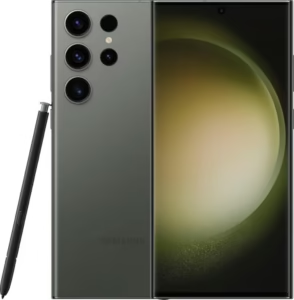
Samsung Galaxy S23 5G, 128GB, Phantom Black

Best Overall

Best For: Buyers who want a compact flagship with a smooth display, flexible cameras, and strong performance.

Best Overall
SAMSUNG Galaxy S23 5G, US Version, 128GB, Phantom Black - Unlocked (Renewed)

SAMSUNG

SAMSUNG Galaxy S23 5G, US Version, 128GB, Phantom Black - Unlocked (Renewed)

The Galaxy S23 is the article's best overall choice because it combines a smooth 120Hz display, strong performance, and versatile cameras. The 128GB renewed model also offers USB-C, wireless charging, and Wireless PowerShare.

6.1-inch Dynamic AMOLED 2X display Snapdragon 8 Gen 2 for Galaxy Triple rear camera
4.1/5.0 (2,000)
$254.50
View on Amazon

The Galaxy S23 earns the top position because it delivers more hardware flexibility in several important areas. The 6.1-inch Dynamic AMOLED 2X display supports an adaptive 48–120Hz refresh rate.

The Snapdragon 8 Gen 2 for Galaxy also gives the S23 strong performance for gaming, multitasking, and demanding apps. Samsung pairs the processor with 8GB of RAM and 128GB of storage in this listing.

Camera versatility is another major advantage. The rear system combines a 50MP main camera, 12MP ultrawide camera, and 10MP telephoto camera with 3x optical zoom.

The S23 also supports 25W wired charging, wireless charging, and Wireless PowerShare. USB-C makes the phone easier to integrate with modern cables and accessories.

However, the Galaxy S23 is not the best choice for everyone. Buyers deeply invested in iMessage, FaceTime, Apple Watch, or other Apple services may prefer the iPhone 14.

For Samsung owners, the S23 also provides features such as Samsung DeX and an ultrasonic fingerprint sensor. The compact 168g design makes the phone comfortable for one-handed use.

Apple iPhone 14, 128GB, Blue

Best For iOS Users

Best For: Buyers who prefer iOS, Apple’s ecosystem, Face ID, and a familiar iPhone experience.

Best for iOS Users
Apple iPhone 14, 128GB, Blue - Unlocked (Renewed)

APPLE

Apple iPhone 14, 128GB, Blue - Unlocked (Renewed)

The iPhone 14 is the article's preferred option for buyers who want iOS, Face ID, and Apple's ecosystem. The 128GB renewed model also delivers strong everyday performance, capable cameras, and a high-quality 6.1-inch OLED display.

6.1-inch Super Retina XDR OLED display A15 Bionic chip Dual 12MP rear cameras
4.0/5.0 (13,300)
$305.00
View on Amazon

The iPhone 14 remains a capable compact phone with a 6.1-inch Super Retina XDR OLED display. The panel provides strong contrast, HDR support, and a 2532-by-1170 resolution.

Unlike the Galaxy S23, the iPhone 14 uses a 60Hz display. Therefore, scrolling and animations are less fluid than on Samsung’s adaptive 120Hz panel.

Apple uses the A15 Bionic chip in the iPhone 14. The processor still handles everyday apps, photography, video, gaming, and multitasking well.

The camera system includes a 12MP main camera and a 12MP ultrawide camera. Apple also adds Photonic Engine processing, Night mode, and sensor-shift optical image stabilization.

The iPhone 14’s biggest advantage is its software and ecosystem experience. Face ID, iOS, AirDrop, FaceTime, and integration with other Apple devices can make the phone more convenient for existing Apple users.

However, the iPhone 14 lacks a dedicated telephoto camera. It also uses a Lightning connector rather than USB-C.

The Amazon listing used here is an unlocked renewed 128GB model. Buyers should check the current condition, battery information, seller details, and return terms before ordering.

Galaxy S23 vs iPhone 14: Specs Compared

The Galaxy S23 has several hardware advantages, while the iPhone 14 remains competitive in processing and software optimization.

Feature Samsung Galaxy S23 Apple iPhone 14
Display 6.1-inch Dynamic AMOLED 2X 6.1-inch Super Retina XDR OLED
Refresh rate 48–120Hz adaptive 60Hz
Resolution 2340 × 1080 2532 × 1170
Processor Snapdragon 8 Gen 2 for Galaxy A15 Bionic
RAM 8GB 6GB
Storage options 128GB, 256GB 128GB, 256GB, 512GB
Rear cameras 50MP + 12MP + 10MP 12MP + 12MP
Telephoto Yes, 3x optical No
Front camera 12MP 12MP TrueDepth
Video Up to 8K recording Up to 4K recording
Battery 3,900mAh Apple does not publish battery capacity
Wired charging Up to 25W Fast charging with compatible adapter
Wireless charging Yes Yes
Reverse wireless charging Yes No
Connector USB-C Lightning
Biometrics Ultrasonic fingerprint + face recognition Face ID
Water resistance IP68 IP68
Weight 168g 172g
Operating system Android iOS

Display: Galaxy S23 Wins on Smoothness

The Galaxy S23 has the better display experience because its panel supports an adaptive refresh rate up to 120Hz.

Both phones use 6.1-inch OLED-based displays. However, the S23 can adjust between 48Hz and 120Hz, while the iPhone 14 uses a 60Hz panel.

That difference is noticeable when scrolling through websites, switching between apps, and navigating menus. The iPhone 14 still provides excellent contrast, HDR support, and color quality.

For smoother everyday use, choose the Galaxy S23. For basic viewing, the iPhone 14 display remains very good.

Performance: Both Phones Are Fast

Both phones provide strong performance, but they approach performance differently. The Galaxy S23 uses Snapdragon 8 Gen 2 for Galaxy, while the iPhone 14 uses Apple’s A15 Bionic.

The S23 benefits from a newer Snapdragon platform than the iPhone 14’s A15 Bionic. It also includes 8GB of RAM, which helps with multitasking and demanding Android apps.

The iPhone 14 still performs extremely well in everyday tasks. Apple’s tight hardware and software integration keeps the phone responsive across common workloads.

For gaming and heavier multitasking, the Galaxy S23 is the more flexible choice. For everyday apps, either phone provides plenty of performance.

Camera: Galaxy S23 Offers More Versatility

The Galaxy S23 has the more versatile rear camera system because it adds a dedicated 3x telephoto camera.

Samsung uses a 50MP main camera, 12MP ultrawide camera, and 10MP telephoto camera. The telephoto lens provides true optical zoom for closer subjects.

The iPhone 14 uses two 12MP rear cameras. The setup includes a main camera and an ultrawide camera, but no dedicated telephoto lens.

Apple still offers strong computational photography. Features such as Photonic Engine, Night mode, and sensor-shift stabilization help the iPhone produce consistent results.

For portraits, distant subjects, and flexible framing, choose the Galaxy S23. For straightforward point-and-shoot photography and video, the iPhone 14 remains a strong option.

For more Samsung camera guidance, see our guide to Galaxy camera settings for night photography.

Video: iPhone 14 Remains a Strong Choice

The iPhone 14 is a strong choice for buyers who prioritize video and Apple’s video-processing experience.

The iPhone 14 supports 4K video recording at up to 60fps. Apple also provides features such as Cinematic mode and Dolby Vision HDR recording.

The Galaxy S23 goes further with up to 8K video recording. Samsung also provides 4K recording across its camera system.

Therefore, the S23 offers more recording flexibility, while the iPhone remains attractive for users who prioritize Apple’s video workflow.

Battery and Charging: Galaxy S23 Offers More Flexibility

The Galaxy S23 offers more charging flexibility with USB-C, wireless charging, and Wireless PowerShare.

Samsung equips the S23 with a 3,900mAh battery and support for up to 25W wired charging. The phone also supports Fast Wireless Charging 2.0 and Wireless PowerShare.

Apple does not publish the iPhone 14’s battery capacity in its official specifications. The phone supports wired fast charging, MagSafe wireless charging, and Qi wireless charging.

For charging speed and accessory flexibility, the Galaxy S23 has the stronger feature set. For Apple users who already own MagSafe accessories, the iPhone 14 remains convenient.

If you own an S23, our guide explains how to fast-charge the Galaxy S23.

You can also learn how to use Wireless PowerShare on the Galaxy S23 series when you need to charge compatible accessories.

Design and Durability: Both Are Compact and Tough

Both phones use premium materials and offer IP68 water and dust resistance. The Galaxy S23 is slightly lighter at 168g, compared with 172g for the iPhone 14.

Samsung uses Gorilla Glass Victus 2 and an Armor Aluminum frame. Apple uses a Ceramic Shield front, glass back, and aluminum design.

Neither phone should be treated as waterproof. IP68 resistance does not make either device immune to liquid damage.

For more detail, see our guide covering whether the Galaxy S23 is waterproof.

Software: Android and iOS Take Different Approaches

The Galaxy S23 is better for customization and multitasking, while the iPhone 14 is better for users already invested in Apple’s ecosystem.

Samsung’s One UI provides flexible home-screen controls, multitasking features, and Samsung DeX. The S23 also includes an in-display fingerprint sensor alongside face recognition.

Apple uses iOS with Face ID and close integration across Apple devices. AirDrop, FaceTime, iMessage, and Apple Watch integration can influence the buying decision.

Therefore, the best software depends heavily on the devices and services you already use.

Galaxy S23 vs iPhone 14: Which Should You Buy?

The Galaxy S23 is the better overall buy for shoppers who want more hardware features in a compact phone.

  • Choose the Galaxy S23 for a 120Hz display.
  • Choose the Galaxy S23 for a dedicated telephoto camera.
  • Choose the Galaxy S23 for USB-C and Wireless PowerShare.
  • Choose the Galaxy S23 for Android customization and DeX.
  • Choose the iPhone 14 if you already use Apple devices.
  • Choose the iPhone 14 if Face ID and iOS are priorities.
  • Choose the iPhone 14 if Apple’s video ecosystem fits your workflow.

Before buying either renewed listing, check the current seller, battery information, device condition, return policy, and included accessories.

Galaxy S23 vs iPhone 14: Other Comparisons Worth Reading

If you are still deciding between Samsung and Apple, these related comparisons can help narrow the choice.

Frequently Asked Questions

Which is better, Galaxy S23 or iPhone 14?

The Galaxy S23 is better overall for most feature-focused buyers. It has a 120Hz display, telephoto camera, USB-C, and reverse wireless charging.

What is the biggest difference between Galaxy S23 and iPhone 14?

The biggest differences are the display refresh rate, camera setup, operating system, and charging connector.

The Galaxy S23 has a 120Hz adaptive display and three rear cameras. The iPhone 14 has a 60Hz display and two rear cameras.

Is Galaxy S23 faster than iPhone 14?

The Galaxy S23 has a newer Snapdragon 8 Gen 2 for Galaxy platform, while the iPhone 14 uses A15 Bionic.

Real-world performance varies by workload. Both phones remain fast for everyday use.

Which has a better camera, Galaxy S23 or iPhone 14?

The Galaxy S23 has the more versatile camera system because it includes a dedicated 3x telephoto camera.

The iPhone 14 can still produce excellent photos and offers strong computational photography.

Which has better battery life, Galaxy S23 or iPhone 14?

Battery life is close and depends heavily on usage. The iPhone 14 can perform efficiently despite its smaller physical battery.

The Galaxy S23 offers a 3,900mAh battery and faster wired charging. Samsung also adds Wireless PowerShare.

Does Galaxy S23 have a 120Hz display?

Yes, the Galaxy S23 has an adaptive 48–120Hz refresh rate.

Does iPhone 14 have a 120Hz display?

No, the standard iPhone 14 uses a 60Hz display.

Does Galaxy S23 have wireless charging?

Yes, the Galaxy S23 supports wireless charging and Wireless PowerShare.

Does iPhone 14 have USB-C?

No, the iPhone 14 uses a Lightning connector.

Does Galaxy S23 have a fingerprint scanner?

Yes, the Galaxy S23 has an ultrasonic in-display fingerprint sensor.

Which phone is better for gaming?

The Galaxy S23 is the better choice for buyers who prioritize Android gaming features and sustained performance.

The Snapdragon 8 Gen 2 for Galaxy provides strong graphics performance, while the 120Hz display makes supported games feel smoother.

Final Thoughts

The Galaxy S23 and iPhone 14 remain capable compact phones, but they target different priorities. The S23 wins this comparison because it combines a smoother display, more versatile cameras, USB-C, and broader charging features.

The iPhone 14 makes more sense for buyers who already live inside Apple’s ecosystem. Ultimately, choose the S23 for hardware flexibility and the iPhone 14 for the iOS experience.

Official specifications: See Samsung’s Galaxy S23 specifications and Apple’s iPhone 14 technical specifications for manufacturer-listed details.

Related Articles

Leave a Reply

Your email address will not be published. Required fields are marked *

As an Amazon Associate, Gizmosum earns from qualifying purchases. If you click certain affiliate links on this site and make a purchase, we may earn a small commission at no extra cost to you. Your support helps us create honest reviews, buying guides, and helpful tech content. Thank you!