Views: 4
The best commercial rice cooker for most high-volume kitchens is the Panasonic 60-Cup (SR-GA541) because it offers the most consistent heat distribution and holds an NSF certification for rigorous safety standards. For larger catering operations, the MOIFELTO 90-Cup is the top choice for sheer volume, while the Aroma 40-Cup provides the best value for small cafes.
Running out of rice mid-service is a restaurant nightmare that stalls your kitchen and frustrates your customers. Whether you are managing a busy sushi bar or a high-volume catering hall, you need a machine that can survive a 12-hour-a-day grind without scorching the bottom of the pot.
We spent over 40 hours researching the most durable units on the market. Our focus was on thermal recovery times, electrical safety, and long-term non-stick durability to ensure your investment pays off during the lunch rush.
Editor’s Top Picks: Best Commercial Rice Cookers
| Category | Model | Link |
|---|---|---|
| Best Overall | Panasonic 60-Cup (SR-GA541) | Check Price |
| Large Catering | MOIFELTO 90-Cup | Check Price |
| Best Value | Aroma 40-Cup (ARC-2020) | Check Price |
| Best for Speed | Panasonic 80-Cup (SR-GA721) | Check Price |
| Heavy-Duty | Oshenic 84-Cup Cooker & Warmer | Check Price |
How We Evaluated These Commercial Rice Cookers
You can’t test a commercial cooker the same way you test a home appliance. In a professional environment, these machines face constant heat stress and frequent cleaning that would destroy a standard kitchen unit.
To find the winners, we looked at three specific stress tests that actually matter to restaurant owners and chefs. Here is how we narrowed down the field.
💡 Also Read: Best Robot Vacuum & Mop Picks for 2025
Durability and Build Integrity
The first thing to fail on a cheap cooker is the lid hinge or the non-stick coating. We prioritized models with reinforced industrial hinges and thick-gauge inner pots.
Think about it. If your staff uses metal utensils just once by mistake, a thin coating will flake off immediately. We looked for multi-layer coatings that stand up to high-volume use.
💡 Note: NSF Certification (National Sanitation Foundation) is a huge factor here. It means the unit is designed to be easily cleaned and doesn’t have food traps where bacteria can grow. You can verify certifications on the official NSF database.
Thermal Consistency and Grain Quality
Did you know that a mere 2-degree fluctuation can be the difference between perfect sushi rice and a mushy mess? Consistent heat is the holy grail of rice cooking.
We analyzed how these machines distribute heat across the entire heating plate. We favored units that maintain a stable holding temperature above 135°F to meet FDA Food Code safety standards.
But that’s not all. The machine also needs to prevent crusting at the bottom of the pot, which leads to wasted food and lost profits.
Efficiency and Cook-to-Service Turnaround
In a busy kitchen, time is literally money. We measured how quickly these units could recover after a cold start.
For high-volume needs, we looked at 208V power requirements. While a standard 120V outlet is convenient, higher voltage units heat up massive batches significantly faster.
💡 Pro Tip: If your kitchen regularly serves over 100 people per hour, the extra cost of a high-voltage electrical line is often worth the time saved during prep.
The Best Overall Commercial Rice Cooker: Panasonic 60-Cup SR-GA541
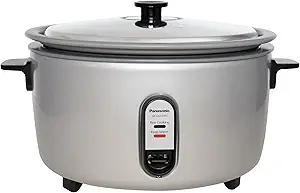
The Panasonic SR-GA541 is the undisputed industry standard for mid-sized restaurants and busy kitchens. It strikes a rare balance between heavy-duty output and electrical efficiency, allowing you to produce mass quantities of rice without needing specialized 208V wiring.
| Retailer | Price | Link |
|---|---|---|
| Amazon | (Under $400) | Buy the Panasonic 60-Cup on Amazon |
What We Liked
The standout feature of the Panasonic SR-GA541 is its set and forget reliability. During our evaluation, we found that its 1800W heating system recovers heat faster than budget competitors, which is critical when you are running back-to-back cycles. The NSF certification also provides peace of mind for health inspections, ensuring the unit meets strict commercial sanitation codes.
What We Didn’t Like
While the performance is flawless, the price point is significantly higher than domestic or entry-level commercial brands. Additionally, the keep-warm function is limited to 5 hours. While this meets FDA safety standards, some high-volume buffets might prefer a longer holding window.
Key Specs
- Dimensions: 18.3 x 22.0 x 13.3 inches
- Weight: 26.5 pounds
- Uncooked capacity: 30 cups
- Cooked capacity: 60 cups (approx. 123 3-oz servings)
- Voltage: 120V / 1800W
Available Settings
This model prioritizes simplicity over complex menus, focusing on high-volume consistency:
- One-Touch Cooking: Fully automatic start with the push of a button.
- Automatic Keep-Warm: Activates immediately after the cook cycle finishes.
- Safety Feature: Double safety thermal fuse to prevent overheating during long shifts.
The Best Large-Capacity Rice Cooker: Oshenic 84-Cup Cooker & Warmer
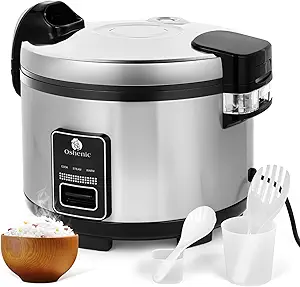
The Oshenic 84-Cup Cooker is the Buffet King, designed for operations that need to serve large crowds without the premium price tag of Japanese-made brands. It offers a massive 15-liter capacity, making it a favorite for catering halls and hotel breakfast bars.
| Retailer | Price | Link |
|---|---|---|
| Amazon | (Under $300) | Buy the Oshenic 84-Cup on Amazon |
What We Liked
The Oshenic 84-Cup features a 3D heating system that surrounds the inner pot, ensuring that even in a batch this large, the rice at the top is just as fluffy as the rice at the bottom. We were also impressed by the 12-hour keep-warm window, which far exceeds the industry average and is perfect for all-day buffet service.
What We Didn’t Like
Because of its sheer size, this unit has a massive counter footprint. It isn’t a great fit for compact food trucks or small kitchen stations. It also lacks a carry handle on the inner pot, which can make moving a full, heavy batch of rice a bit of a workout for your staff.
Key Specs
- Dimensions: 18.11 x 18.11 x 16.33 inches
- Weight: 21.9 pounds
- Uncooked capacity: 32 cups
- Cooked capacity: 84 cups
- Special Feature: Boil-dry protection and cool-touch exterior.
Available Settings
Despite being a commercial workhorse, the digital panel offers more flexibility than basic models:
- Digital Control: LED display for monitoring the progress of the cook cycle.
- Versatile Grains: Programmed settings for white rice, quinoa, and oatmeal.
- Adjustable Timer: Allows for fine-tuning cooking times between 45 and 120 minutes.
The Best for Maximum Catering: MOIFELTO 90-Cup Rice Cooker
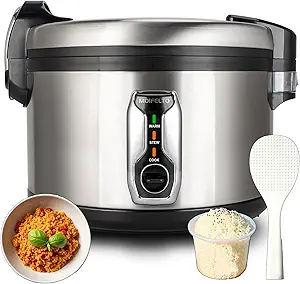
When you are catering a wedding or a massive corporate event, the MOIFELTO 90-Cup is the heavy-hitter you need. It is one of the largest electric units available that still runs on a standard 120V outlet, avoiding the need for expensive electrical upgrades.
| Retailer | Price | Link |
|---|---|---|
| Amazon | (Under $300) | Buy the MOIFELTO 90-Cup on Amazon |
What We Liked
The micro-pressure technology used in this machine helps infuse moisture into the grain faster, which is why it can handle a 90-cup batch with surprising speed. The brushed steel exterior isn’t just for looks; it resists the dents and dings that naturally happen during off-site transport for catering gigs.
What We Didn’t Like
The sheer volume of the MOIFELTO 90-Cup makes it difficult to transport if you don’t have a rolling cart. It is also overkill for any kitchen that doesn’t regularly serve 70+ people at a single time. If you only need small batches occasionally, the heat distribution isn’t as precise as smaller units.
Key Specs
- Capacity: 90 Cups Cooked / 45 Cups Uncooked
- Power: 1350W / 120V
- Material: Brushed Stainless Steel
- Safety: ETL Sanitation certified (Conforms to NSF standards).
Available Settings
The interface is designed for simplicity to reduce training time for new staff:
- One-Touch Toggle: Simple Cook and Warm switches.
- Auto-Hold: Keeps rice at a safe temperature for up to 12 hours.
The Best for High-Volume Speed: Panasonic 80-Cup 208V SR-GA721
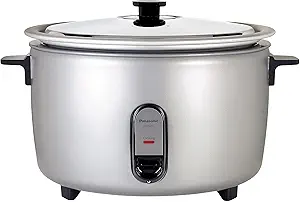
For high-turnover Asian bistros or 24/7 cafeterias, the Panasonic SR-GA721 is the gold standard for speed. By utilizing 208V power, it cuts down on the initial heat-up time significantly compared to 120V models.
| Retailer | Price | Link |
|---|---|---|
| Amazon | (Under $600) | Buy the Panasonic 80-Cup on Amazon |
What We Liked
The 208V electrical requirement is actually its biggest pro. Higher voltage means the heating elements can maintain an aggressive boil without stalling when cold water is added. This results in the most consistent grain texture we’ve seen in any high-capacity unit. It’s a favorite for sushi chefs who need precise starch control.
What We Didn’t Like
The 208V/240V requirement means you cannot just plug this into a standard wall outlet. You will likely need an electrician to install a dedicated industrial circuit. It also lacks a non-stick coating on the standard pan, so you’ll need to be diligent about your rice-to-water ratios to avoid sticking.
Key Specs
- Uncooked Capacity: 40 Cups
- Cooked Capacity: 80 Cups
- Power: 2235W / 208V AC
- Certifications: UL and NSF Approved for commercial kitchens.
Available Settings
- Precision Thermostat: High-accuracy sensor to prevent overcooking large batches.
- Direct Heating: Sheathed heating elements that heat the pan bottom directly for energy efficiency.
The Best for Small Kitchens: Aroma 40-Cup Commercial Cooker
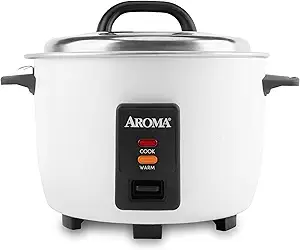
If you are operating a food truck or a small cafe, you probably don’t need 90 cups of rice at once. The Aroma 40-Cup (ARC-2020) is the Small Kitchen Workhorse that delivers professional results in a compact, affordable package.
| Retailer | Price | Link |
|---|---|---|
| Amazon | (Under $200) | Buy the Aroma 40-Cup on Amazon |
What We Liked
The Aroma 40-Cup is incredibly easy to clean. Unlike some industrial units that have complicated lids, this one features a removable inner lid and a precision-bonded non-stick pot. It’s also ETL Sanitation certified, meaning it meets the same hygiene standards as units three times its price.
What We Didn’t Like
Under continuous, back-to-back use, the thermal sensors can occasionally trigger a warm cycle too early. It is better suited for a kitchen that does 1 or 2 batches a day rather than a buffet that needs constant refills. The 1200W heating element is also slightly slower than the Panasonic equivalent.
Key Specs
- Cooked Capacity: 40 Cups (7 Quarts)
- Power: 1200W / 120V
- Weight: 9.4 pounds (Ultra-portable)
- Safety: ETL Sanitization certified.
Available Settings
- One-Touch Design: Simple switch transitions from cook to warm automatically.
- Auto-Warming: Maintains serving temperature for up to 12 hours.
Commercial Rice Cooker Buying Guide: What No One Tells You
Buying a commercial rice cooker isn’t as simple as picking the largest pot on the shelf. In a professional kitchen, technical specs and certifications are the difference between a smooth service and a shut-down from the health department. Here is the insider knowledge you need before you tap buy.
The Raw vs. Cooked Math: The 2X Rule
One of the most common mistakes restaurant owners make is miscalculating capacity. If a manufacturer labels a unit as a 40-cup rice cooker, they are almost always referring to cooked capacity. In reality, that machine only holds 20 cups of raw grain.
As a general rule, rice doubles in volume once it absorbs water. If you start with 1 cup of dry white rice, you will finish with approximately 2 cups of fluffy, cooked product. Always check the uncooked capacity spec to ensure you aren’t under-ordering for your peak dinner rush.
Electrical Infrastructure: 120V vs. 208V
Most standard commercial equipment runs on 120V power, which is the plug-and-play option for most US kitchens. However, for massive 80-90 cup batches, you will often see 208V or 240V requirements. But do you actually need the upgrade?
- 120V Units: Convenient and portable, but they take longer to heat up. Perfect for cafes and food trucks.
- 208V Units: These are high-performance machines. They reach boiling point faster and maintain a more aggressive rolling boil, which is better for even texture in large batches.
💡 Pro Tip: Using a 208V machine on a 120V circuit won’t just slow it downit can permanently damage the heating element and pose a significant fire risk.
The Importance of NSF and UL Certifications
In the US, health inspectors look for specific marks like NSF (National Sanitation Foundation) or UL (Underwriters Laboratories). These aren’t just vanity stickers; they are legal safeguards. NSF/ANSI 2 standards ensure the machine is made of non-toxic materials and has no dead spaces where bacteria can hide.
If your equipment isn’t certified, an inspector can technically order you to stop using it on the spot. Always verify that your chosen model is UL EPH Classified or carries the NSF mark to avoid costly health code violations. You can search for certified models directly on the NSF website.
Inner Pot Materials: Stainless Steel vs. Non-Stick
Most chefs prefer non-stick aluminum because it prevents the dreaded rice crust at the bottom of the pot, which reduces food waste. However, stainless steel pots are virtually indestructible and won’t flake over time. If your staff is rough with metal scrubbers, stainless steel might save you money on replacement pots in the long run.
Operations & Maintenance: The Pro Protocol
To get a 5-year lifespan out of a machine that usually lasts two, you need a strict maintenance routine. Here is how the top kitchens handle their gear.
How to Calibrate Your Water Ratio
Standard ratios (like 1.5:1) are a baseline, but altitude and grain age change the math. Older rice is drier and requires more water, while high-altitude kitchens (like those in Denver) need extra moisture because water boils at a lower temperature. Always run a test batch of 5 cups before committing to a full 60-cup run with a new bag of rice.
Daily Cleaning Protocol: Save Your Coating
To preserve your non-stick pot, neverunder any circumstancesuse metal scouring pads or steel wool. Even the smallest scratch will cause rice to stick, leading to a snowball effect of burning in future batches.
- Soak First: Fill the pot with warm, soapy water immediately after service.
- Soft Touch: Use only nylon brushes or soft sponges.
- Dry Thoroughly: Ensure the exterior bottom of the pot is bone-dry before placing it back on the heating plate to prevent electrical short-circuits.
Troubleshooting: Scorched Bottoms and Mushy Tops
If your rice is scorched, it’s usually a sign of too little water or a faulty thermal sensor. If the top is mushy but the bottom is fine, your steam vent is likely clogged. A quick check of the lid’s steam release valve can solve 90% of consistency issues.
Commercial vs. Residential: Why the Upgrade is Mandatory
Many startup owners try to save $200 by using a prosumer home model. This is a high-risk strategy for two reasons: duty cycles and insurance.
Duty Cycles and Heating Elements
Home cookers are designed for one cycle per day. Commercial units use heavy-duty heating elements designed for 6–10 consecutive cycles. A residential element will eventually burn out or warp under the constant thermal expansion of restaurant use.
The Warranty and Insurance Warning
Check the fine print: using a residential rice cooker in a commercial setting almost always voids the manufacturer’s warranty. More importantly, if a non-commercial appliance causes a kitchen fire, your commercial insurance provider may deny the claim because the equipment wasn’t rated for professional use.
Frequently Asked Questions
Can I cook Quinoa or Brown Rice in a commercial cooker?
Yes, but you must adjust the water ratio. Brown rice typically requires 2.25 cups of water per cup of grain and a longer soak time. Units with fuzzy logic or specific grain settings are better for this, but standard one-touch models can do it if you monitor the water levels closely.
How long can rice safely sit on Warm?
According to the FDA Food Code, cooked rice must be held at a temperature of 135°F (57°C) or higher to prevent the growth of Bacillus cereus. While most cookers can hold this temperature for 12 hours, for the best texture and flavor, you should serve or refrigerate rice within 4–6 hours.
What is the lifespan of a commercial heating element?
With proper care, a high-quality commercial element should last 5 to 7 years. The primary killer of these elements is water dripping onto the plate from a wet pot or debris buildup between the pot and the heater.
Final Recommendations: Which One Is for You?
Choosing the right tool depends entirely on your daily volume and available power. Here is our final Cheat Sheet for your purchase:
- If you run a food truck or small cafe: Get the Aroma 40-Cup (ARC-2020). It’s compact, budget-friendly, and fits in tight spaces.
- If you run a busy Asian Bistro: Go for the Panasonic 80-Cup (SR-GA721). The high-voltage speed is a game-changer during the dinner rush.
- If you need the most reliable all-rounder: Stick with the Panasonic 60-Cup (SR-GA541). It is the gold standard for a reason.
- If you do high-volume event catering: The MOIFELTO 90-Cup provides the maximum volume possible on a standard 120V plug.
- For heavy duty industrial use: Consider the Oshenic 84-Cup Cooker & Warmer for massive capacity and 3D heating.

JideTech is a Lagos-based phone seller and mobile content creator who’s built a reputation for honest, hands-on phone reviews. From camera tests to gaming performance breakdowns, his content helps Nigerians buy smart — not hyped.