The 2026 financial landscape in Nigeria has been redefined by the meteoric rise of digital banking. OPay has transitioned from a simple payment app into an indispensable household name for millions of daily users.
This success has sparked a major question: who owns OPay? As users trust the platform with billions in transactions, understanding the faces and the corporate machinery behind the “Super App” has become a national priority.
Currently, OPay operates as a leading Mobile Money Operator (MMO). It is fully licensed and strictly regulated by the Central Bank of Nigeria (CBN), ensuring that all deposits are protected by the NDIC.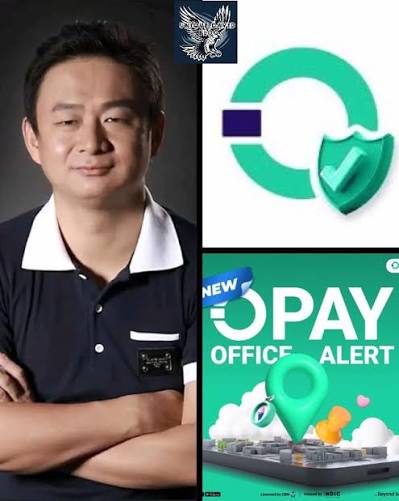
Who is the Owner of OPay?
To start with, the primary owner and visionary behind OPay is Yahui Zhou, a seasoned Chinese billionaire. He founded the company to bridge the gap in financial inclusion by leveraging high-speed mobile technology across the African continent.
Yahui Zhou: The Visionary Founder
Yahui Zhou is a global tech entrepreneur known for chairing Kunlun Tech. His reputation as a “unicorn maker” stems from his ability to scale digital platforms rapidly in emerging and underserved global markets.
His strategic shift from global browsers to African fintech was driven by a gap in banking. He recognized that Nigeria’s mobile-first population needed a more agile solution than traditional brick-and-mortar banks could offer.
The Role of Opera Limited
Initially. OPay was originally birthed within the Opera Limited ecosystem. By leveraging the massive reach of the Opera Mini browser, the startup gained immediate access to millions of data-conscious users looking for integrated services.
Is OPay a Chinese Company?
While OPay relies on foreign capital, its operations are deeply rooted in Nigerian soil. The company utilizes a hybrid model where global investment supports a workforce of thousands of local Nigerian professionals and agents.
that is why the company has successfully transitioned from a Chinese-incubated startup to a Nigerian-led institution. This evolution ensures the platform remains culturally relevant while maintaining world-class technological standards and security protocols.
The Leadership: Who is the CEO of OPay Nigeria in 2026?
As of 2026, the leadership of OPay Nigeria is headed by Dauda Gotring. His appointment marked a significant era of regulatory alignment and stability for the fintech giant following its rapid expansion years.
Dauda Gotring: The Regulatory Veteran
Dauda Gotring is a former Director at the Central Bank of Nigeria (CBN). His deep understanding of Nigerian financial policy has been instrumental in navigating the complex regulatory environment of digital banking.
OPay specifically hired a former CBN Director to serve as MD/CEO to bolster institutional trust. This move signaled to both the government and the public that OPay prioritizes legal compliance and financial safety.
The impact of his leadership is evident in OPay’s high trust and compliance ratings. Under his watch, the company has integrated advanced KYC (Know Your Customer) systems that meet international anti-money laundering standards.
The Legacy of Olu Akanmu
The company also honors the legacy of Olu Akanmu, the former President and Co-CEO. He was the architect of OPay’s initial massive growth, helping the brand reach over 30 million registered users before his departure.
The Nigerian Executive Team now consists of local experts across marketing, technology, and operations. This homegrown talent is the engine that is why OPay understands the unique financial needs of the Nigerian marketplace.
The Corporate History: From Paycom to OPay
The OPay we know today didn’t start from scratch; it was built on a pre-existing foundation. Understanding what OPay was before 2018 reveals its strategic entry into the competitive Nigerian financial services sector.
The Acquisition of Paycom Nigeria Limited
In 2017, Opera orchestrated the acquisition of Paycom Nigeria Limited. Paycom was a mobile money platform originally founded by Telnet, and it held a dormant but highly valuable operational license at the time.
This license was the “Golden Ticket” for OPay’s entry into Nigeria. that is why the company could bypass years of red tape and launch its financial services almost immediately under a regulated framework.
Timeline of Evolution
The journey from a simple payment app to a “Digital Bank“ was rapid. OPay briefly expanded into a “Super App” with ORide and OFood before pivoting back to its core mission of financial services.
Ownership Structure and Major Shareholders
The ownership of OPay is a blend of individual vision and institutional power. It is backed by some of the world’s most aggressive and successful venture capital firms, giving it a massive war chest.
Series C Funding and Valuation
The 2021 Series C Funding round raised a staggering $400 million. This investment was led by the SoftBank Vision Fund 2, catapulting the company’s valuation to over $2 billion in record time.
| Major Shareholder | Role/Type |
|---|---|
| SoftBank Vision Fund 2 | Lead Institutional Investor |
| Sequoia Capital China | Key Venture Backer |
| Redpoint China | Strategic Financial Partner |
| Source Code Capital | Early Stage Investor |
In 2026, OPay’s valuation remains over $2 billion. This status makes it one of the most successful fintech unicorns in history, proving the scalability of Yahui Zhou’s original vision for the African market.
Safety is the primary concern for any digital banking user in 2026. As OPay scales to serve over 50 million Nigerians, the company has implemented rigorous regulatory safeguards and advanced security features to protect customer funds and data.
Is OPay Safe? Regulation and Security Measures
OPay is widely considered safe because it operates under the strict oversight of the Central Bank of Nigeria (CBN). that is why the platform must adhere to the same financial stability standards as traditional commercial banks.
A key layer of protection is the NDIC Integration. You can perform a verification of license on the NDIC website, confirming that user deposits are insured up to N5,000,000 per subscriber.
Advanced Security Features
The NightGuard feature is a specialized security tool that allows users to restrict account access during late-night hours. This prevents unauthorized transfers if a phone is stolen or accessed while the owner is asleep.
The Large Transaction Shield provides an extra defense for high-value transfers. When a user exceeds their preset limit (typically between N100,000 and N300,000), the app triggers facial verification and OTP prompts before finalizing the payment.
The 2024 KYC Audit and Onboarding
In early 2024, the CBN mandated a temporary pause on new user onboarding for several fintechs. OPay successfully cleared this KYC Audit by enforcing stricter Bank Verification Number (BVN) and National Identity Number (NIN) linkages.
By June 2024, OPay received full approval to resume operations. This regulatory “clean bill of health” proved that OPay’s systems are robust enough to combat fraud and money laundering effectively in the Nigerian market.
OPay vs. The Competition: Ownership & Market Share
The fintech space is a battle for market share and user trust. OPay maintains a dominant position by leveraging a unique blend of massive foreign investment and a deeply localized operational strategy across all 36 states.
OPay vs. PalmPay: The Fintech Giants
Both OPay and PalmPay are often labeled as “Chinese-backed” giants. While OPay was birthed via the Opera ecosystem, PalmPay received significant backing from Transsion Holdings (the makers of TECNO and Infinix phones).
The primary difference lies in their ecosystem integration. OPay has evolved into a comprehensive digital bank with high-yield savings, while PalmPay focuses heavily on rewards, cashback, and integration within the Transsion mobile hardware suite.
OPay vs. Moniepoint and Kuda
The distinction between ownership models is clear when comparing OPay to Moniepoint or Kuda. Moniepoint is a homegrown success focusing on SME business banking, while Kuda launched as a digital-only bank for the “smartphone generation.”
that is why OPay’s Series C funding from SoftBank gives it a scale advantage. Unlike Kuda’s retail-first approach, OPay’s massive 1 million+ agent network allows it to serve the unbanked population in rural areas effectively.
Frequently Asked Questions (FAQs)
Is OPay owned by the Nigerian government?
No, OPay is a privately owned company. It is a commercial entity licensed by the CBN but is not a state-owned enterprise. The company is funded by global venture capital firms.
Does Opera still own OPay?
Opera Limited remains a minority shareholder. As of 2026 filings, Opera holds approximately a 9.4% stake in the company. This investment is currently valued at over $250 million on their balance sheet.
Who is the owner of OPay Ride?
The ride-hailing service, ORide, was a subsidiary of OPay. However, the company shut down its transport operations in 2020 to focus entirely on financial services. There is no current owner of OPay Ride.
Where is the OPay head office located?
The OPay Nigeria corporate headquarters is located at Alexander House, Otunba Jobi Fele Way, Ikeja, Lagos. This central hub manages all operations for their 1 million+ active agents across the country.
Conclusion: The Future of OPay in Africa
The 2031 vision for OPay is ambitious: serving 1 billion users across emerging markets. This goal signifies a transition from being just a Nigerian success story to becoming a global financial infrastructure powerhouse.
Ultimately, OPay is a global powerhouse with a Nigerian heart. While its funding is international, its impact on financial inclusion within Nigeria remains unmatched. that is why it remains the benchmark for African fintech success.