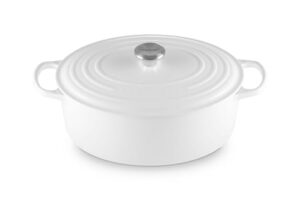
Wondering what size Dutch oven for sourdough will give your loaf enough room to rise? For most single sourdough loaves, a 5- to 6-quart Dutch oven is the best starting range. Smaller loaves can work well in a 4- or 5-quart pot, while larger loaves may need 6 to 8 quarts.
The right choice depends on more than quart capacity. Dough weight, loaf shape, interior diameter, and pot depth all affect how comfortably the dough fits during baking.
For most home bakers, a 5-quart Dutch oven offers a useful balance of size and versatility. If you regularly bake larger loaves, a 6-quart model gives the dough more room to expand.
If you are considering a larger vessel, our guide to an 8-quart Dutch oven explains when extra capacity makes sense.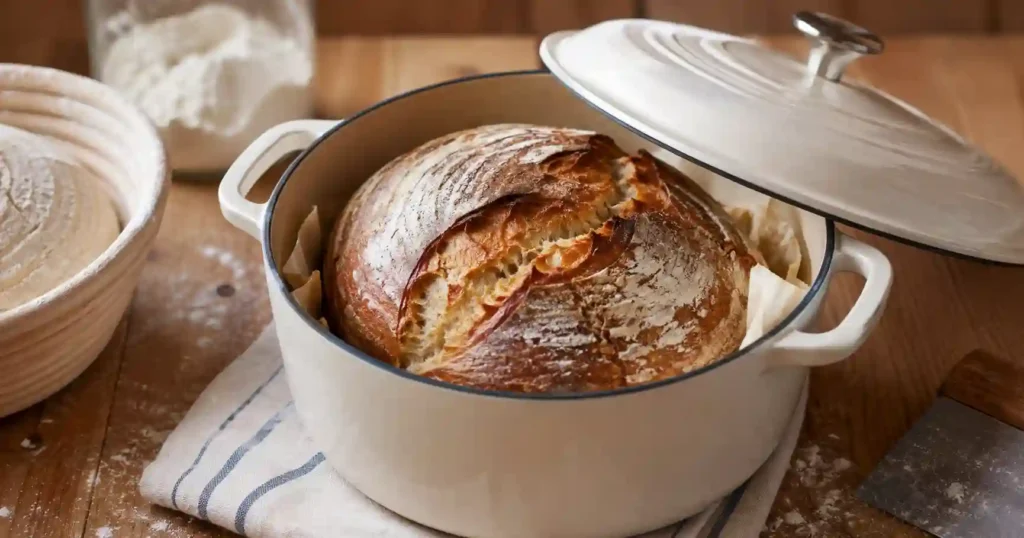
What Size Dutch Oven for Sourdough Is Best?
A 5- to 6-quart Dutch oven works well for many standard single-loaf sourdough recipes.
This range provides enough space for oven spring without making the pot unnecessarily large. A 5-quart model also works well for everyday cooking beyond bread.
However, quart capacity does not tell the whole story. Two pots with the same capacity can have different interior diameters and depths.
| Dutch Oven Size | Best Use | Sourdough Suitability |
|---|---|---|
| 4 quart | Small loaves | Good for smaller boules |
| 5 quart | Typical home baking | Excellent for many single loaves |
| 5.5 quart | Versatile baking | Excellent for regular sourdough |
| 6 quart | Larger loaves | Excellent for more dough |
| 7 quart | Large loaves | Good for larger dough portions |
| 8 quart | Very large baking | Useful for oversized loaves |
These sizes are practical guidelines rather than strict rules. Always compare the pot’s interior dimensions with the expected size and shape of the dough.
Is a 5-Quart Dutch Oven Big Enough for Sourdough?
Yes, a 5-quart Dutch oven is large enough for many standard sourdough loaves.
A 5-quart pot provides a good balance between baking space and manageable weight. The capacity also works well for stews, roasts, and other everyday meals.
King Arthur Baking uses a 4- to 5-quart Dutch oven for one of its bread recipes. That example shows how a smaller covered pot can work when the dough size matches the vessel.
King Arthur Baking’s bread recipe provides a useful real-world example of Dutch oven sizing for bread.
When Should You Choose a 5-Quart Model?
A 5-quart Dutch oven makes sense when you usually bake one moderate-size loaf at a time.
- Standard boules: The round cooking surface suits round dough.
- Small kitchens: The compact size requires less storage space.
- Everyday cooking: Five quarts works for bread and many other meals.
- Beginner baking: The capacity provides useful room for oven spring.
- Budget setups: One versatile pot can handle several cooking tasks.
Is a 6-Quart Dutch Oven Good for Sourdough?
Yes, a 6-quart Dutch oven is an excellent choice for larger sourdough loaves.
The additional space gives larger dough portions more room to expand. A 6-quart model also provides flexibility when recipes vary in dough weight.
For someone who wants one vessel for sourdough and larger meals, 6 quarts can offer more versatility than a smaller pot.
Can You Bake Sourdough in a 4-Quart Dutch Oven?
Yes, a 4-quart Dutch oven can bake sourdough successfully when the loaf fits comfortably inside.
A smaller vessel works particularly well for compact loaves. However, a large dough ball can become crowded as the bread expands during oven spring.
For larger dough portions, moving up to 5 or 6 quarts provides more usable space.
When Is a 4-Quart Dutch Oven a Better Choice?
A 4-quart vessel works best when you regularly make smaller loaves or need a compact baking setup.
- Small sourdough loaves
- Compact boules
- Smaller dough batches
- Limited kitchen storage
- Occasional bread baking
What Size Dutch Oven for a 500g Sourdough Loaf?
A 4- to 5-quart Dutch oven can suit many loaves made with around 500g of flour, depending on the complete dough recipe.
Flour weight does not equal total dough weight. Water, starter, and salt add to the final dough mass.
Therefore, flour weight alone should not determine the cookware size. Consider the complete dough weight and expected loaf dimensions.
What Size Dutch Oven for a 750g Sourdough Loaf?
A 5- to 6-quart Dutch oven is a practical range for many 750g-class sourdough loaves.
The ideal size still depends on the loaf shape. A wide boule needs a different footprint from a long bâtard.
When choosing between two sizes, compare the proofed dough’s expected width with the cooking surface.
What Size Dutch Oven for a 1kg Sourdough Loaf?
A 6- to 7-quart Dutch oven generally provides comfortable space for a large 1kg-class loaf.
The larger vessel gives the dough additional room during oven spring. However, choosing the biggest available pot is not always necessary.
Check the interior width, depth, and loaf shape before making the final choice.
Can a Dutch Oven Be Too Big for Sourdough?
Yes, a Dutch oven can be unnecessarily large for a small sourdough loaf.
An oversized vessel adds weight and can give a small dough ball excessive room to spread. A smaller pot may provide a better fit.
Large cookware still works for bread when the loaf matches the available space. The goal is adequate clearance rather than maximum capacity.
💡 Pro Tip: Choose the Dutch oven based on the loaf’s footprint, not only the quart capacity printed on the package.
Does Dutch Oven Shape Matter for Sourdough?
Yes, the shape matters because the cooking vessel should match the shape of the loaf.
A round Dutch oven naturally suits a boule. An oval Dutch oven can provide better length for an elongated bâtard.
| Dutch Oven Shape | Suitable Bread Shape | Main Advantage |
|---|---|---|
| Round | Boule | Matches a round loaf |
| Oval | Bâtard | Provides more length |
Is a Round or Oval Dutch Oven Better for Sourdough?
Neither shape is universally better; the right option depends on the loaf shape you bake most often.
Choose round cookware for regular boule baking. An oval vessel makes more sense when elongated loaves are common.
How Does Dutch Oven Size Affect Oven Spring?
Dutch oven size can affect how much room the dough has to expand during oven spring.
Oven spring occurs when dough rapidly expands during the early stage of baking. A pot that is too narrow can restrict that expansion.
Meanwhile, excessive width can allow a small dough ball to spread instead of rising upward.
For that reason, the best Dutch oven for bread provides enough headroom and side clearance without creating excessive empty space.
Why Do You Bake Sourdough in a Dutch Oven?
A Dutch oven helps sourdough develop a strong crust by trapping moisture released from the dough.
The covered environment creates a humid space around the loaf during the early baking stage. That moisture helps delay crust setting while the bread expands.
Once the lid comes off, the crust can brown and become crisp.
Does a Dutch Oven Need to Be Preheated for Sourdough?
Not every sourdough recipe requires the same preheating method.
Some recipes call for a thoroughly preheated Dutch oven. Other methods start the dough in a cold vessel and heat everything together.
Therefore, follow the recipe’s instructions and the cookware manufacturer’s guidance rather than assuming one method works for every pot.
How Long Should You Preheat a Dutch Oven for Sourdough?
A common preheating period is around 30 to 45 minutes, but the correct method depends on the recipe and cookware.
For example, some King Arthur Baking recipes call for a preheated Dutch oven at high baking temperatures. Other recipes use a cold-oven approach.
Never assume that every Dutch oven can safely handle empty preheating. Check the manufacturer’s instructions first.
Can You Use an Enameled Dutch Oven for Sourdough?
Yes, an enameled Dutch oven can work well for sourdough when its manufacturer permits the required baking temperature.
Enameled cast iron combines cast iron’s heat retention with an enamel cooking surface. However, temperature limits can vary between models.
Always check the manufacturer’s instructions before using an enameled vessel at high heat.
Is Cast Iron Better Than Enameled Cast Iron for Sourdough?
Neither material is automatically better for every baker.
| Feature | Bare Cast Iron | Enameled Cast Iron |
|---|---|---|
| Heat retention | Excellent | Excellent |
| Seasoning | Requires seasoning care | Does not require traditional seasoning |
| High-heat use | Often very capable | Depends on manufacturer limits |
| Cleaning | Requires more care | Generally easier |
| Versatility | Excellent | Excellent |
For sourdough baking, both materials can work well. Size, shape, lid fit, and temperature rating matter more than material alone.
What Features Make a Good Dutch Oven for Sourdough?
A good bread-baking Dutch oven combines suitable dimensions, strong heat retention, a well-fitting lid, and a safe oven rating.
How Important Is Dutch Oven Capacity?
Capacity determines how much cooking space the vessel provides. For many home bakers, 5 to 6 quarts offers a useful balance.
Why Does Interior Diameter Matter?
Interior diameter determines how comfortably a round loaf fits. This measurement can matter more than quart capacity alone.
Why Does Pot Depth Matter?
Pot depth gives the dough room to rise. A shallow vessel can create clearance problems during oven spring.
Why Is Lid Fit Important?
A close-fitting lid helps retain moisture during covered baking. The enclosed environment supports the steam-rich conditions that help crust development.
Why Should You Check the Oven Rating?
The oven rating confirms whether the cookware can handle the required baking temperature. Check the complete manufacturer’s instructions before high-temperature baking.
Do Dutch Oven Handles Matter?
Sturdy handles make a heavy hot Dutch oven easier to move safely. Cast iron becomes extremely hot during baking, so heat protection remains essential.
How We Choose the Right Dutch Oven Size
The best size recommendation starts with the loaf rather than the cookware brand.
- Estimate the finished dough weight: Include water, starter, salt, and other ingredients.
- Identify the loaf shape: Boules and bâtards need different interior footprints.
- Check the interior dimensions: Do not rely only on the advertised quart capacity.
- Allow room for oven spring: The dough should not hit the lid as it expands.
- Check the oven rating: Confirm that the vessel supports the recipe’s temperature.
- Consider versatility: A 5- or 6-quart pot can handle many meals beyond bread.
What Are the Most Common Dutch Oven Sourdough Mistakes?
The most common mistakes involve choosing the wrong size, ignoring interior dimensions, and using unsuitable heating instructions.
| Mistake | Why It Causes Problems | Better Approach |
|---|---|---|
| Choosing only by quart capacity | Interior dimensions vary | Check diameter and depth |
| Using a tiny pot for a large loaf | Expansion becomes restricted | Move up one size |
| Using an oversized pot for a small loaf | The dough has excessive room to spread | Match capacity to loaf size |
| Ignoring loaf shape | The dough may not fit the footprint | Match round or oval cookware to the loaf |
| Assuming every pot can be preheated empty | Temperature limits differ | Follow manufacturer instructions |
| Judging size by flour weight alone | Total dough weight is higher | Consider the complete dough formula |
Can You Bake Sourdough Without a Dutch Oven?
Yes, you can bake sourdough without a Dutch oven.
A Dutch oven remains popular because it creates a contained, humid baking environment without requiring a separate steam system.
Other covered baking vessels can also work when they support the required temperature. Some bakers instead use baking stones, baking steels, or other setups with added steam.
What Size Dutch Oven Should a Beginner Buy?
A 5-quart Dutch oven is a practical starting point for many beginners baking one sourdough loaf at a time.
The size provides enough room for many standard loaves without becoming unnecessarily large. It also remains useful for everyday cooking.
If your recipes regularly produce larger loaves, a 6-quart model provides more flexibility.
Is a 7-Quart Dutch Oven Too Big for Sourdough?
A 7-quart Dutch oven is not too large for every sourdough baker, but it can be excessive for small loaves.
The larger capacity becomes more useful for large dough portions and people who want extra room for other cooking tasks.
For a standard single boule, however, a 5- or 6-quart vessel will usually be easier to handle.
When Does an 8-Quart Dutch Oven Make Sense?
An 8-quart Dutch oven makes the most sense when you regularly cook large batches or bake unusually large loaves.
For one ordinary sourdough boule, the extra capacity is usually unnecessary. The larger vessel also adds considerable weight.
However, an 8-quart model can be valuable when one pot needs to handle oversized bread and large family meals.
Our 8-quart Dutch oven guide covers the larger-capacity option in more detail.
What Size Dutch Oven for Sourdough Should You Choose?
For most home bakers, 5 to 6 quarts is the best overall range for a single sourdough loaf.
Choose 4 quarts for smaller loaves, 5 quarts for a versatile everyday option, and 6 to 7 quarts for larger loaves. Consider 8 quarts when you need extra capacity for oversized baking or large-batch cooking.
| Loaf Situation | Recommended Range | Why |
|---|---|---|
| Small loaf | 4 quart | Compact footprint suits smaller dough |
| Typical single loaf | 5 quart | Good balance of size and versatility |
| Larger single loaf | 5.5–6 quart | More room for expansion |
| Large loaf | 6–7 quart | More capacity and headroom |
| Oversized loaf or large batch | 7–8 quart | Extra interior space |
Frequently Asked Questions About Dutch Oven Size for Sourdough
What size Dutch oven for sourdough is best?
A 5- to 6-quart Dutch oven is a strong general choice for many single sourdough loaves.
What size Dutch oven do I need for sourdough bread?
Most home bakers can start with a 5- or 6-quart vessel, then adjust the size for unusually small or large loaves.
Is a 5 quart Dutch oven big enough for sourdough?
Yes, a 5-quart model is large enough for many standard sourdough loaves.
Is a 6 quart Dutch oven good for sourdough?
Yes, a 6-quart vessel gives larger loaves more room while remaining versatile for everyday cooking.
Can you bake sourdough in a 4 quart Dutch oven?
Yes, a 4-quart Dutch oven can work well for smaller sourdough loaves.
What size Dutch oven is best for a 1kg loaf?
A 6- to 7-quart Dutch oven generally gives a large 1kg-class loaf comfortable room to expand.
Can a Dutch oven be too big for sourdough?
Yes, an oversized vessel can give a small loaf excessive room to spread and adds unnecessary weight.
What shape Dutch oven is best for sourdough?
A round Dutch oven suits boules, while an oval model works especially well for bâtards.
Do you need a Dutch oven to bake sourdough?
No, sourdough can also be baked with other suitable baking vessels and steam methods.
How do I choose a Dutch oven for sourdough?
Match the vessel’s capacity, interior dimensions, shape, depth, lid, and temperature rating to the bread recipe.
How much dough can a 5 quart Dutch oven hold?
A 5-quart pot can handle many standard single-loaf recipes, but the practical limit depends on the dough shape and pot dimensions.
How much dough can a 6 quart Dutch oven hold?
A 6-quart vessel generally provides more room than a 5-quart model and suits larger single loaves.
Can I use an enameled Dutch oven for sourdough?
Yes, provided the specific cookware supports the recipe’s baking temperature and heating method.
How does Dutch oven size affect oven spring?
The vessel needs enough side clearance and headroom for the dough to expand without hitting the walls or lid.
Final Thoughts
The best Dutch oven size depends on the loaf rather than a universal capacity rule. For most home sourdough baking, 5 to 6 quarts is the safest starting range.
- 4 quart: Best for smaller sourdough loaves and compact kitchens.
- 5 quart: Best all-around size for many single-loaf bakers.
- 5.5 quart: A versatile middle-ground option.
- 6 quart: Better for larger loaves and flexible everyday cooking.
- 7 quart: Useful for large dough portions and bigger bread.
- 8 quart: Best reserved for oversized loaves and large-batch cooking.
Most importantly, check the interior dimensions before buying. A well-fitting pot with the right shape and safe temperature rating will serve sourdough better than a larger pot chosen by quart capacity alone.
Related Articles