Ice fishing has undergone a massive transformation. Gone are the days of stationary waiting; 2026 is the year of precision mobility. By combining elite lithium-powered gear with Live Sonar technology, modern anglers are now hunting fish with surgical accuracy rather than just “fishing” for them.
 The Evolution of Hard Water Angling
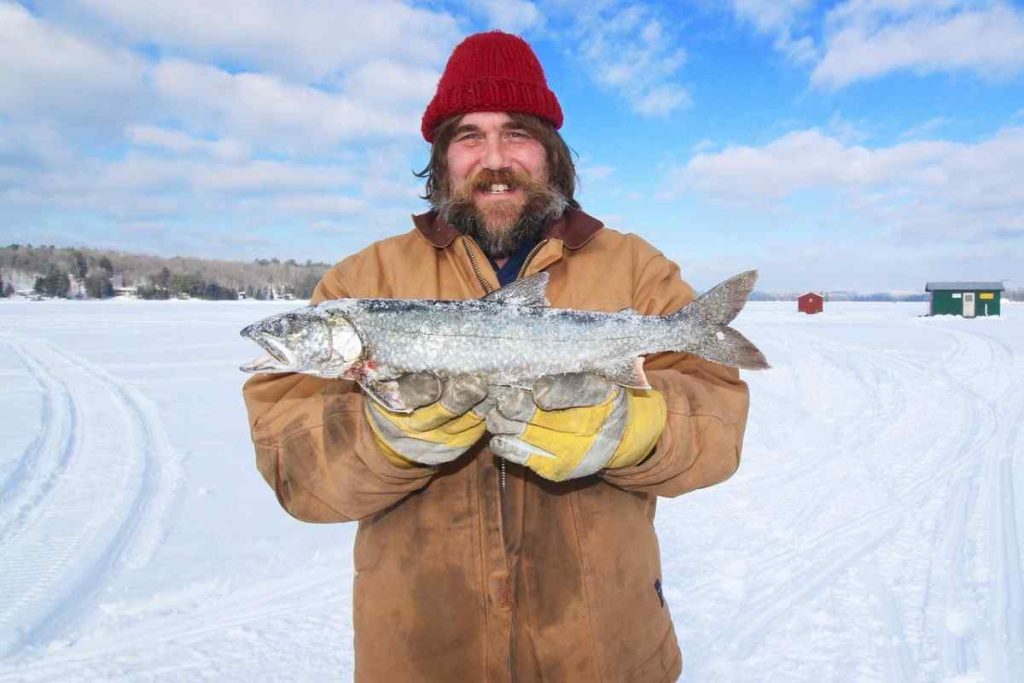 The Evolution of Hard Water Angling
For decades, the standard image of ice fishing involved a heavy wooden sled and a five-gallon bucket. You would sit, freeze, and hope a school of fish wandered beneath your hole. That is why the current shift toward high-tech mobile angling is so revolutionary.
Today, we have traded heavy gas engines for brushless electric motors and paper maps for real-time satellite intelligence. This transition isn’t just about comfort—it is about efficiency. Anglers are now “hole hopping” with lightweight setups, covering miles of ice in hours to stay on active schools.
Moreover, 2026 marks the peak of the “Precision Era.” With the integration of AI-driven sonar and high-capacity lithium batteries, the barrier between the angler and the underwater world has effectively vanished. If you want to remain competitive on the hard water this season, understanding this evolution is your first step.
What is Ice Fishing?
Ice fishing is the practice of catching fish through an opening in the ice on a frozen body of water. This unique winter sport requires specialized equipment—such as augers to drill holes and short, sensitive rods—to target species like walleye, perch, and pike that remain active in sub-zero temperatures.
While the core concept remains simple, the execution varies from basic “tip-up” sets to advanced electronic scouting. Beginners should focus on mastering ice safety and basic jigging techniques before investing in high-end electronics. In short, it is a game of patience, preparation, and thermal management.
How Much Ice is Safe for Ice Fishing?
Understanding ice thickness is the difference between a successful trip and a life-threatening emergency. Ice is rarely uniform across a lake; consequently, you must check the depth every 150 feet. Factors like underwater springs, wind, and snow cover can significantly weaken the structure.
As a rule of thumb, clear “blue” ice is the strongest. White “snow ice” is only half as strong, meaning you need double the thickness to achieve the same safety rating. That is why carrying a spud bar to test the ice in front of you is a non-negotiable habit for every serious angler.
The 2026 Ice Thickness Safety Chart
This chart follows the latest safety standards from the Minnesota DNR and the National Weather Service. Use these as minimum requirements for new, clear ice:
| Ice Thickness | Safe Activity / Load |
|---|---|
| 2″ or Less | STAY OFF – Extremely dangerous. |
| 4″ | Ice fishing on foot (single person). |
| 5″ – 7″ | Snowmobile or small ATV. |
| 8″ – 12″ | Small car or compact SUV. |
| 12″ – 15″ | Medium-sized pickup truck. |
Essential Safety Gear Checklist
Safety gear isn’t just “nice to have”—it is your insurance policy against the unpredictable nature of frozen water. Bear in mind that most ice-related accidents occur during the early and late seasons. For this reason, your safety kit should be the first thing you pack.
- Ice Picks: These should be worn around your neck at all times. If you fall through, these allow you to grip the slippery edge of the ice to pull yourself out.
- Spud Bar: A heavy metal rod used to strike the ice. If the bar breaks((( through in one hit, the ice is unsafe to walk on.
- Floatation Suits: Modern suits from Striker or SIMMS provide both extreme warmth and buoyancy. These are 2026 essentials because they buy you the most precious resource in an emergency: time.
- Throw Ropes & Whistles: A 50-foot throw rope is vital for rescuing a partner, while a whistle helps rescuers locate you in whiteout conditions.
Ice Fishing Augers: Manual vs. Electric vs. Gas
The battle for ice supremacy used to be won by loud, heavy gas augers. However, the landscape has shifted. While gas models still offer raw power for 30-inch thick ice, they come with the burden of weight, fumes, and maintenance.
On the other hand, manual augers remain the choice for early-season purists or those fishing remote backcountry lakes. They are the ultimate “zero-failure” backup. But make no mistake, the industry is moving in one clear direction: Lithium-ion power.
The Rise of Lithium-Ion Power
In 2026, Lithium-ion electric augers are the gold standard. These units provide massive torque without the back-breaking weight of a gas engine. What is more, they start instantly with a button press, even in -20°F temperatures. Modern batteries can now drill over 100 holes through 16 inches of ice on a single charge.
Why the Ice Fishing Auger is Your Most Important Investment
The auger is the “key” to the lake. Without a reliable way to cut through the frozen surface, your fishing trip ends before it begins. Furthermore, a fast-cutting auger enables the “mobile” lifestyle. If you can’t drill a hole in under 15 seconds, you are less likely to move when the bite slows down. That is why investing in a high-quality electric model is the single best move for your 2026 season.
Rods, Reels, and Line Selection
Precision is the name of the game when the water is near freezing. Because fish become lethargic in winter, their bites are often nothing more than a slight “upward” movement of your line. As a result, your rod and reel combo must be specifically tuned for cold-weather sensitivity.
Choosing Ice Fishing Rods
When selecting ice fishing rods, you must match the “action” to your target. For panfish like crappie, an ultra-light rod with a “noodle” tip is essential to see those faint bites. Conversely, if you are chasing trophy Walleye or Northern Pike, you need a medium-heavy rod with enough backbone to set a large hook into a bony jaw.
Inline Reels vs. Spinning Reels
The great debate of 2026 centers on line management. Inline reels have exploded in popularity because they allow the line to drop straight off the spool, which eliminates line twist. This is critical for light jigs. Meanwhile, traditional spinning reels offer superior drag systems for fighting larger, harder-pulling fish in deep water.
Ice Fishing Shelters and Shanties
While “braving the elements” sounds heroic, staying warm is a practical necessity for long days. Thankfully, modern shelters have evolved from heavy wooden sheds into high-tech, insulated habitats.
Portable Hubs for the “Hole Hopper”
For the angler who refuses to stay in one spot, portable hub shelters are the answer. These “pop-up” style tents are lightweight and can be set up in under 60 seconds. Additionally, modern insulated hubs retain heat so well that a small propane heater can keep the interior at 60°F even during a blizzard.
Ice Castle Fish Houses
If you prefer the “luxury” side of the sport, Ice Castle Fish Houses represent the pinnacle of comfort. These wheelhouses can be towed onto the ice and lowered to the surface, offering amenities like kitchens, beds, and satellite TV. They are essentially RV-style sleepers built specifically for the frozen tundra.
The Fish Finder Revolution
If you aren’t using electronics in 2026, you are fishing blind. In fact, the speed at which you can locate a school and determine their depth is what separates the pros from the amateurs.
Traditional Flashers vs. Digital Sonar
Traditional flashers (like the Vexilar series) are prized for their zero-latency response. You see your jig move in real-time. Alternatively, new Digital Sonar units provide a “scrolling” history, making it easier to track fish that are hovering just inches off the bottom.
Live Sonar (Forward-Facing Sonar)
Live Sonar (such as Garmin LiveScope) is the most disruptive tech in ice fishing history. It allows you to see 100 feet in any direction before you even drill a hole. You can watch a fish approach your bait, see how it reacts to your jigging, and even identify the species by its silhouette. Simply put, it is an underwater ultrasound that has changed the game forever.
Underwater Cameras: When to Use Them
While sonar tells you *something* is there, an underwater camera tells you *what* it is. In clear water lakes, cameras are unbeatable for confirming if that “blob” on your sonar is a trophy walleye or a school of rough fish. Moreover, they are the best tool for identifying bottom structure like weed edges or transitions from sand to rock.
Species-Specific Tactics & Techniques
Every species reacts differently to the winter environment. Consequently, a “one-size-fits-all” approach will lead to an empty bucket.
Ice Fishing for Walleye at Night
Walleyes are light-sensitive predators. That is why the “golden hour” at sunset and the deep hours of the night are prime time. Use glow-in-the-dark lures and aggressive “ripping” motions to call them in from a distance. Pro tip: Set your lures 12-18 inches off the bottom where these “marble-eyes” are hunting.
Panfish Strategies (Crappie, Bluegill, Perch)
For panfish, finesse is everything. In 2026, tungsten jigs are the standard because they are smaller but heavier than lead, allowing them to punch through the slush and sink quickly. Use a “quiver” jigging motion rather than large jumps to entice these picky eaters.
Setting Up Tip-Ups for Northern Pike
Pike are the wolves of the ice. For this reason, using tip-ups with large live suckers or frozen smelt is the most effective way to target them. Place your tip-ups along the edges of weed beds in 5-15 feet of water. Remember, when that flag pops, give the fish time to turn the bait before you set the line!
Using GPS Lake Mapping (Navionics/LakeMaster)
In the modern era of hard water angling, you no longer need to “guess” where the fish are hiding. That is why high-definition GPS lake mapping has become the most powerful tool in an angler’s arsenal. By using apps like Navionics or LakeMaster, you can study a lake’s topography before you even step onto the ice.
Identifying points, drop-offs, and submerged weed lines is the primary goal of digital scouting. Fish use these structural changes as “highways” for movement. For instance, a steep drop-off near a shallow flat is a classic ambush point for evening walleye. Consequently, if you find these transitions on your digital map, you have already narrowed down 90% of the lake to the most productive 10%.
Furthermore, 2026 satellite overlays allow you to see exactly where weed beds remain green through the winter. Green weeds produce oxygen, which attracts baitfish and, ultimately, the predators you are chasing. In short, your smartphone is now just as important as your sonar when it comes to locating trophy fish.
Common Ice Fishing FAQ
These are the most frequent questions from the ice fishing community. Mastering these basics will ensure you are prepared for any conditions on the frozen water.
What is the best bait for ice fishing?
The best bait for ice fishing depends on your target species, but waxworms (larvae of the bee moth) are generally considered the “universal” choice for panfish like crappie and bluegill due to their high fat content and scent. On the other hand, spikes (maggots) are tougher and stay on the hook longer, making them ideal when the bite is fast. For larger predators like walleye and pike, live or frozen minnows remain the gold standard.
Can you ice fish in any state?
No, ice fishing is geographically limited by climate. While it is iconic in states like Minnesota, Wisconsin, and Michigan, you can also find excellent hard water opportunities in high-altitude regions of the West and throughout the Northeast. Always check the U.S. Fish & Wildlife Service for federal land regulations, as some wildlife refuges have specific seasonal closures.
Do I need a special license?
Technically, you do not need a “special” ice fishing license; a standard annual fishing license from your state is usually sufficient. However, many states require a separate shelter license if you plan to leave a permanent fish house or “wheelhouse” on the ice overnight. You can find specific requirements and purchase permits directly through your state’s Department of Natural Resources (DNR) portal.
Staying Warm: The Layering System
If you get wet or cold, your trip is over. That is why professional anglers utilize a strict three-layer system to manage moisture and trap heat. Cotton is your enemy in the winter; it absorbs sweat and loses all insulating properties when damp. For this reason, every piece of clothing you wear must be technical and moisture-wicking.
- Base Layer: This is the foundation of your warmth. Use Merino wool or high-performance synthetics. These materials pull sweat away from your skin so you stay dry while drilling holes.
- Mid-Layer: This is your primary insulator. A heavy fleece or a “puffy” down jacket traps air and holds your body heat inside.
- Outer Shell: Your final defense must be a waterproof and windproof shell. In 2026, many anglers opt for “Float Suits” which provide extreme weather protection along with life-saving buoyancy in case of an ice breakthrough.
Joining the Hard Water Community
Ice fishing is more than just a hobby; it is a community built on shared respect for the elements and the resource. As a result, practicing proper ethics is vital for the future of the sport. This is especially true regarding “Catch and Release” in sub-zero temperatures.
Because fish eyes and gills can freeze in seconds when exposed to -10°F air, you must keep the fish in the water as much as possible. If you plan to release a fish, unhook it while it is still in the hole. Moreover, never place a fish you intend to release directly on the ice, as this damages their protective slime coat and leads to fatal infections.
As we look forward to the 2026 season, the technology may change, but the thrill of the “thump” on the end of the line remains the same. Whether you are in a $50,000 wheelhouse or sitting on a simple bucket, the hard water is waiting. So, grab your gear, check the ice thickness, and we will see you out there!