
Starting an oil perfume business in Nigeria can be profitable when you control product quality, sourcing costs, pricing, compliance, and customer acquisition rather than relying on high-margin claims alone.
Oil perfume businesses can start at a small scale and grow through retail sales, online orders, gift packages, customized fragrances, and wholesale distribution. However, success depends on choosing reliable fragrance suppliers, using suitable materials, maintaining consistent batches, presenting products professionally, and understanding the regulatory requirements that apply to the products you sell.
This guide explains how the business works, what you need to start, how to source and package perfume oils, how to approach production, how to market the business, how to think about startup costs and profit, and which challenges to plan for.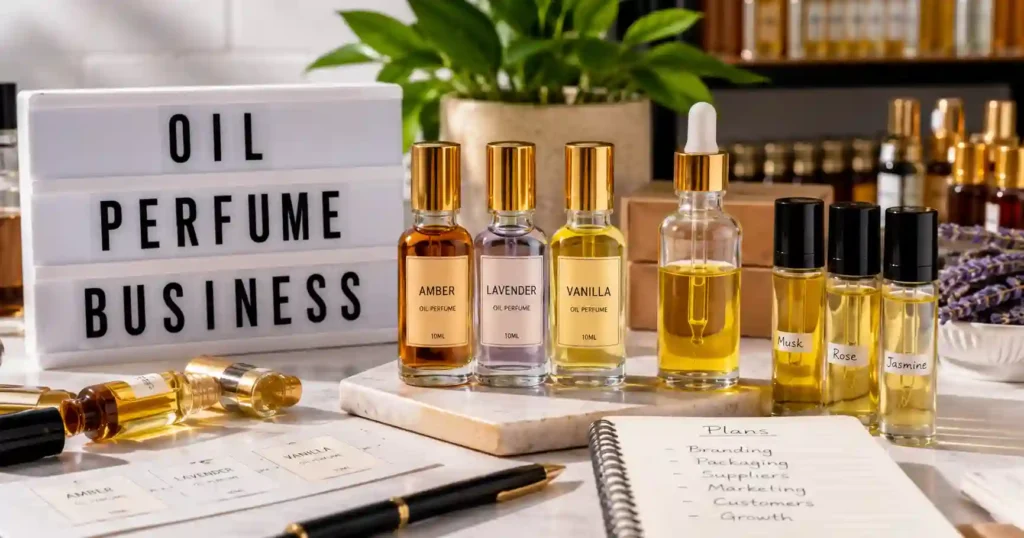
Is an Oil Perfume Business Profitable in Nigeria?
An oil perfume business can be profitable in Nigeria, but profitability depends on demand, product quality, pricing, operating costs, supplier reliability, and effective marketing.
The business can be attractive because entrepreneurs can start with a relatively small product range and expand as sales grow. Instead of purchasing large quantities immediately, a new seller can test a few fragrance profiles, identify customer preferences, and reinvest part of the revenue into inventory.
However, profitability should not be assumed from a fixed percentage. Your actual margin depends on the cost of fragrance materials, carrier oils, bottles, labels, packaging, delivery, marketing, wastage, registration, and other operating expenses.
What Is an Oil Perfume Business?
An oil perfume business involves sourcing or formulating fragrance products, packaging them, and selling them directly to consumers, retailers, or other businesses.
The business can operate as a resale model, a small-scale blending operation, or a more developed fragrance brand. The appropriate model depends on available capital, technical knowledge, regulatory requirements, target customers, and the level of control you want over the final product.
Oil perfumes generally use concentrated fragrance materials combined with a suitable carrier or base. The exact formulation depends on the fragrance material, intended application, supplier guidance, and applicable safety requirements.
Why Start an Oil Perfume Business in Nigeria?
The main attraction is the ability to build a flexible fragrance business around different customer groups, price points, scents, packaging styles, and sales channels.
- Flexible scale: You can begin with a limited product range and expand gradually.
- Product variety: Different fragrance families can serve different customer preferences.
- Branding opportunities: Bottles, labels, packaging, and scent collections can create a recognizable brand.
- Multiple sales channels: Products can be sold through social media, physical stores, direct referrals, retailers, or online platforms.
- Customization: Personalized labels, gift packaging, and curated fragrance collections can create additional value.
- Repeat-purchase potential: Customers who like a fragrance may return when they need another bottle.
Nevertheless, these advantages do not guarantee success. A fragrance business still needs accurate costing, dependable suppliers, good customer service, proper product handling, and effective promotion.
How Much Does It Cost to Start an Oil Perfume Business in Nigeria?
There is no single startup cost for an oil perfume business because the required capital changes with the business model, product quantity, packaging, equipment, location, and regulatory obligations.
The frequently quoted ₦50,000 to ₦100,000 startup range in older business guides should not be treated as a guaranteed current figure. Inflation, exchange rates, supplier pricing, packaging choices, and business scale can significantly change the amount required.
A better approach is to calculate your startup budget from the actual items you need.
| Expense | What to Consider |
|---|---|
| Fragrance materials | Supplier price, quality, minimum order quantity, and fragrance selection. |
| Carrier or base materials | Suitability for the intended product and supplier documentation. |
| Bottles | Bottle size, material, durability, appearance, and quantity. |
| Caps or applicators | Roller, dropper, screw-cap, or other appropriate dispensing system. |
| Labels | Branding, product information, batch details, and applicable labeling requirements. |
| Equipment | Measuring tools, containers, funnels, droppers, and other production equipment. |
| Packaging | Boxes, pouches, gift packaging, protective materials, and shipping materials. |
| Marketing | Photography, social media promotion, advertising, samples, and promotional materials. |
| Business and regulatory costs | Registration, applicable approvals, professional services, and compliance expenses. |
💡 Pro Tip: Start with a small test inventory instead of spending your entire budget on fragrances that customers may not want.
What Do You Need to Start an Oil Perfume Business?
You need suitable fragrance materials, compatible carrier or base materials where applicable, containers, dispensing components, labels, measuring equipment, storage, packaging, a sales channel, and a clear business model.
Fragrance Oils
Fragrance materials provide the scent profile of the finished perfume product.
Choose suppliers based on consistency, documentation, quality, intended use, pricing, and reliability rather than scent popularity alone. Ask suppliers for relevant safety and usage information before using a fragrance material on the skin.
Carrier or Base Materials
A carrier or base material can dilute or carry fragrance materials when the chosen formulation requires one.
Common materials discussed in the supplied source include jojoba, coconut, and almond oils. However, suitability depends on the intended formulation, skin use, stability, sensory characteristics, and supplier guidance.
Perfume Bottles
The bottle should protect the product while providing a practical and attractive way for customers to use it.
Common options include glass bottles, roller bottles, dropper bottles, and other suitable containers. Choose the container based on the product type, dispensing method, durability, leakage resistance, and brand positioning.
Caps and Applicators
The dispensing system should close securely and deliver the intended amount of product without unnecessary leakage or contamination.
Roller-ball applicators, droppers, and screw caps can suit different product formats. Test the complete bottle-and-cap combination before purchasing a large quantity.
Labels
Labels identify the product and communicate information customers need to understand and use it correctly.
Depending on the applicable requirements, labeling can include the brand, product identity, net content, batch or lot information, manufacturer details, expiry information, storage conditions, and other required information.
How to Research the Oil Perfume Market in Nigeria
Market research helps you identify customers, fragrance preferences, competitors, pricing patterns, and gaps before you commit significant money to inventory.
Identify Your Target Customers
Start by deciding exactly who you want to sell to rather than trying to sell every fragrance to everyone.
Your target customers could include individual fragrance buyers, gift shoppers, retailers, corporate customers, event organizers, or customers looking for personalized products.
Different groups may prioritize different factors. Some customers may care about price, while others may focus more on packaging, fragrance profile, convenience, or brand identity.
Study Competitors
Competitor research shows how other perfume businesses position their products and where your brand could offer something different.
Compare fragrance selections, bottle sizes, packaging, prices, delivery options, customer service, social media activity, promotions, and customer reviews.
Test Demand Before Buying Large Inventory
Small-scale testing can reduce the risk of buying large quantities of fragrances that do not sell.
Begin with a limited selection and track which scents receive inquiries, purchases, repeat orders, and positive feedback. Use those results to guide future inventory decisions.
How to Choose Perfume Oil Suppliers
The best supplier is not necessarily the cheapest supplier; consistency, documentation, quality, reliability, and total landed cost matter too.
- Ask about fragrance specifications and intended applications.
- Request relevant safety information.
- Compare wholesale pricing.
- Check minimum order quantities.
- Ask about batch consistency.
- Confirm delivery arrangements.
- Test samples before placing large orders.
- Keep records of suppliers and purchased batches.
- Maintain alternative suppliers for important materials.
Supplier diversification can also protect the business from sudden stock shortages or changes in pricing.
How to Create Oil Perfume for Sale
Creating oil perfume for sale requires a controlled formulation process, accurate measurement, suitable ingredients, clean equipment, appropriate packaging, and product-safety checks.
Choose the Fragrance Material
Choose the fragrance according to the intended product, target customer, supplier instructions, and applicable safety limits.
A fragrance can be sold as a single scent or included in a broader collection. However, do not assume that every fragrance material is suitable for direct skin application.
Determine the Appropriate Concentration
Use the concentration specified for the intended application instead of treating one percentage as a universal perfume formula.
The supplied source gives a general 10–30% fragrance-oil range, but that range should not be treated as a universal safety or formulation standard. Follow the fragrance supplier’s documentation and applicable requirements for the specific material and product.
Measure Ingredients Accurately
Accurate measurement helps maintain consistency between batches.
Use suitable measuring equipment and record the quantities used in every batch. Good records make it easier to reproduce a successful formulation and investigate problems later.
Mix the Formulation
Combine the ingredients according to the validated formulation and mix them using clean, suitable equipment.
Avoid improvising with household containers or unverified ratios when producing products for sale. The production process should be repeatable and documented.
Fill the Bottles
Transfer the finished product into clean, appropriate containers using equipment that minimizes spills and contamination.
Check the bottles for leaks and inspect the finished units before packaging. Consistent filling also helps prevent customer complaints about different quantities.
Cap and Label the Product
Secure each container and apply the correct product label before the product reaches customers.
Maintain batch records so products can be traced back to the relevant ingredients and production date when necessary.
How to Package Oil Perfume for Sale
Good packaging should protect the product, prevent leakage, communicate important information, and support the brand’s positioning.
Packaging does not need to be expensive to look professional. A consistent bottle, clean label, secure cap, and protective outer packaging can create a stronger customer experience than excessive decoration.
- Choose bottles that fit the dispensing method.
- Test containers for leakage before selling them.
- Use labels that remain readable during normal handling.
- Protect bottles during delivery.
- Use consistent branding across your product range.
- Keep packaging away from excessive heat, light, and moisture where appropriate.
How to Register an Oil Perfume Business in Nigeria
Business registration and product regulation are separate considerations, so an entrepreneur should address both according to the actual business model.
Register the Business with CAC
The Corporate Affairs Commission provides registration for Nigerian business names and companies through its registration system.
CAC’s current guidance states that individuals and proprietors can register business names through the Company Registration Portal, including name availability, completion of the required form, submission of documents, and payment of the applicable filing fee.
Use the official CAC process rather than relying on outdated registration instructions from third-party blogs.
Check Applicable Product Requirements
If you manufacture or sell perfume as a cosmetic product, check the current NAFDAC requirements that apply to the specific product and business model.
NAFDAC’s published cosmetics regulations identify perfumes as a cosmetic-product category and state registration requirements for cosmetics covered by the regulations. The exact compliance process should therefore be confirmed with NAFDAC before manufacturing, advertising, distributing, or selling a regulated cosmetic product.
NAFDAC’s published labeling regulations also address information such as brand name, product identity, lot or batch number, net content, expiry date, manufacturer information, registration number, and storage conditions. Requirements should be checked against the current rules applicable to your product.
Do not assume that registering a business name with CAC automatically authorizes the manufacture or sale of a regulated cosmetic product.
How to Price Oil Perfume for Profit
Price your perfume by calculating the complete cost per sellable unit and then adding a margin that fits your market.
Your unit cost should account for more than the fragrance material.
- Fragrance or perfume material.
- Carrier or base material.
- Bottle.
- Cap or applicator.
- Label.
- Outer packaging.
- Production losses.
- Delivery-related costs where applicable.
- Marketing costs.
- Business and regulatory expenses allocated to the product.
- Other operating expenses.
For example, if your total cost for one finished unit is ₦X and you sell it for ₦Y, the gross profit per unit before other business expenses is ₦Y minus ₦X.
This approach is more useful than copying a generic 50–80% profit-margin claim because your actual numbers depend on your costs and selling price.
💡 Pro Tip: Keep a simple cost sheet for every product so price changes do not silently reduce your margin.
How to Market an Oil Perfume Business in Nigeria
The strongest marketing strategy combines product presentation, targeted promotion, customer trust, easy ordering, and repeat-purchase systems.
Build a Recognizable Brand
A recognizable brand makes it easier for customers to remember and recommend your products.
Use a consistent business name, logo, packaging style, product naming system, photography style, and tone across your marketing channels.
Use Social Media
Social media can help a small perfume business demonstrate products, educate customers, collect inquiries, and build trust.
Useful content can include fragrance descriptions, packaging videos, customer testimonials, product-care information, gift ideas, behind-the-scenes content, and educational fragrance posts.
Offer Samples Carefully
Samples can help customers experience fragrances before committing to a larger purchase.
Use samples as a controlled marketing expense and track whether sampling generates actual orders. A sample program that creates no measurable sales should be adjusted rather than expanded automatically.
Create Gift and Personalized Options
Personalized packaging and gift sets can create additional reasons for customers to buy.
Potential occasions include birthdays, weddings, anniversaries, corporate gifts, festive periods, and other celebrations. Packaging should remain practical while matching the customer’s budget.
Encourage Repeat Purchases
Repeat customers can reduce the pressure to find new buyers for every sale.
Keep customer records responsibly, provide reliable service, make reordering simple, and use appropriate loyalty or referral offers. Avoid sending unwanted promotional messages.
Small-Scale vs Large-Scale Oil Perfume Business
A small-scale model is usually easier to test, while a larger operation can support wider distribution but requires stronger systems and more capital.
| Factor | Small Scale | Larger Scale |
|---|---|---|
| Inventory | Smaller and easier to test. | More variety and higher stock requirements. |
| Capital | Lower initial commitment. | Higher investment and working-capital needs. |
| Operations | Can be managed with simpler processes. | Requires stronger inventory, quality, staffing, and record systems. |
| Market Reach | Usually focused on a smaller customer base. | Can support retailers, distributors, and wider online sales. |
| Risk | Lower inventory exposure when testing demand. | Greater exposure to unsold inventory and operating costs. |
How to Avoid Common Oil Perfume Business Mistakes
The easiest way to reduce avoidable losses is to test products, document costs, verify suppliers, and avoid making unsupported product claims.
- Do not buy large inventory before testing customer demand.
- Do not choose suppliers solely because their prices are low.
- Do not assume every fragrance oil is suitable for skin application.
- Do not use one concentration formula for every fragrance material.
- Do not ignore batch records.
- Do not overlook leakage and packaging tests.
- Do not calculate profit using only the fragrance cost.
- Do not make medical or safety claims without appropriate evidence.
- Do not assume business registration replaces product-specific regulatory requirements.
- Do not rely entirely on one marketing channel.
How to Store Perfume Oils and Finished Products
Store fragrance materials and finished products according to their supplier instructions and protect them from conditions that can damage quality.
The supplied source recommends avoiding excessive heat, light, and moisture. However, the appropriate storage conditions can vary between materials and finished formulations, so supplier documentation should take priority.
Keep containers properly closed, organized, and clearly identified. Good inventory records can also help prevent expired, damaged, or incorrectly labeled products from being sold.
How to Handle Common Oil Perfume Business Problems
Why Does the Fragrance Smell Different Between Batches?
Batch differences can result from changes in raw materials, formulation, measurement, storage, or supplier batches.
Keep records for every batch and compare the ingredients, quantities, supplier information, and storage conditions when a difference occurs.
Why Is the Perfume Leaking?
Leakage usually requires checking the bottle, cap, applicator, filling level, and packaging before shipment.
Test containers before purchasing large quantities and inspect finished products before delivery.
Why Does the Fragrance Fade Quickly?
Short fragrance longevity can result from formulation, fragrance material, concentration, application, storage, or customer expectations.
Do not promise a specific wear time unless you have reliable evidence for the exact finished product. Instead, describe the product accurately and follow the fragrance supplier’s applicable guidance.
What Should You Do If a Supplier Runs Out of Stock?
Use a documented backup-supplier strategy so one stock shortage does not stop your entire business.
Test alternative suppliers before an emergency occurs. However, do not substitute a different raw material without confirming that the replacement is appropriate for the formulation.
How to Grow an Oil Perfume Business
Grow the business by reinvesting in proven products, improving operations, strengthening the brand, and expanding only when demand supports the additional cost.
- Start with a focused range: Test a manageable number of fragrance profiles.
- Track sales: Record which products sell and which remain in inventory.
- Improve packaging: Upgrade presentation after validating demand.
- Build repeat customers: Make reordering easy and provide dependable service.
- Expand carefully: Add products based on customer demand rather than personal preference alone.
- Explore wholesale: Approach suitable retailers once your supply and quality systems can support larger orders.
- Strengthen compliance: Keep business and product documentation organized as the operation grows.
Frequently Asked Questions About Oil Perfume Business in Nigeria
Is oil perfume business profitable in Nigeria?
Yes, an oil perfume business can be profitable, but profitability depends on demand, pricing, product quality, operating costs, and effective management.
How much capital do I need to start an oil perfume business in Nigeria?
The required capital varies according to your scale, inventory, packaging, equipment, marketing, location, and compliance costs.
The commonly quoted ₦50,000–₦100,000 figure should be treated as an example from older business content rather than a guaranteed current startup budget.
Can I start an oil perfume business from home?
A small business may operate from a suitable home-based setup where permitted, but manufacturing cosmetics for sale can involve product-specific regulatory, safety, hygiene, storage, and labeling requirements.
Check the current requirements that apply to your product and location before beginning commercial production.
What equipment is needed for perfume oil production?
Basic equipment can include suitable measuring tools, mixing containers, funnels, pipettes or droppers, bottles, caps, labels, and appropriate storage.
The exact equipment depends on the production method and scale.
What carrier oil should I use for perfume oil?
The appropriate carrier depends on the formulation, intended use, stability, skin compatibility, and supplier guidance.
Jojoba, coconut, and almond oils are examples mentioned in the supplied source, but they should not be treated as universally suitable for every formulation.
How do I price perfume oil for sale?
Calculate the complete cost of producing and selling each unit, then add a margin that fits your market and business objectives.
Include materials, packaging, wastage, marketing, delivery-related costs, and other operating expenses instead of calculating profit from fragrance cost alone.
Do I need to register an oil perfume business in Nigeria?
You should determine the appropriate business registration and product-regulatory requirements before operating commercially.
CAC provides registration for business names and companies, while product-specific requirements may apply to cosmetics and perfumes. Check the current requirements with the relevant authorities.
Does perfume oil require NAFDAC registration?
If the product falls within the cosmetics regulated by NAFDAC, applicable registration requirements may apply.
NAFDAC’s published cosmetics regulations include perfumes within the cosmetic-product classifications and address registration of covered cosmetic products. Confirm the current requirements for your exact product and business model before selling.
What are the biggest challenges of an oil perfume business?
The main challenges include supplier reliability, changing input costs, competition, product consistency, packaging, customer acquisition, inventory management, and regulatory compliance.
How can I get customers for my perfume oil business?
Use targeted social media content, referrals, samples, attractive packaging, direct selling, repeat-purchase strategies, and suitable retail partnerships.
Track which channels actually generate orders so your marketing budget goes toward activities that produce measurable results.
Final Thought
An oil perfume business can be a viable Nigerian small-business opportunity when it is treated as a real business rather than simply a product-reselling exercise.
The strongest starting point is to research your target market, test a focused fragrance range, calculate your complete costs, choose dependable suppliers, use suitable packaging, maintain consistent records, and verify the regulatory requirements that apply to your products.
Most importantly, avoid building your business plan around guaranteed profit figures. Build it around actual supplier quotes, realistic selling prices, expected sales volume, operating expenses, customer demand, and the compliance requirements for your chosen business model.
- Best starting strategy: Test a small product range before expanding inventory.
- Best cost strategy: Calculate the complete unit cost before setting your selling price.
- Best growth strategy: Reinvest in products and marketing channels that demonstrate real customer demand.
- Best risk strategy: Verify suppliers, product-safety information, labeling, and applicable Nigerian regulatory requirements before selling.
Choose a focused market, build a trustworthy fragrance brand, and scale the business according to proven customer demand.