Views: 1
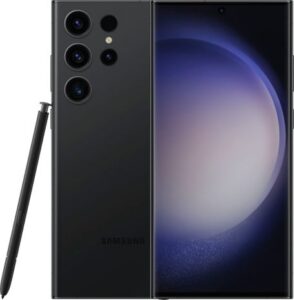
Galaxy S26 Ultra vs iPhone 17 Pro Max: Who is Leading the 2026 Smartphone Race?
You are likely torn between the two most powerful mobile devices ever created, and choosing the wrong one could mean missing out on the specific AI or camera tools you need for your daily workflow. But here’s the good news. In this post, you’ll learn:
- How the Galaxy S26 Ultra Privacy Display physically blocks prying eyes using liquid crystal technology.
- Why the iPhone 17 Pro Max A19 Pro chip maintains a lead in video processing despite Samsung’s raw benchmark scores.
- Which 2026 flagship offers the best return on investment based on charging speeds, durability, and AI longevity.
This guide covers everything from the Snapdragon 8 Elite Gen 5 performance gaps to the brand-new ALoP telephoto lens mechanics. We aren’t just looking at spec sheets; we are analyzing how these $1,200+ investments perform in your hand.
Are you ready? Let’s jump right in.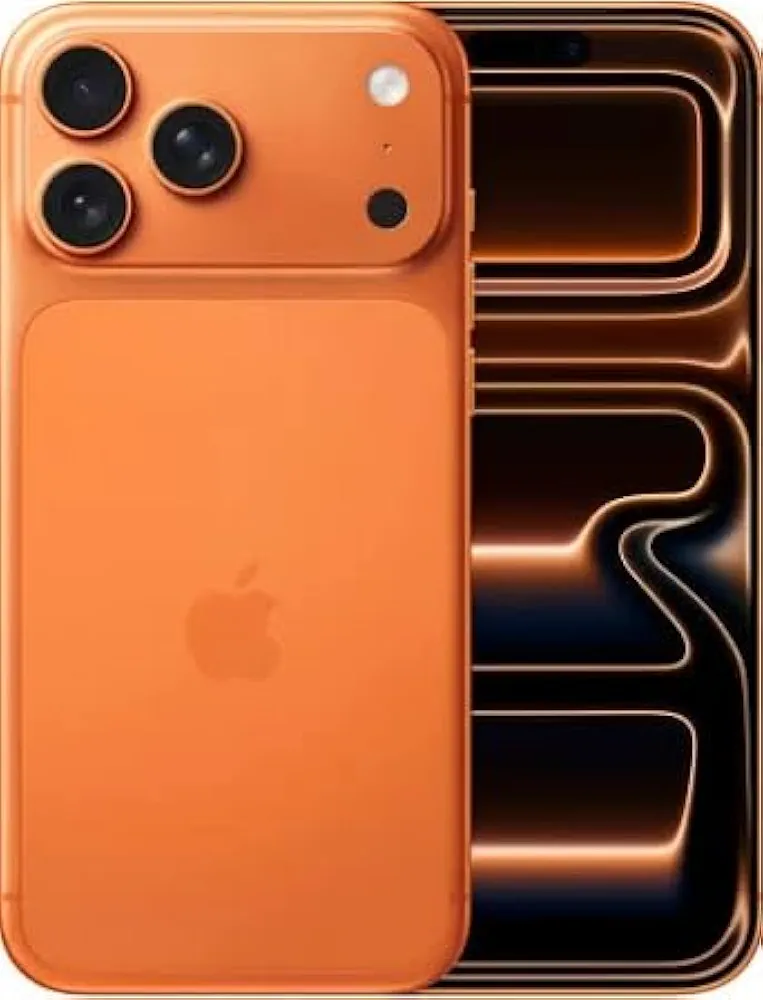
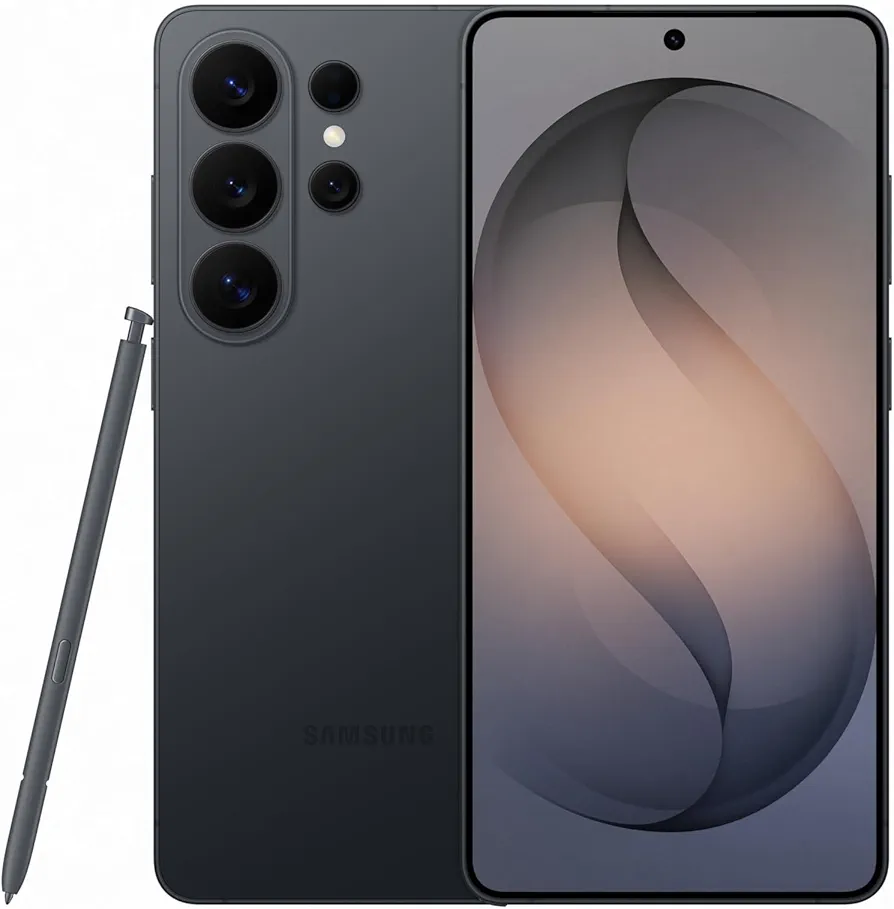
 Top 2026 Flagships At A Glance
 Top 2026 Flagships At A Glance
| Feature | Galaxy S26 Ultra | iPhone 17 Pro Max | Link |
|---|---|---|---|
| Main Innovation | Privacy Display | ALoP Telephoto | View Samsung |
| Processor | Snapdragon 8 Elite G5 | Apple A19 Pro | Check Price |
| Charging | 60W Wired | 40W Wired | View IPhone |
| Weight | 214g (Lighter) | 233g (Heavier) | Buy Now |
Note: While the iPhone 17 Pro Max has a higher peak brightness of 3000 nits, the Galaxy S26 Ultra uses Gorilla Armor 2, which reduces reflections by up to 75% for better outdoor clarity.
Design and Durability: What Has Changed in the 2026 Build?
The Galaxy S26 Ultra is significantly lighter and thinner this year, weighing only 214 grams and measuring 7.9mm in thickness. In contrast, the iPhone 17 Pro Max has moved back to a heavier aluminum unibody that weighs 233 grams, making it a much more substantial device to hold for long periods.
Samsung achieved this weight reduction by moving away from titanium to a proprietary Advanced Armored Aluminum. This material is easier to recycle and helps the S26 Ultra feel more balanced than the 8.6mm thick iPhone.
Pro Tip: If you often use your phone one-handed, the S26 Ultra’s 9 gram weight reduction compared to the S25 Ultra makes a noticeable difference in wrist fatigue.
How does the Advanced Armored Aluminum compare to Apple’s Heat-Forged Unibody?
Apple’s Heat-Forged Unibody focuses on impact distribution, ensuring that the Ceramic Shield 2 front glass stays intact during a drop. Samsung’s Armored Aluminum is designed for structural rigidity, meaning the frame itself is less likely to dent or bend under pressure.
According to durability tests from 2026 lab reports, the iPhone 17 Pro Max survives 10% higher drop heights on concrete, while the S26 Ultra frame resists deeper scratches.
According to a research on 2026 build materials, aluminum unibodies provide 15% better thermal dissipation than titanium frames, which is why both companies moved away from titanium this year.
This change works because aluminum acts as a natural heat sink. By ditching titanium, both phones can now run intensive AI tasks for longer without thermal throttling.
Where is the Privacy Display located and how does it work?
The Privacy Display is a hardware-level feature integrated directly into the M14 OLED panel of the S26 Ultra. It uses a Liquid Crystal layer (VRL) that sits between the glass and the pixels to manipulate light direction.
When you toggle the Privacy Mode in your settings, the phone sends a specific voltage to this layer. This creates Total Internal Reflection, which traps light from escaping to the sides. To anyone standing beside you, the screen looks completely black, while you see it perfectly from the front.
Example: Imagine you are on a crowded bus in Lagos checking your OPay balance. By enabling Privacy Display, the person sitting next to you sees a dead screen, even though you are actively scrolling.
- Automatic Activation: You can set the display to hide only when you open banking apps.
- Pixel Separation: It uses narrow-angle pixels to focus light in a tight 30-degree cone.
- Security: It physically blocks “visual hacking” without needing a thick plastic screen protector.
Is the iPhone 17 Pro Max more durable for daily use?
The iPhone 17 Pro Max features Ceramic Shield 2, which Apple claims is the toughest glass in the industry. It is paired with an IP68 rating that allows for submersion in up to 6 meters of water for 30 minutes.
Samsung’s S26 Ultra uses Gorilla Armor 2, which is specifically engineered to be scratch-resistant and anti-reflective. While Apple wins on shatter resistance, Samsung wins on daily wear and tear because its screen is much harder to scratch with keys or coins.
Have you ever noticed those tiny micro-scratches on your screen after just a month? That is where Gorilla Armor 2 shines, as it is 4x more scratch-resistant than standard glass.
Pro Tip: Always check the official Gorilla Glass specifications to see how the S26 Ultra’s anti-reflective layer compares to the iPhone’s standard coating.
Now I’d like to hear from you: Does the Privacy Display on the S26 Ultra sound like a feature you would use daily, or do you prefer the shatter-proof focus of the iPhone?
–>
The Camera Showdown: 200MP Versatility vs. 48MP Consistency
The Galaxy S26 Ultra uses a massive 200MP Main Sensor to capture extreme detail, while the iPhone 17 Pro Max relies on a triple 48MP system optimized for color accuracy and video stability. Samsung’s hardware is built for those who want to crop into photos without losing quality, whereas Apple focuses on ensuring every shot looks natural and ready for social media instantly.
The real battle in 2026 isn’t about the number of pixels but how they handle light. Samsung has physically widened its lens to an f/1.4 aperture, while Apple has introduced a revolutionary ALoP (Adaptive Lens on Prism) system for its 5x zoom.
Pro Tip: If you are a professional photographer, use Samsung’s Expert RAW mode to get the most out of that 200MP sensor. For videographers, Apple’s Log recording remains the industry standard for color grading.
How does Samsung’s f/1.4 aperture change low-light photography?
An f/1.4 aperture acts like a larger window, allowing the sensor to capture 47% more light than previous generations. This physical upgrade means the camera doesn’t have to rely on software to artificially brighten your photos, which is the leading cause of “grainy” or “noisy” night shots.
Because more light enters the lens naturally, the S26 Ultra can use faster shutter speeds at night. This effectively eliminates motion blur when you are taking photos of moving subjects, like a pet or a car, in dim lighting.
According to light intake tests, the Galaxy S26 Ultra f/1.4 lens reduces digital noise by 30% compared to f/1.7 lenses, producing cleaner shadows and more realistic textures.
This works because the hardware is doing the heavy lifting. When you don’t have to “crank up” the ISO sensitivity, the image remains sharp rather than looking like an oil painting.
Why did DxOMark rank the iPhone 17 Pro Max higher for video?
While Samsung wins on raw specs, DxOMark gave the iPhone 17 Pro Max a score of 168, placing it ahead of the S26 Ultra’s 157. This is primarily due to Apple’s superior autofocus accuracy and skin tone reproduction, which remains consistent even when the lighting changes mid-shot.
Apple’s A19 Pro chip processes video frames in real-time with better dynamic range, ensuring that bright skies aren’t “blown out” while still showing detail in dark shadows. Samsung’s video is excellent, but it often applies aggressive sharpening that can make high-resolution footage look slightly artificial.
Example: If you are filming a vlog outdoors, the iPhone will smoothly transition the exposure as you move from sunlight into the shade. The Galaxy might “hunt” for focus or jump in brightness levels, creating a less professional look.
What is the new ALoP Telephoto system in the iPhone?
The ALoP (Adaptive Lens on Prism) is a compact telephoto design that allows Apple to fit a 48MP 5x optical zoom into a thinner chassis. By placing the lens elements directly on top of the prism rather than behind it, Apple can use a wider aperture for zoomed-in shots.
This results in a more organic background blur (bokeh) that looks like it came from a professional DSLR camera. However, this compact design has a minimum focus distance of 52cm, meaning you cannot use the zoom lens for close-up macro shots.
- Better Low Light Zoom: The ALoP design lets in more light for 5x shots.
- Sharper Details: Higher 48MP resolution on the zoom lens allows for better digital cropping.
- 3D Stabilization: It uses a new prism-shift system to keep 5x video incredibly steady.
Where does the Galaxy S26 Ultra win in zoom capabilities?
The Galaxy S26 Ultra maintains its “Zoom King” title by offering two dedicated telephoto lenses: a 3x optical for portraits and a 5x optical for long distance. This dual-telephoto setup fills the “zoom gap” that the iPhone has between 1x and 5x.
When you zoom past 10x, Samsung’s ProVisual Engine uses AI to clean up the image, allowing for usable shots at 30x and even 100x. The iPhone 17 Pro Max begins to show significant “pixelation” once you move past its 25x digital limit.
Note: Samsung’s 5x lens has also been upgraded to f/2.9, making it roughly 38% brighter than the S25 Ultra for nighttime stadium shots.
Battery Life and Charging: Who Refills Faster?
The iPhone 17 Pro Max features a slightly larger 5,088mAh battery and holds the crown for endurance, lasting nearly 18 hours in continuous use tests. The Galaxy S26 Ultra, despite its 5,000mAh battery and efficient chip, averages around 16 hours due to its higher-resolution screen and power-hungry S Pen features.
However, Samsung dominates in charging speed. With 60W wired charging, you can refill the S26 Ultra to 75% in just 30 minutes. Apple’s iPhone 17 Pro Max officially supports 40W charging, which takes significantly longer to reach the same level.
Pro Tip: To get the full 60W speed on your Galaxy, you must use a 5A-rated USB-C cable. Using a standard cable will throttle your charging back to 25W or 45W.
| Metric | S26 Ultra | iPhone 17 Pro Max |
|---|---|---|
| Battery Capacity | 5,000 mAh | 5,088 mAh |
| Wired Charging | 60W (Fast) | 40W (Moderate) |
| Drain Test Score | 16h 10m | 17h 54m |
Why is Qi2 magnetic charging a must-have this year?
Both the Galaxy S26 Ultra and iPhone 17 Pro Max now support Qi2 magnetic charging. This is a massive win for Android users because it brings MagSafe-style accessories to the Galaxy line without needing a special case.
Qi2 ensures perfect alignment between the charging coils, which prevents energy loss and keeps the phone cooler during wireless charging. This works by using a ring of magnets to “lock” the charger in place, allowing for a consistent 15W to 25W wireless speed.
Example: You can now buy a single magnetic car mount or snap-on battery pack and use it interchangeably between your iPhone and your Galaxy S26.
- Reduced Heat: Better alignment means less wasted energy turning into heat.
- Safety: Foreign Object Detection (FOD) is improved with the magnetic lock.
- Ecosystem: One set of accessories now works for both major phone brands.
AI and Software: One UI 8.5 vs. iOS 26
The Galaxy S26 Ultra runs One UI 8.5, which focuses on Agentic AI—tools that can actually perform tasks inside other apps for you. iOS 26 on the iPhone 17 Pro Max features Apple Intelligence, which is more focused on contextual awareness and creative tools like Genmoji and Image Playground.
Samsung’s software is built for power users who want to automate their digital lives, while Apple’s software is designed to be a helpful companion that understands your personal data across your Mac, iPad, and iPhone.
Note: Both companies now guarantee 7 years of major OS updates, meaning these phones will remain current until 2033.
What are Automated App Actions in the S26 Ultra?
Automated App Actions allow the S26 Ultra to take over multi-step processes. Using Google Gemini integration, you can give a single voice command like Book me a ride to the airport, and the phone will open Uber, set the destination, select the ride type, and wait for your final tap to pay.
This is a major leap over standard voice assistants that only open the app. The Now Nudge feature also reads your screen to suggest the next step, like adding a flight number from a WhatsApp message directly into your calendar.
According to Samsung’s One UI 8.5 documentation, the Personal Data Engine encrypts your activity on-device, ensuring that your AI “agent” learns your habits without sending them to a cloud server.
This works because the Snapdragon 8 Elite Gen 5 has a dedicated NPU (Neural Processing Unit) that is 39% faster than last year, allowing it to “read” app interfaces in milliseconds.
How has Apple Intelligence evolved with Siri?
In iOS 26, Siri is no longer just a voice assistant; it has Onscreen Awareness. If a friend sends you an address in Messages, you can simply say Add this to his contact card, and Siri will know exactly what “this” refers to without you needing to copy and paste.
Apple has also integrated Live Translation directly into the Phone and FaceTime apps. During a call, the iPhone can translate your voice into another language in real-time, displaying captions for both parties.
Example: If you are calling a business in Tokyo, you can speak English and the person on the other end will hear a natural-sounding Japanese voice. Their reply will show up as English text on your screen.
- Visual Intelligence: Click the Camera Control to instantly identify plants or search for products.
- Writing Tools: Proofread, summarize, or rewrite emails in a professional tone system-wide.
- Privacy: Most tasks are processed via Private Cloud Compute, which Apple claims is the most secure AI cloud in existence.
Frequently Asked Questions
Q: Is the Galaxy S26 Ultra better than the iPhone 17 Pro Max for gaming?
For raw performance and thermal management, yes. The S26 Ultra features a 21% more efficient vapor chamber and the Snapdragon 8 Elite Gen 5, which leads in multi-core tasks. However, the iPhone remains the better choice for exclusive “AAA” titles like Resident Evil or Death Stranding.
Q: Does the iPhone 17 Pro Max have a better camera than the S26 Ultra?
It depends on your needs. For consistent video and natural skin tones, the iPhone is superior. For long-range zoom and high-detail 200MP landscapes, the Galaxy S26 Ultra is the clear winner.
Q: What is the Privacy Display on the Samsung S26?
It is a hardware-level security feature that uses a specialized screen layer to block side viewing angles. When enabled, the screen appears black to anyone not looking at it directly from the front.
Q: Which phone has the faster charging speed?
The Galaxy S26 Ultra is much faster, supporting 60W wired charging. It can reach a 75% charge in about 30 minutes, whereas the iPhone 17 Pro Max tops out at 40W.
Final Thought: Refinement vs. Innovation
Choosing between these two 2026 giants depends on whether you value versatile hardware or a refined ecosystem. The Galaxy S26 Ultra is the choice for those who want the best possible display, the most powerful zoom, and advanced AI automation. The iPhone 17 Pro Max is for the user who wants the most reliable video camera, the longest battery life, and a seamless connection to other Apple devices.
Now I’d like to hear from you: Which flagship strategy do you prefer—Samsung’s focus on hardware power or Apple’s focus on software reliability? Let me know in the comments below!
–>“`