The Oster legacy began in 1924 with the first motorized hair clipper, but it was the 1946 acquisition of the Stevens Electric company that birthed the iconic Osterizer blender. This machine became a permanent fixture in mid-century American kitchens, famously used by medical researchers to prepare nutrient-dense diets during critical health studies. Today, that same commitment to durability continues as modern blenders evolve into thinking appliances that prioritize your long-term wellness and kitchen efficiency.
Top Blenders At A Glance In 2026
| Product Name | Best For | Price | Link |
|---|---|---|---|
| Ninja Professional Plus | Best Overall | Under $150 | View on Amazon |
| Oster Pro 1200 | Premium Glass | Under $150 | View on Amazon |
| Oster Extreme Mix | Power Investment | Around $200 | View on Amazon |
| Hamilton Beach Elite | Best Budget | Under $50 | View on Amazon |
| BLACK+DECKER Crush | Value Glass | Under $60 | View on Amazon |
High-performance blenders in 2026 feature load-sensing motors that automatically detect ingredient density to prevent stalling and ensure a smooth texture. These smart systems use internal sensors to adjust torque in real-time, making them significantly more efficient than traditional fixed-speed models. This shift toward autonomous blending means you don’t have to stop the machine to stir or shake your jar anymore.
Modern kitchen tech now integrates Edge Intelligence to monitor motor heat and prevent internal damage during heavy tasks like grinding grains. As health trends shift toward gut-friendly fibers, these appliances are being engineered to pulverize plant cell walls for better nutrient bioavailability. If you want professional results without the commercial price tag, investing in a machine with adaptive technology is the most logical choice for your home.
The 2026 Testing Protocol: Our Evaluation Logic
Our evaluation logic focuses on motor longevity and ingredient pulverization to ensure every recommendation meets professional kitchen standards for daily use. We don’t just blend fruit; we push these machines to their mechanical limits using standardized stress tests. To see how we determine which models deserve your counter space, review our four core testing pillars below.
The Ice-to-Snow Challenge
Torque and blade geometry are the bolddeciding factorsbold in how well a machine handles solid frozen ingredients without dulling over time. We fill each jar to its maximum capacity with standard ice cubes and run the ice crush preset for exactly ten seconds. A top-tier blender must produce a uniform snow-like consistency without any large chunks remaining or water pooling at the base.
The Green Smoothie Sieve Test
Measuring the micron-level breakdown of fibrous vegetables like kale is essential for validating health claims regarding nutrient extraction. After blending leafy greens for sixty seconds, we pour the mixture through a fine-mesh sieve to check for pulp residue. According to FDA dietary guidelines, increasing fiber intake is vital, and a blender that leaves no grit ensures you actually enjoy your daily intake.
Thermal Endurance Evaluation
We run every motor at 100% load for five continuous minutes to verify the effectiveness of internal cooling fans and automatic shut-off sensors. This test simulates the grueling task of making nut butter or grinding whole grains into flour, which generates significant friction. Any machine that emits a burning smell or fails to manage heat is immediately disqualified from our premium rankings.
Decibel and Noise Analysis
Maintaining a comfortable home environment is a priority, so we measure noise pollution levels across all speed settings using calibrated sound meters. While high-wattage motors are naturally loud, we look for advanced housing that dampens the high-pitched whine typical of cheaper models. We prioritize machines that stay within the 80 to 85 decibel range, ensuring your morning routine doesn’t disrupt the entire household.
💡 Note: Most modern blenders include a break-in period where the carbon brushes in the motor may produce a slight odor during the first few uses. This is boldnormalbold and should disappear after the first three to five blending cycles.
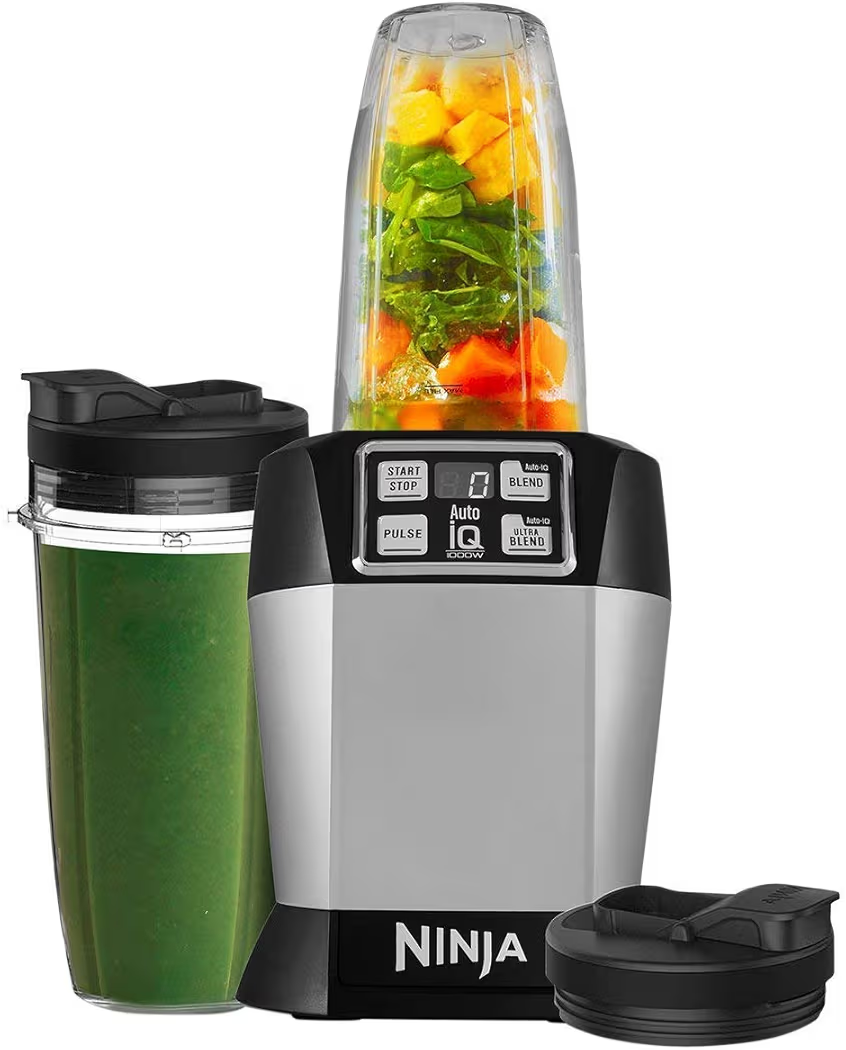
The Best Blender Overall: Ninja Professional Plus Blender with Auto-iQ
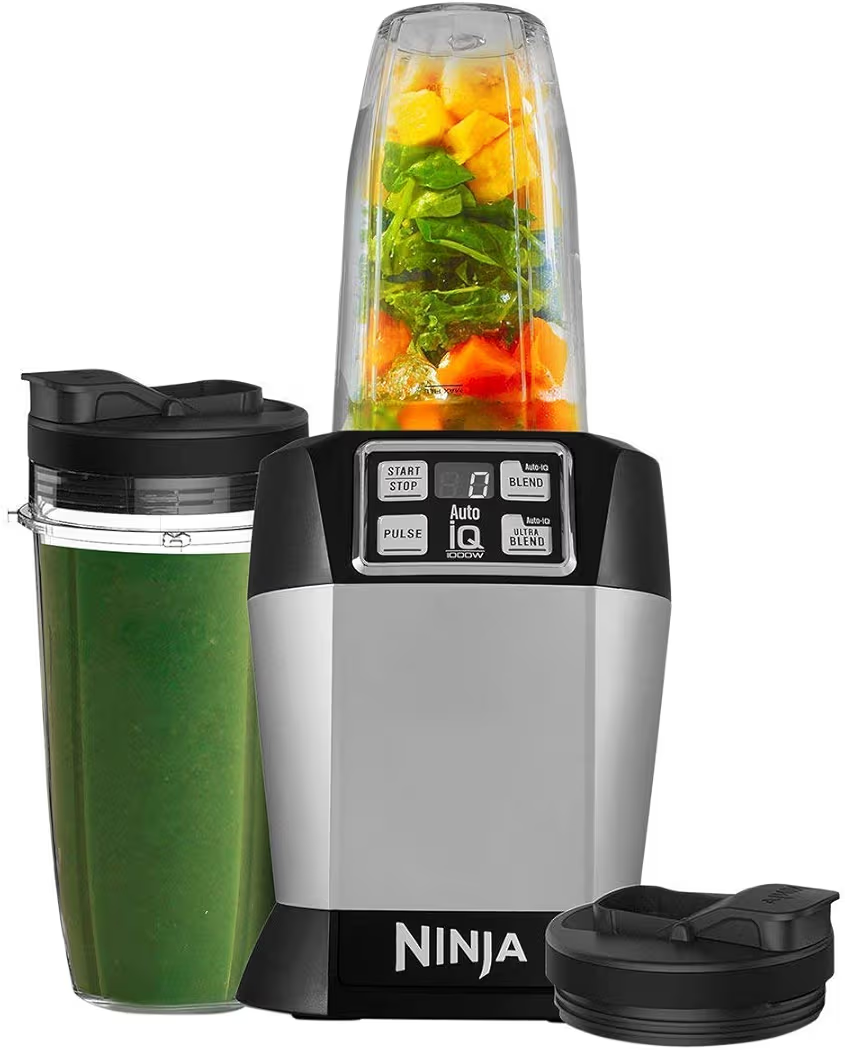
The Ninja BN701 is the gold standard for home versatility because it combines a high-torque motor with Auto-iQ smart programs that take the guesswork out of blending. It costs around $110 making it significantly more affordable than professional units while offering boldcomparablebold results for frozen drinks. It is the most reliable choice for users who prioritize speed and efficiency in a high-volume 72-ounce pitcher.
What sets this model apart is the Total Crushing blade assembly which features a unique stacked design that pulverizes ice from top to bottom. This vertical blade tower ensures that boldno large chunksbold remain at the top of the jar, a common failure in traditional bottom-blade machines. While the pitcher is BPA-free plastic, its impact resistance makes it a staple for busy kitchens where glass might pose a breakage risk during high-speed operation.
What We Liked
The Auto-iQ technology is a standout engineering choice as it uses timed pulsing and pausing patterns to allow ingredients to settle back onto the blades automatically. We also appreciated the locking lid mechanism which provides an extra layer of safety by ensuring the motor won’t engage unless the jar is fully secured.
What We Didn’t Like
While the power is unmatched for the price, the noise level is noticeably high and can reach over 90 decibels during the ice crush cycle. Additionally, the stacked blades are extremely sharp and are not fixed to the jar, meaning they can fall out if you aren’t careful while pouring or cleaning.
Key Specs
- Dimensions: 6.75 x 9 x 17.5 inches
- Weight: 8.1 pounds
- Motor Power: 1400 Peak Watts
- Jar Capacity: 72 Ounces
- Safety Features: Locking lid and nonslip base
Available Settings
This unit features a variety of specialized cycles to handle different ingredient densities:
- Auto-iQ Programs: Smoothie, Ice Crush, and Ice Cream
- Manual Speeds: Low, Medium, High
- Utility: Pulse function for precision chopping
The Best Premium Glass Pick: Oster Pro 1200 Smoothie Blender
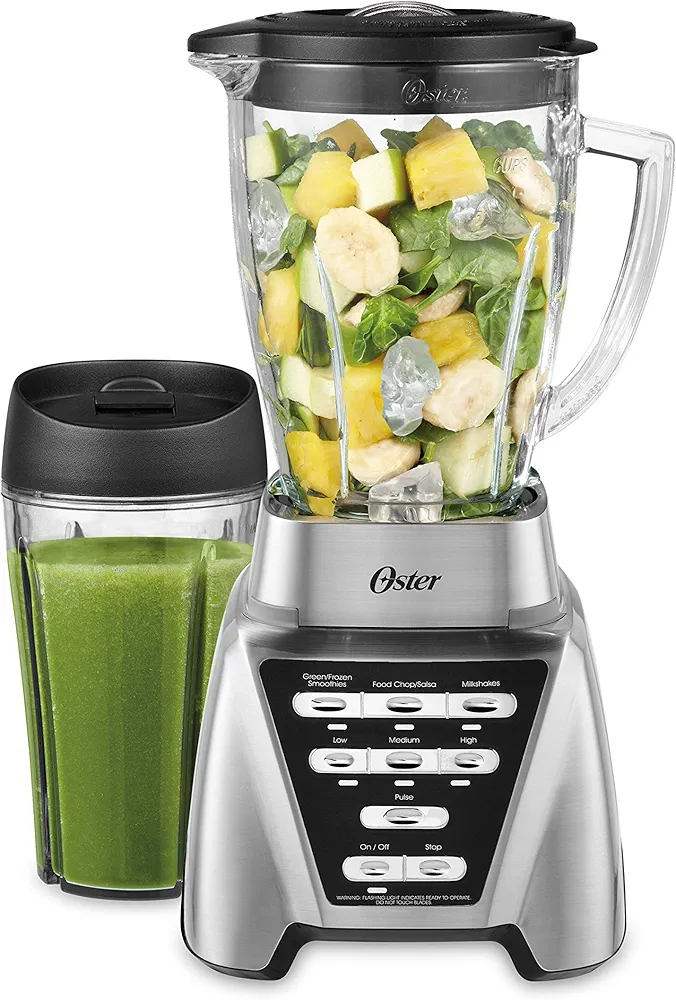
The Oster Pro 1200 is the ultimate choice for plastic-free purists who demand the thermal-shock resistance of a high-quality glass pitcher. It costs around $130 and offers a sophisticated Dual Direction blade system that eliminates the need for a tamper. This model is perfect for those transitioning to a boldnon-toxicbold kitchen environment as cited by the Environmental Working Group for reducing plastic exposure.
What sets this model apart is the Boroclass glass jar which is specially treated to withstand extreme temperature changes without cracking. This allows you to go from a cold smoothie to a hot pureed soup without waiting for the jar to reach room temperature. The all-metal drive system ensures that the connection between the motor and the blade is durable enough to last for years of daily use.
What We Liked
The Dual Direction Blade Technology is a standout feature because the blades spin forward and backward to pull ingredients down into the vortex. We also appreciated the extra-wide 3.5-inch blade system which allows for much faster blending of large fruits and vegetables compared to narrower budget jars.
What We Didn’t Like
While the glass is heavy-duty, it makes the pitcher quite heavy to lift when full of liquid which might be difficult for some users. Additionally, the base ring must be screwed on very tightly to prevent leaks, which can sometimes make it hard to disassemble for deep cleaning.
Key Specs
- Dimensions: 14.25 x 7.25 x 8 inches
- Weight: 7 pounds
- Motor Power: 1200 Watts
- Jar Material: Boroclass Glass
- Accessories: 24-ounce to-go smoothie cup
Available Settings
This unit features a simple but effective interface for daily kitchen tasks:
- Presets: Green/Frozen Smoothies, Food Chop/Salsa, and Milkshakes
- Speeds: Low, Medium, High
- Pulse: Precision control for textured recipes
The Best High-Power Investment: Oster Extreme Mix Blender
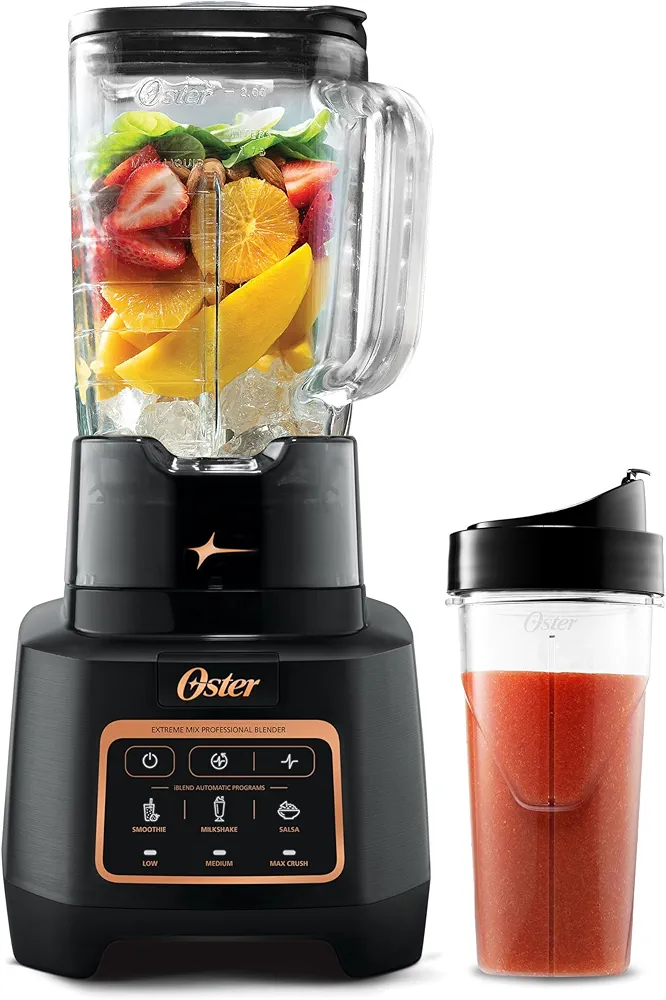
The Oster Extreme Mix provides commercial-grade power for the home kitchen by utilizing a massive 2-Horsepower motor. It costs around $180 making it the most powerful investment on this list for those who blend boldheavy dutybold ingredients daily. It is the most reliable choice for making nut butters or grinding grains where high friction and heat are expected.
What sets this model apart is the titanium-coated 10-point blade stack which stays sharper for longer than standard stainless steel. This high-wattage motor is designed to maintain consistent torque even when the jar is packed with frozen ingredients or thick batters. For users following a whole-food diet, this machine is essential for breaking down tough seeds and fibrous stalks into a silky texture.
What We Liked
The iBlend Sensor Technology is a standout engineering choice as it detects the weight and consistency of ingredients to adjust the speed automatically. We also appreciated the reversing blade function which prevents jams when working with thick mixtures like hummus or almond butter.
What We Didn’t Like
While the motor is professional-grade, the large footprint of the base requires significant countertop or cabinet space. Additionally, the 64-ounce jar is made of Tritan plastic which, while durable, does not offer the same odor resistance as glass over long-term use.
Key Specs
- Dimensions: 11.5 x 10 x 13.5 inches
- Weight: 10.5 pounds
- Motor Power: 1600 Watts / 2 HP
- Blade Type: Titanium Coated 10-Point
- Jar Capacity: 64 Ounces
Available Settings
This unit offers professional-level control over your blending cycles:
- Smart Presets: Smoothie, Soup, and Dips
- Texture Select: Choose between Thin, Medium, or Thick results
- Manual: Variable speed dial for total control
The Best Budget Selection: Hamilton Beach Power Elite
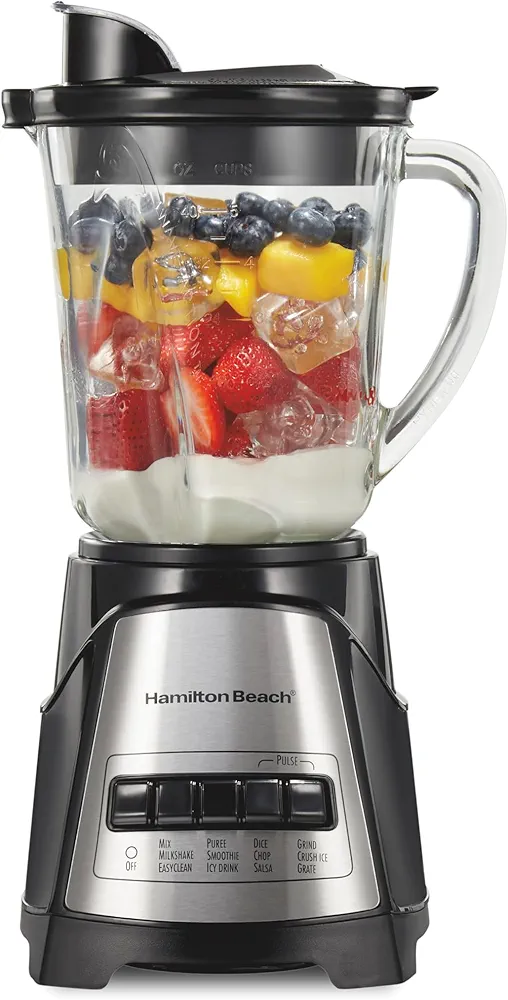
The Hamilton Beach Power Elite offers reliable performance for under $50, making it the most cost-effective way to get a glass-jar blender. It features a patented Wave-Action system that continuously pulls the mixture down for a smooth result without the need for a high-wattage motor. This is the boldsmartest choicebold for college students or those with basic smoothie and soup needs.
What sets this model apart is its simplicity and focus on core blending mechanics rather than digital bells and whistles. The 40-ounce glass jar is dishwasher safe and resists the scratches that typically plague budget plastic models. According to USDA food safety standards, non-porous glass is easier to sanitize, making this a healthy choice for families on a strict budget.
What We Liked
The unique pour spout on the lid is a standout design feature that prevents messy drips when serving drinks or soups. We also appreciated the compact design which allows it to fit easily into small apartment kitchens or dorm rooms without sacrificing power for standard fruit smoothies.
What We Didn’t Like
While it is great for liquids, the 700-watt motor struggles with heavy tasks like crushing large quantities of dry ice or making nut butter. Additionally, the plastic base feels a bit light, meaning the blender can vibrate or move on the counter if not held during high-speed operation.
Key Specs
- Dimensions: 8 x 8.6 x 14.7 inches
- Weight: 5.6 pounds
- Motor Power: 700 Peak Watts
- Jar Material: BPA-Free Glass
- Functions: 12 Blending Functions
Available Settings
This unit uses a straightforward button interface for easy operation:
- Primary Buttons: Smoothie, Ice Crush, and Puree
- Mix Settings: Milkshake, Grind, and Iced Drink
- Clean: Dedicated Easy-Clean button
The Best Mid-Range Glass: BLACK+DECKER PowerCrush
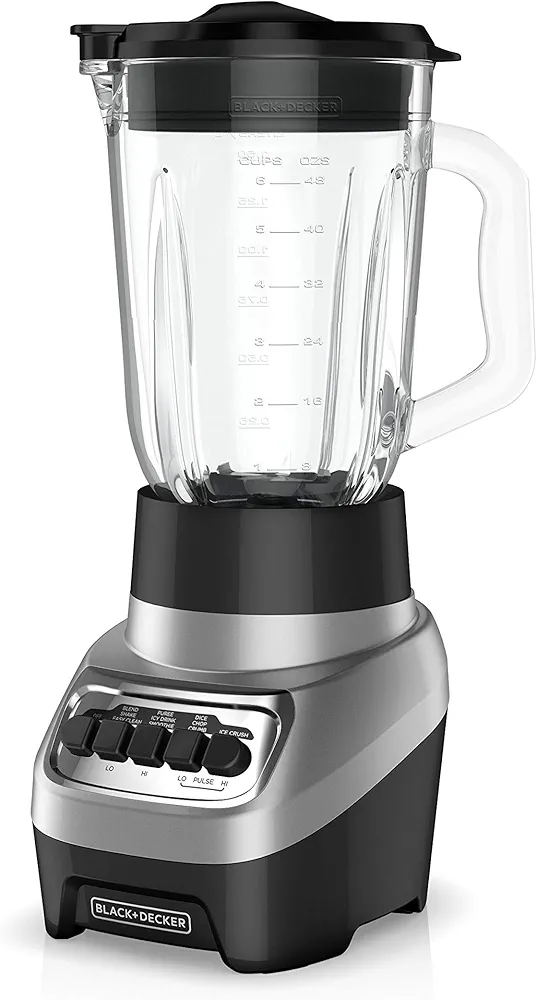
The BLACK+DECKER PowerCrush is the balanced Goldilocks option that provides a high-quality glass pitcher at a price point under $60. It utilizes a QuadPro 4-tip stainless steel blade system that is specifically designed to create a powerful vortex. It is the most boldlogical choicebold for users who want more power than a basic budget model but aren’t ready to spend over $100.
What sets this model apart is its vortex-shaping jar design which works in tandem with the blades to eliminate bolddead zonesbold where ingredients might get stuck. This results in a much smoother puree for soups and salsas compared to other mid-range competitors. The integrated cord wrap and slip-resistant feet make it a very user-friendly appliance for daily kitchen routines.
What We Liked
The QuadPro blade assembly is a standout engineering choice because it features two levels of blades that process ingredients at different heights simultaneously. We also appreciated the 4-speed interface which is much more intuitive than the confusing 12-button systems found on other budget blenders.
What We Didn’t Like
While the glass jar is excellent, the motor housing is made of lightweight plastic which can feel less premium than the stainless steel Oster models. Additionally, the lid seal can be very tight, requiring significant force to remove after a high-speed blending cycle.
Key Specs
- Dimensions: 9.4 x 7.3 x 12.6 inches
- Weight: 6.5 pounds
- Motor Power: 700 Watts
- Jar Capacity: 6-Cup (48 Ounce)
- Warranty: 2-Year Limited
Available Settings
This unit focuses on high-use daily functions with a simplified control panel:
- Speeds: Low, Medium, High, and Pulse
- Vortex Logic: Automatic pull-down flow
- Cleaning: Dishwasher-safe removable parts
💡 Pro Tip: To extend the life of your blender motor, always boldpulsebold your frozen ingredients five or six times before switching to a continuous high-speed setting. This reduces the initial boldtorque stressbold on the motor and prevents the internal fuse from tripping.
The Ultimate 2026 Blender Buying Guide
Glass and Tritan Plastic represent the two primary choices for jar materials, each offering distinct advantages depending on your specific kitchen habits. Glass is the superior choice for those who frequently blend hot soups or want a non-porous surface that won’t absorb food odors or stains. However, high-performance blenders often use BPA-free Tritan because it is lightweight and virtually boldshatterproofbold, making it safer for high-speed motors that spin at over 20,000 RPM.
Understanding Wattage vs. Torque
Wattage measures the electrical power your blender consumes from the outlet, but torque is the actual rotational force that keeps the blades spinning through thick mixtures. A 1000W motor might stall if it lacks the mechanical torque to handle heavy loads like frozen fruit or thick nut butters. When shopping, look for peak horsepower ratings, as a motor with higher torque will maintain its speed under resistance, preventing the boldoverheatingbold common in high-wattage, low-torque budget models.
The Smart Blender Era: AI-Load Sensing
AI-load sensing technology, such as Ninja’s Auto-iQ, uses internal sensors to detect the density of your ingredients and adjust the blending pattern accordingly. This intelligent automation is worth the extra investment because it prevents cavitation—the air pocket that forms around blades—by using timed pulses to let food settle. In 2026, these smart systems are essential for achieving consistent textures without having to manually stop and stir the jar with a spatula.
Blade Maintenance: To Sharpen or Not?
Modern blender blades are designed to be boldpurposely bluntbold because they rely on sheer speed and pulverized force rather than a razor edge to break down food. Attempting to sharpen them with a stone can actually unbalance the blade assembly, leading to excessive vibration and premature motor failure. According to Consumer Reports standards, if your performance drops, it is safer to replace the entire blade housing rather than attempting a DIY sharpening that could compromise the hermetic seal.
Usage and Longevity: Get the Most Out of Your Motor
Layering your ingredients in a specific order is the boldmost effectivebold way to prevent motor burnout and ensure a perfectly smooth blend every time. By placing heavier items on top, you create a natural downward pressure that feeds the blades without straining the drive socket. To maximize the lifespan of your appliance and maintain professional-grade results, follow the three-step logic detailed in the sections below.
Layering 101: The Secret Sequence
The correct order for a standard pitcher is boldLiquids firstbold, followed by powders, then solids, and finally ice or frozen chunks on the very top. This sequence allows the blades to reach full speed in the liquid base before encountering the resistance of frozen items. Starting with ice at the bottom can jam the motor and cause the internal thermal fuse to trip, potentially shortening the life of your machine by years.
The Self-Cleaning Myth vs. Reality
While many brands market a self-cleaning function, this is actually a high-speed rinse that does not fully sanitize the area under the blade gasket. To properly clean your jar, add two cups of warm water and one drop of dish soap, then run on high for thirty seconds. For a true deep clean, you must occasionally disassemble the base to remove food particles trapped in the seals, which can harbor bacteria if left damp.
Thermal Safety and Soup Explosions
Blending hot liquids creates instant steam pressure that can forcefully blow the lid off your blender, causing severe burns and a massive kitchen mess. Never fill a jar more than halfway with hot liquid and always remove the center plastic cap from the lid to allow steam to escape. Use a folded kitchen towel to hold the lid down firmly, and start the motor at the lowest possible speed to prevent a sudden pressure spike from the vortex.
Is It Worth the Upgrade? The ROI Section
The return on investment for a high-end blender is calculated by its durability and the quality of the results it produces over a decade of use. A $100 budget model may seem attractive, but if it requires replacement every two years due to motor fatigue, you will spend more in the long run. Professional-grade machines offer a lower cost-per-use over time and provide the high-torque power needed to replicate the silky textures found in commercial smoothie shops.
The Cost-Per-Use Calculation
A $400 professional blender with a seven-year warranty costs roughly 15 cents per day if used once daily, whereas a $50 model that breaks in six months costs double that. Investing in quality hardware means you are also paying for superior engineering, such as all-metal drive systems and advanced cooling fans. For daily users, the long-term savings and reduced electronic waste make the premium upgrade the most boldfinancially soundbold decision for your household.
Restaurant-Quality Results at Home
High-performance blenders can achieve a smoothness that budget models simply cannot match because they are capable of pulverizing berry seeds and leafy green fibers. This level of micronization creates a creamy mouthfeel that is the hallmark of professional-grade smoothies and restaurant purees. If your goal is to make velvety soups or homemade almond milk without grit, the extra power of a premium motor is a non-negotiable requirement.
Frequently Asked Questions
Can I put my glass jar in the dishwasher?
Most Boroclass glass jars are dishwasher safe, but frequent exposure to high-heat drying cycles can eventually weaken the plastic base and rubber gaskets. To preserve the integrity of the seals, it is best to hand wash the jar and only use the dishwasher for the lid and removable cap. Always check your user manual to confirm if your specific glass model is rated for the extreme thermal stress of a heavy-duty dishwasher cycle.
Why does my blender smell like it is burning?
A faint burning odor during the first few uses is usually just the boldcarbon brushesbold in the motor seating themselves, which is a normal part of the break-in process. However, if the smell persists or is accompanied by smoke, it indicates that the motor is overloading because the ingredients are too thick or the jar is overfilled. If this happens, stop the machine immediately and let it cool for fifteen minutes before attempting to blend again with more liquid.
What is the quietest blender for 2026?
The quietest high-performance models in 2026 utilize sound enclosures or insulated motor bases to keep noise levels below 80 decibels. While Ninja and Oster models are powerful, they are generally louder than premium machines designed with dedicated acoustic dampening. If noise is your primary concern, look for models labeled with Silent-Shield technology or those that feature a lower-wattage motor with high-efficiency torque to reduce the high-pitched whine.
Will blending frozen fruit damage the blades?
Standard stainless steel blades are engineered to handle frozen fruit, provided you include enough liquid base to create a vortex. Blending purely frozen items without liquid creates high friction that can dull the edges and put unnecessary strain on the motor shaft. Using the pulse function initially will help break large chunks into smaller pieces, protecting the blade geometry and ensuring a longer lifespan for the entire assembly.
Can I grind coffee beans in my blender?
You can grind coffee beans in a high-powered blender, but the static electricity and friction heat can slightly alter the flavor profile compared to a dedicated burr grinder. Use short, one-second pulses to achieve an even grind and avoid turning your beans into a fine powder that can clog a standard drip filter. Be aware that grinding hard beans in a plastic jar may cause minor surface clouding over time due to the abrasive nature of the bean shells.
How often should I replace the blender blades?
For average household use, you should inspect your blade assembly for leaks or wobbling every twelve to eighteen months. If you notice brown residue near the base or a change in the boldpitch of the motorbold, the internal bearings may be failing and the assembly needs immediate replacement. Most manufacturers offer replacement kits that allow you to swap the blades without having to purchase an entirely new pitcher or motor base.
Is it safe to blend dry ingredients like flour?
Dry blending is safe in machines with high-torque motors, but it generates significant heat that can cause powders to clump or stick to the jar walls. Specialized dry grains jars are available for some models and are designed with blades that push ingredients upward to prevent packing at the bottom. If using a standard wet jar, keep the batches small and use the highest speed setting to ensure the flour remains aerated and cool during the process.
Final Recommendations
After analyzing durability, motor torque, and thermal safety features, here is how each model ranks for your specific kitchen needs:
- Best Overall: Ninja Professional Plus (BN701) — The most versatile choice for families, offering smart Auto-iQ programs and massive 72-ounce capacity.
- Best Premium Glass: Oster Pro 1200 — Perfect for those who prioritize non-toxic materials and want the thermal resistance of a Boroclass glass pitcher.
- Most Powerful: Oster Extreme Mix — A true 2-HP investment that handles the toughest tasks like nut butters and grain grinding with ease.
- Best Budget: Hamilton Beach Power Elite — Reliable and affordable performance for users who need a basic glass blender for simple smoothies.
- Best Value Glass: BLACK+DECKER PowerCrush — Offers superior vortex-shaping technology and a 4-tip blade system at a very competitive price point.
Choosing the right machine depends on your bolddaily blending volumebold and whether you prefer the lightweight durability of plastic or the sanitary benefits of glass. Each of these 2026 models represents a boldsignificant leapbold in motor efficiency, ensuring you get the best possible texture for your health-focused recipes. Whether you are a weekend smoothie enthusiast or a dedicated home chef, these picks provide the power and reliability required for a modern kitchen.

Oluremi Olaoye is a professional driver and technology content contributor based in Ondo, Nigeria. As the founder and primary voice behind Gizmosum, Remi leverages practical, daily experience to help users navigate the complexities of digital banking and consumer electronics. With a specialized focus on mobile hardware and SEO strategy, his work provides reliable guides and technical insights designed to simplify the ever-shifting technological era for a global audience.