
Updated August 2026: The best small Japanese rice cooker is the Zojirushi Micom 3-Cup Rice Cooker (NS-LGC05XB) because it uses advanced microcomputer technology to automatically adjust cooking times and temperatures for consistent grains. Designed specifically for small households, apartments, and singles, these compact appliances deliver precise heating without taking up valuable counter space. Choosing a specialized Japanese brand also gives buyers access to dedicated rice programs, automatic temperature control, and durable nonstick inner pans.
For most buyers, a 3-cup model offers the best balance of capacity, countertop space, and cooking control. However, a 5.5-cup model makes more sense when you regularly prepare larger portions or cook for a small family.
If inner-pot material is an important part of your buying decision, compare the cooking surface and maintenance requirements before choosing a model. You can also see our guide to the best stainless steel rice cooker if you are specifically comparing alternatives to nonstick cooking surfaces.
Quick Answer: What Is the Best Small Japanese Rice Cooker?
The Zojirushi Micom 3-Cup NS-LGC05XB is the best small Japanese rice cooker for most people. Its 3-cup capacity, Micom cooking system, fuzzy logic controls, compact footprint, and multiple rice settings make it especially suitable for singles, couples, apartments, and small households.
The best mini Japanese rice cooker depends on more than capacity. Cooking technology, wattage, inner-pot construction, menu options, and Keep Warm performance all affect the experience.
- Best Overall: Zojirushi Micom NS-LGC05XB
- Best Value: Tiger JBV-A10U
- Best Budget: Zojirushi NHS-06
- Best Smart Compact: Toshiba TRCS02
- Best Premium: Zojirushi NL-AAC10
For a true small Japanese rice cooker 3 cup, the Zojirushi NS-LGC05XB and NHS-06 are the most direct matches in this lineup. The Toshiba TRCS02 also targets the same compact household size, while the Tiger JBV-A10U and Zojirushi NL-AAC10 provide more capacity.
Small Japanese Rice Cooker 3 Cup Comparison
The table below compares the five recommended models by capacity, cooking technology, wattage, inner-pot construction, and the Amazon ratings shown in the product research used for this guide.
| Product | Best For | Amazon | Capacity | Wattage | Inner Pot | Technology | Rating |
|---|---|---|---|---|---|---|---|
| Zojirushi NS-LGC05XB | Best Overall | View at Amazon | 3 cups | 450W | Spherical nonstick coated pan | Micom + fuzzy logic | 4.7/5 from 8,118 reviews |
| Tiger JBV-A10U | Best Value | View at Amazon | 5.5 cups | 672W | Aluminum with fluorine coating | Micom + Tacook | 4.6/5 from 6,751 reviews |
| Zojirushi NHS-06 | Best Budget | View at Amazon | 3 cups | 300W | Durable nonstick pan | Conventional | 4.5/5 from 12,290 reviews |
| Toshiba TRCS02 | Best Smart Compact | View at Amazon | 3 cups | 460W | Nonstick inner pot | Fuzzy logic | 4.5/5 from 3,615 reviews |
| Zojirushi NL-AAC10 | Best Premium | View at Amazon | 5.5 cups | 610W | Thick black inner pan | Micom + fuzzy logic | 4.7/5 from 901 reviews |
Amazon ratings and review counts can change over time. Specifications are based on the product information available for the listed models.
Best Small Japanese Rice Cooker Picks
These five models cover the main needs of compact rice-cooker buyers. The lineup includes simple conventional cooking, Micom automation, fuzzy logic, and larger 5.5-cup options.
Best Small Zojirushi Rice Cooker: NS-LGC05XB
Best For: Singles, couples, apartments, and buyers who want premium Micom cooking in a compact 3-cup size.

ZOJIRUSHI
Zojirushi Micom 3-Cup Compact Size, Multiple Settings, Stainless Steel Made, Built-In Retractable Power Cord and Easy to Transport Rice Cooker and Warmer
This compact Zojirushi is the article's best overall small Japanese rice cooker. Its 3-cup capacity, Micom and fuzzy logic cooking, multiple rice settings, and compact design make it well suited to singles, couples, apartments, and small households.
Who Should Buy It
Best for singles, couples, apartment dwellers, and buyers who want advanced cooking control in a compact rice cooker. It is also a strong choice for frequent rice eaters who want more automation.
Why We Pick It
It earned the top spot because it balances compact size, cooking consistency, Micom technology, and useful cooking programs. The article also highlights its ability to cook small portions and its retractable power cord.
Features & Benefits
| Feature | Benefit |
|---|---|
| 3-cup capacity | suits small daily portions and compact kitchens |
| Micom + fuzzy logic | automatically adjusts cooking conditions for more consistent results |
| Multiple rice settings | supports different rice varieties and other foods |
| Retractable power cord | makes storage easier |
| Keep Warm | keeps cooked rice ready after cooking |
Pros & Cons
| Pros | Cons |
|---|---|
| ✓ Excellent cooking consistency | ✕ Higher price than basic models |
| ✓ Compact 3-cup design | ✕ Limited capacity for larger households |
| ✓ Advanced Micom controls |
Best Value Small Japanese Rice Cooker: Tiger JBV-A10U
Best For: Small families and meal-prep users who want Micom cooking and Tacook synchronized cooking.

TIGER
Tiger Jbv A10u 5.5 Cup Micom Rice Cooker with Tacook (White)
The Tiger JBV-A10U is the article's best-value choice for buyers who need more capacity than a 3-cup cooker provides. Its Micom cooking system and Tacook technology allow rice and a main dish to cook simultaneously.
Who Should Buy It
Best for small families, meal-prep users, and buyers who want Japanese cooking technology without paying premium flagship prices. The 5.5-cup capacity also suits households that regularly prepare larger batches.
Why We Pick It
It combines Micom cooking, a 5.5-cup capacity, and Tacook synchronized cooking at a value-focused price. The article specifically highlights its ability to prepare rice and another dish at the same time.
Features & Benefits
| Feature | Benefit |
|---|---|
| 5.5-cup capacity | provides more room for family meals and leftovers |
| Micom cooking | provides computerized control for more consistent cooking |
| Tacook system | allows rice and a main dish to cook simultaneously |
| Automatic Keep Warm | keeps cooked rice ready for serving |
| Multiple cooking programs | adds flexibility beyond basic rice cooking |
Pros & Cons
| Pros | Cons |
|---|---|
| ✓ Strong value | ✕ Larger footprint than 3-cup models |
| ✓ Tacook synchronized cooking | ✕ Fewer advanced programs than premium models |
| ✓ Larger 5.5-cup capacity |
Best Budget Small Japanese Rice Cooker: Zojirushi NHS-06
Best For: First-time buyers and budget shoppers who prefer simple one-switch conventional cooking.
ZOJIRUSHI
Zojirushi 3 Cup Rice Cooker/Steamer ( White)
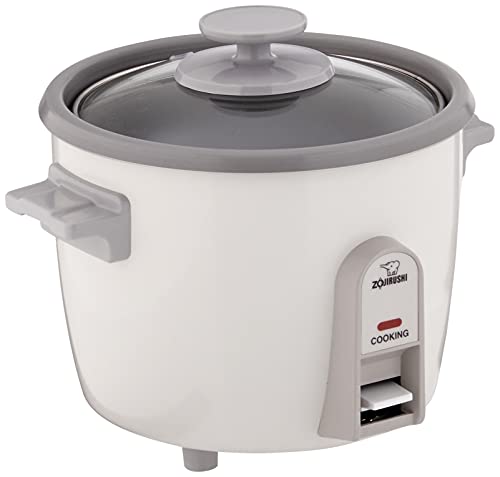
The Zojirushi NHS-06 is the article's best budget pick and uses conventional cooking rather than Micom technology. Its simple one-switch operation, 3-cup capacity, and compact design make it a practical choice for everyday rice cooking.
Who Should Buy It
Best for first-time rice cooker buyers, students, budget shoppers, and anyone who prefers simple controls. It works particularly well for users who do not need advanced cooking programs.
Why We Pick It
It earned its budget recommendation by focusing on dependable everyday cooking instead of adding expensive electronic features. The article also identifies its compact 3-cup format as a strong fit for small households.
Features & Benefits
| Feature | Benefit |
|---|---|
| 3-cup capacity | provides a compact amount of rice for one or two people |
| Conventional heating | keeps operation simple and straightforward |
| One-switch control | makes cooking easy for beginners |
| Automatic Keep Warm | keeps rice warm after cooking |
| Removable nonstick pan | makes cleanup easier |
Pros & Cons
| Pros | Cons |
|---|---|
| ✓ Affordable | ✕ No Micom technology |
| ✓ Very easy to operate | ✕ Limited cooking programs |
| ✓ Compact design |
Best Mini Japanese Rice Cooker: Toshiba TRCS02
Best For: Students, couples, and apartment kitchens that need fuzzy logic and digital cooking programs.
TOSHIBA
Toshiba Mini Rice Cooker, 3 Cups Uncooked, for 1-3 People, Steamer and Warmer, Fuzzy Logic, One-Touch Cooking, 24-Hour Delay Timer, Auto Keep Warm, White
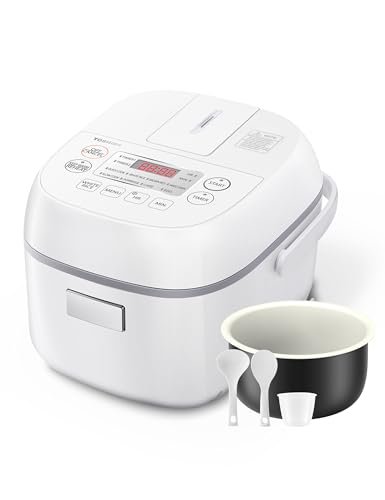
The Toshiba TRCS02 is the article's best mini Japanese rice cooker for buyers who want digital features in a compact 3-cup appliance. Its fuzzy logic cooking, multiple programs, delay timer, and automatic Keep Warm function add convenience for small households.
Who Should Buy It
Best for students, couples, apartment kitchens, and buyers who want smart cooking features without moving to a larger rice cooker. It is also useful for people who prepare rice or other foods ahead of mealtimes.
Why We Pick It
It combines a small footprint with fuzzy logic and digital controls. The article highlights its ability to provide automated cooking while remaining suitable for one to three people.
Features & Benefits
| Feature | Benefit |
|---|---|
| 3-cup capacity | fits small households and limited counter space |
| Fuzzy logic | automatically adjusts cooking conditions for more consistent results |
| Multiple cooking programs | supports different foods and cooking needs |
| 24-hour delay timer | lets users schedule cooking ahead of time |
| Auto Keep Warm | maintains cooked rice after the cooking cycle |
Pros & Cons
| Pros | Cons |
|---|---|
| ✓ Smart features at a compact size | ✕ Smaller capacity for larger households |
| ✓ Fuzzy logic cooking | ✕ More complex than basic one-switch models |
| ✓ Useful delay timer |
Best Premium Small Japanese Rice Cooker: Zojirushi NL-AAC10
Best For: Frequent rice eaters who want a larger 5.5-cup capacity and a broad selection of cooking programs.

ZOJIRUSHI
Zojirushi Nl AAC10 Micom Rice Cooker and Warmer, 5.5 Cup, 1.0 L
The Zojirushi NL-AAC10 is the article's best premium choice for buyers who need a larger 5.5-cup capacity and advanced Micom cooking. Its broad selection of cooking programs makes it suitable for frequent rice eaters and households that prepare different grains and dishes.
Who Should Buy It
Best for frequent rice eaters, enthusiastic home cooks, and small families that want premium Japanese cooking technology with more capacity. It is especially useful when a 3-cup cooker feels too restrictive.
Why We Pick It
It earned the premium recommendation because it combines Micom and fuzzy logic control with a 5.5-cup capacity and numerous specialized cooking programs. The article also highlights its long-term reliability and premium Japanese construction.
Features & Benefits
| Feature | Benefit |
|---|---|
| 5.5-cup capacity | handles larger batches and family meals |
| Micom + fuzzy logic | provides automated temperature and cooking control |
| Multiple cooking programs | supports sushi rice, mixed rice, porridge, sweet rice, steaming, reheating, quick cooking, and brown rice |
| LCD control panel | makes cooking settings easier to select |
| Keep Warm and Extended Keep Warm | helps maintain cooked rice after preparation |
Pros & Cons
| Pros | Cons |
|---|---|
| ✓ Broad selection of cooking programs | ✕ Higher purchase price |
| ✓ Excellent cooking consistency | ✕ Larger footprint than 3-cup models |
| ✓ Larger 5.5-cup capacity |
How to Choose a Small Japanese Rice Cooker: 3-Cup vs. 5.5-Cup
The right size depends mainly on how much uncooked rice you prepare at one time. A 3-cup Japanese rice cooker is the better fit for singles and couples, while a 5.5-cup model gives small families more room for larger meals.
3-Cup Japanese Rice Cookers
A 3-cup cooker is designed for compact daily cooking. The Zojirushi NS-LGC05XB, Zojirushi NHS-06, and Toshiba TRCS02 all fit this category.
The Zojirushi NS-LGC05XB can cook as little as half a cup of rice or oats. That makes the model especially useful when you rarely need a full batch.
- Best for one or two people.
- Requires less counter space.
- Works well in apartments and dorm rooms.
- Usually easier to store.
- Better suited to small daily portions.
5.5-Cup Japanese Rice Cookers
A 5.5-cup model is better when you regularly prepare larger portions or want leftovers. The Tiger JBV-A10U and Zojirushi NL-AAC10 provide substantially more capacity than the 3-cup models.
- Better for small families.
- Useful for meal preparation.
- Provides more room for leftovers.
- Handles larger cooking batches.
- Requires more countertop space.
3-Cup vs. 5.5-Cup Comparison
| Feature | 3-Cup Models | 5.5-Cup Models |
|---|---|---|
| Best For | Singles and couples | Small families |
| Countertop Space | Smaller footprint | Larger footprint |
| Meal Preparation | Small daily batches | Larger batches and leftovers |
| Typical Models | NS-LGC05XB, NHS-06, TRCS02 | JBV-A10U, NL-AAC10 |
| Capacity | Up to 3 rice-cooker cups | Up to 5.5 rice-cooker cups |
Which Size Is Best for One Person?
A 3-cup model is usually the most practical choice for one person. It keeps the appliance compact while still providing enough capacity for fresh rice and leftovers.
Which Size Is Best for a Couple?
A 3-cup model is normally enough for two people. A 5.5-cup model makes sense if the couple frequently meal preps or wants larger batches.
Which Size Is Best for a Small Family?
A 5.5-cup cooker gives a small family more flexibility. It reduces the need to cook multiple batches when several people are eating together.
Understanding Japanese Rice Cooker Technology: Micom vs. IH
Japanese rice cookers use different heating systems, and the technology affects temperature control, cooking precision, and price. Conventional models use a basic heating element, Micom models add computerized control, and IH models heat the cooking pan directly through induction.
What Is a Conventional Rice Cooker?
A conventional rice cooker uses a basic heating element to heat the inner pan. The cooker typically continues heating until the rice absorbs the available water, then switches to a warm mode.
The Zojirushi NHS-06 represents this simpler approach. It uses a single-switch control and focuses on straightforward everyday rice cooking.
Conventional technology is a good fit when simplicity matters more than advanced menu control. It also tends to cost less than Micom and IH models.
What Is Micom Technology?
Micom means microcomputer-controlled cooking. A microcomputer monitors cooking conditions and adjusts temperature and timing according to the selected menu.
This approach gives the cooker more control than a basic thermostat. It also supports dedicated settings for different rice varieties and other foods.
The Zojirushi NS-LGC05XB uses Micom technology with fuzzy logic and triple heating around the cooking pan. The Tiger JBV-A10U also uses computerized cooking with its Tacook synchronized cooking system.
What Is Fuzzy Logic?
Fuzzy logic allows the rice cooker to make small adjustments during cooking rather than following one fixed heating cycle. The system can respond to cooking conditions and change heat or timing accordingly.
For buyers who regularly switch between rice varieties, fuzzy logic can reduce the need for manual adjustments. The Zojirushi NS-LGC05XB and Toshiba TRCS02 both use this type of automated cooking control.
What Is Induction Heating?
Induction heating, or IH, uses an electromagnetic field to heat the inner cooking pan itself. This differs from a conventional heating element that transfers heat into the pan from below.
IH systems can make fine temperature adjustments quickly because the pan becomes part of the heating system. That greater responsiveness can help produce more even heating across the cooking cycle.
IH models generally cost more than conventional and basic Micom rice cookers. They are best suited to buyers who prioritize advanced heat control and rice texture over the lowest purchase price.
Micom vs. IH: Which Is Better?
| Technology | How It Heats | Control | Best For |
|---|---|---|---|
| Conventional | Heating element warms the inner pan | Basic | Simple rice cooking |
| Micom | Heating element controlled by a microcomputer | Advanced | Consistent everyday cooking |
| IH + Micom | Induction heats the cooking pan | More precise | Advanced rice texture and temperature control |
For most small households, Micom offers the strongest balance of price and cooking control. IH becomes more attractive when premium temperature precision is worth the additional cost.
What Makes a Small Japanese Rice Cooker Different?
A small Japanese rice cooker is designed around controlled rice preparation rather than basic boiling alone. Many models combine programmable menus, automatic temperature control, Keep Warm functions, and specialized settings for different grains.
Cooking Temperature Control
Temperature control is one of the biggest differences between basic and advanced rice cookers. Micom systems can change cooking conditions during the cycle instead of relying on one fixed heating pattern.
Dedicated Rice Programs
Premium compact models can include separate settings for white rice, sushi rice, brown rice, mixed rice, porridge, and other grains. These presets reduce manual adjustments during everyday cooking.
Keep Warm and Reheat Functions
Automatic Keep Warm allows cooked rice to remain at serving temperature after the cooking cycle. Some models also include reheating functions that restore rice to a serving temperature.
Compact Countertop Design
Compact dimensions make these appliances easier to use in apartments, dorms, and smaller kitchens. A smaller footprint also makes storage easier when the cooker is not being used.
Inner Cooking Pan
The inner pan affects cooking performance and cleaning. Nonstick surfaces are common because cooked rice releases more easily and the pan requires less effort to clean.
However, nonstick coatings need careful handling. Avoid metal utensils and abrasive cleaning tools that can damage the cooking surface.
How Do You Choose the Best Mini Japanese Rice Cooker?
The best mini Japanese rice cooker should match your household size, cooking habits, preferred rice varieties, and available counter space. Start with capacity, then compare cooking technology and useful features.
Capacity
Choose 3 cups if you usually cook for one or two people. Choose 5.5 cups if you regularly cook larger portions or want leftovers.
Cooking Technology
Micom is the strongest middle ground for most buyers. Conventional cooking is simpler, while IH provides a more advanced heating method.
Wattage
Wattage indicates the electrical power available during cooking, but a higher number does not automatically mean better rice. Cooking technology and temperature control also matter.
Inner Pot Material and Coating
Compare the construction and coating of the inner pan before buying. Nonstick pans simplify cleanup, while thicker pan designs can support more even heat distribution.
Cooking Programs
Choose a model with the menus you actually use. White rice may be enough for some buyers, while others benefit from brown rice, sushi rice, porridge, oatmeal, or mixed-grain settings.
Keep Warm Performance
Keep Warm matters if you do not eat immediately after cooking. A useful Keep Warm function can reduce the need to cook a fresh batch for every meal.
Cleaning
Removable inner lids and steam components make routine cleaning easier. Follow the manufacturer’s cleaning instructions to protect the nonstick surface.
Storage and Portability
A retractable power cord or carrying handle can make a compact rice cooker easier to store. These features matter most when countertop space is limited.
Are Small Japanese Rice Cookers Worth the Extra Cost?
Small Japanese rice cookers can be worth the higher price when consistent rice quality and automated cooking matter. The value becomes stronger for households that cook rice several times each week.
When a Premium Model Makes Sense
Choose a premium Micom model when you want more cooking programs, automated temperature control, and stronger convenience features.
The Zojirushi NS-LGC05XB is especially appealing when you want those features without moving to a larger 5.5-cup appliance.
When a Budget Model Makes More Sense
A conventional model makes more sense when you mainly cook white or brown rice and want simple operation. The Zojirushi NHS-06 keeps the controls straightforward while retaining the compact 3-cup format.
When a 5.5-Cup Model Makes More Sense
A 5.5-cup model is the better choice when several people regularly eat rice. The Tiger JBV-A10U also adds Tacook synchronized cooking, which can make one-appliance meal preparation more convenient.
Small Zojirushi Rice Cooker vs. Tiger and Toshiba
Zojirushi, Tiger, and Toshiba each approach compact rice cooking differently. Zojirushi emphasizes dedicated rice programs and Micom control, Tiger adds Tacook functionality on the JBV-A10U, and Toshiba combines compact size with fuzzy logic and digital programs.
Zojirushi
Zojirushi offers both conventional and Micom models in this comparison. The NS-LGC05XB is the strongest compact option when advanced cooking control is a priority.
Tiger
Tiger’s JBV-A10U stands out for its 5.5-cup capacity and Tacook synchronized cooking. It is therefore better suited to buyers who want a compact family-size appliance rather than a true 3-cup cooker.
Toshiba
The Toshiba TRCS02 combines a 3-cup capacity with fuzzy logic and digital cooking functions. It is a practical choice for buyers who want smart features in a compact footprint.
Frequently Asked Questions
What is the best small Japanese rice cooker for one person?
The Zojirushi NS-LGC05XB 3-cup model is the best option for one person. It prepares as little as half a cup of rice using fuzzy logic technology and has a small footprint.
Is a 3-cup rice cooker big enough for a family?
A 3-cup Japanese rice cooker is ideal for singles, couples, and small families of up to three people. It yields about 6 cups of cooked rice, depending on the rice variety and preparation.
Which Japanese rice cooker brand is the most reliable?
Zojirushi is one of the most established Japanese rice cooker brands and offers both conventional and advanced Micom models. Tiger is another strong option, especially for buyers who value synchronized cooking features.
Is a 3-cup rice cooker large enough?
Yes. A 3-cup uncooked rice cooker is suitable for one or two people and can also work for a small household when portions are moderate.
Is Micom better than a standard rice cooker?
Micom is more advanced because a microcomputer controls cooking conditions. That extra control can provide more consistent results across different menus and rice varieties.
Can a Japanese rice cooker cook more than rice?
Yes. Depending on the model, Japanese rice cookers can prepare foods such as brown rice, porridge, oatmeal, mixed grains, and other dishes.
How long do Japanese rice cookers usually last?
A quality rice cooker can remain useful for many years when it is cleaned correctly and used according to the manufacturer’s instructions. Replacement parts can also help extend the useful life of some models.
Do Japanese rice cookers use a lot of electricity?
Power consumption varies by model and cooking mode. Compact conventional models generally use less rated cooking power than larger or induction-heating models, but wattage alone does not determine total electricity use.
Should you buy a fuzzy logic rice cooker?
Yes, if you regularly cook different rice varieties or want the cooker to make more adjustments automatically. Fuzzy logic is especially useful for buyers who want convenience without moving to a more expensive IH model.
Final Thought
The right choice depends on what matters most for your needs, whether that is value, capacity, convenience, or a specific feature.
- Best Overall: Zojirushi Micom 3-Cup Compact Rice Cooker (NS-LGC05XB) | View Now at Amazon
- Best Value: Tiger JBV-A10U Micom Rice Cooker | View Now at Amazon
- Best Budget: Zojirushi NHS-06 Rice Cooker | View Now at Amazon
- Best Smart Compact: Toshiba Mini Rice Cooker TRCS02 | View Now at Amazon
- Best Premium: Zojirushi NL-AAC10 Micom Rice Cooker | View Now at Amazon
For most people, the Zojirushi NS-LGC05XB is the strongest overall choice because it combines a compact 3-cup capacity with Micom cooking and multiple dedicated programs. If price is the priority, the Zojirushi NHS-06 offers simpler conventional cooking, while the Toshiba TRCS02 adds fuzzy logic and digital controls.
For households that need more capacity, the Tiger JBV-A10U and Zojirushi NL-AAC10 move up to 5.5 cups. Ultimately, the best small Japanese rice cooker is the model that matches your portion size, cooking technology preferences, and available kitchen space.
We may earn a commission if you purchase through our Amazon links, at no extra cost to you. Product prices, availability, ratings, and review counts can change over time.