Choosing the right kindergarten backpack is mostly about getting the fit and capacity right. For most kindergarteners, a backpack around 12–15 inches tall and 10–15 liters is a useful starting range, but the child’s torso and school supplies matter more than the age label.
A backpack should be large enough for a folder, lunch, water bottle, and basic school items without becoming bulky or heavy. It should also sit securely against the child’s back with adjustable straps.
The most important check is simple: the backpack should fit the child first and the school supplies second.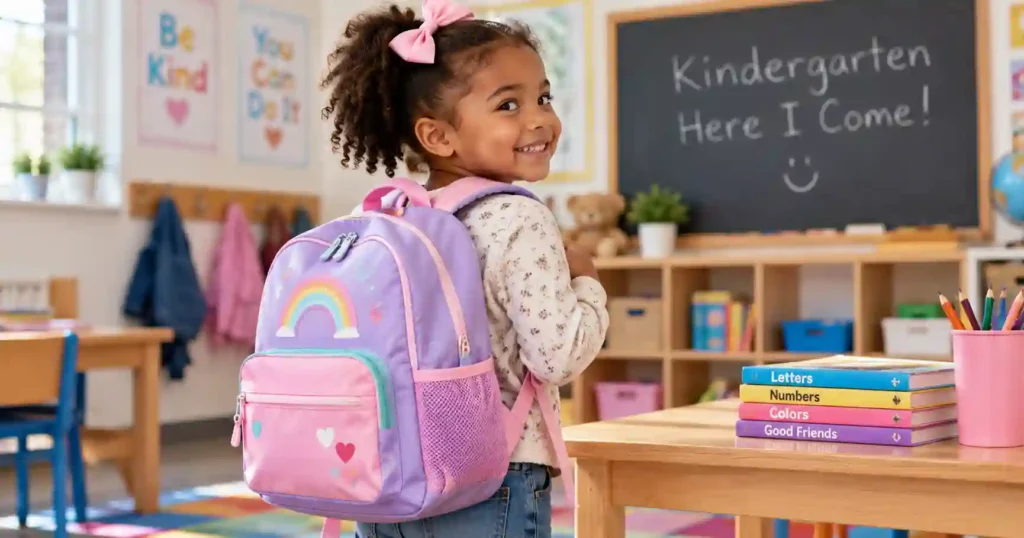
What Size Backpack Is Best for Kindergarten?
A 12–15-inch backpack with about 10–15 liters of capacity is a practical size for most kindergarteners. This range usually provides enough room for everyday school items without requiring a full-size elementary-school backpack.
| Backpack factor | Good starting point |
|---|---|
| Height | 12–15 inches |
| Width | About 10–12 inches |
| Capacity | About 10–15 liters |
| Depth | Roughly 4–7 inches |
| Straps | Padded and adjustable |
There is no universal kindergarten backpack size because children and school requirements vary. The dimensions above are a practical starting range, not a strict standard.
How Many Liters Should a Kindergarten Backpack Be?
About 10–15 liters is a sensible capacity for most kindergarten backpacks. A 10–12-liter backpack can work when the child carries only a folder, snack, water bottle, and a few personal items.
A backpack closer to 14–15 liters makes more sense when the school requires a lunch box, full-size folder, spare clothes, water bottle, or other daily supplies.
More capacity is not automatically better. A larger bag can encourage children to carry unnecessary toys, papers, and other items that increase the load.
Will a Kindergarten Backpack Fit a School Folder?
The backpack should fit the school’s actual folder without bending it. This is one of the most useful checks because children’s backpack labels are not standardized.
Before buying online, check the dimensions of the folder your child’s school uses. Then compare those measurements with the backpack’s internal dimensions rather than relying only on a label such as “kindergarten size.”
Testing the bag with the actual folder also gives you a better idea of whether the remaining space is sufficient for lunch and a water bottle.
What Size Backpack Does a 5-Year-Old Need?
Most 5-year-olds can start with a backpack around 12–15 inches tall and 10–15 liters. However, height alone should not determine the size.
A smaller child may need a shorter backpack with less depth. A taller kindergartener may comfortably use a slightly larger bag if the shoulder straps adjust properly and the backpack stays close to the body.
That is why a child’s torso fit matters more than an age-based size label.
How Should a Kindergarten Backpack Fit?
A kindergarten backpack should sit securely in the middle of the back without hanging excessively below the waist. Both shoulder straps should be adjusted so the bag stays stable while the child walks.
The American Academy of Pediatrics recommends choosing a backpack proportional to the child’s height, using two broad shoulder straps, and adjusting the backpack so it stays close to the body. A chest or waist strap can also help distribute weight more evenly. HealthyChildren.org backpack safety guidance provides additional fitting advice.
Check the backpack from the side
- The backpack should stay close to the child’s back.
- The bottom should not hang excessively below the waist.
- The shoulder straps should not constantly slide off.
- The child should be able to walk normally without leaning forward.
- The bag should not extend excessively beyond the child’s body.
How Heavy Should a Kindergarten Backpack Be?
Aim for about 10% of your child’s body weight when practical, and do not exceed roughly 15%. Current pediatric guidance commonly recommends keeping the full backpack at or below 15% of body weight. The American Academy of Pediatrics specifically advises that backpacks should not weigh more than 15% of a child’s body weight.
For example, a child weighing 50 pounds would ideally carry around 5 pounds or less. A 15% upper limit would be 7.5 pounds.
The exact weight matters because an otherwise well-fitting backpack can still become uncomfortable when overloaded. If a child leans forward to compensate for the weight, the load needs attention.
What Should Fit Inside a Kindergarten Backpack?
A kindergarten backpack usually needs enough room for a folder, lunch or snack, water bottle, and a few personal or school items. The exact list depends on the school’s requirements.
- School folder or communication folder
- Small lunch box or snack container
- Refillable water bottle
- Change of clothes when required
- Small classroom supplies when they must travel between home and school
- Light jacket or seasonal item when necessary
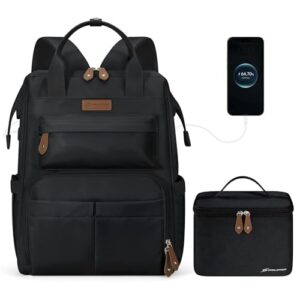
If your child carries lunch every day, choosing a backpack with dedicated lunch storage can make organization easier. A backpack and lunch box set can also simplify matching the two items.
Should the Lunch Box Go Inside the Backpack?
A lunch box can go inside the backpack if the main compartment has enough room without forcing the bag to bulge. For many kindergarteners, keeping lunch separate can make the backpack easier to organize.
If you want the lunch stored inside the bag, compare the lunch box dimensions with the backpack before buying. Our guide to a lunch box that fits in a backpack can help with that decision.
A backpack with dedicated food storage is another option. See our guide to a backpack with a lunch box compartment if your child’s school requires lunch to travel inside the backpack.
What Backpack Features Matter Most for Kindergarten?
Adjustable padded straps, lightweight construction, and an easy-to-use main compartment are more important than extra pockets. Kindergarteners need a bag they can manage independently.
Adjustable shoulder straps
Adjustable straps allow the backpack to sit correctly as the child grows. Padded straps can also make daily carrying more comfortable.
Chest or sternum strap
A chest strap can help keep shoulder straps from sliding outward on a small child’s shoulders. It can also help keep the backpack more stable during movement.
Lightweight construction
A lightweight empty backpack leaves more of the child’s carrying allowance available for school supplies. A heavy bag can consume too much of the available load before anything is packed.
Simple compartments
One main compartment plus a few useful pockets is usually enough. Too many compartments can add weight and make it harder for a young child to remember where things belong.
Easy zippers
Large zipper pulls can make the backpack easier for small hands to open and close. This feature also supports a child’s growing independence.
Water bottle pocket
An exterior bottle pocket keeps a drink separate from papers and clothing. It also makes the bottle easier for a child to reach.
Is a 15L Backpack Too Big for Kindergarten?
A 15-liter backpack is not automatically too big for kindergarten. It can be a practical choice when the child needs to carry a folder, lunch, water bottle, and other daily supplies.
The important question is whether the physical dimensions and strap adjustment fit the child. A 15-liter backpack that sits securely can be a better choice than a smaller bag that cannot hold the school’s folder.
On the other hand, a very small child may be better served by a smaller and lighter backpack. Capacity should never replace proper fit.
Is a 16-Inch Backpack Too Big for Kindergarten?
A 16-inch backpack is on the larger side for kindergarten, so check the child’s torso and the school’s storage requirements before choosing one. The number “16 inches” describes the bag’s dimensions, not whether the bag will fit a particular child.
If the straps cannot shorten enough, the backpack may hang too low. If the school requires only a folder, snack, and water bottle, a smaller bag may also be more practical.
Choose the smallest backpack that comfortably holds everything the child actually needs.
How Do You Measure a Child for a Backpack?
Measure the child’s torso and compare that measurement with the backpack’s dimensions and adjustment range. The goal is to find a bag that sits securely rather than simply choosing a size based on age.
- Have the child stand naturally.
- Identify the upper part of the back near the base of the neck.
- Measure down toward the waist area.
- Compare the measurement with the backpack’s back-panel height.
- Put the backpack on the child with the straps adjusted.
- Add realistic school items and check the fit again.
The final fitting matters because an empty backpack can look smaller and lighter than it does when packed.
How to Test a Kindergarten Backpack Before Buying
The best practical test is to use the actual items your child will carry. This avoids guessing based on capacity numbers alone.
- Put the school folder inside.
- Add the lunch box or snack container.
- Add the water bottle.
- Add any required spare clothes.
- Adjust both shoulder straps.
- Have your child walk around with the loaded backpack.
Watch for slipping straps, excessive swinging, sagging, leaning, or obvious discomfort. If the backpack only works when it is overfilled or tightly compressed, choose a different size.
Common Kindergarten Backpack Sizing Mistakes
Buying a backpack that is too large
Buying a large backpack so a child can “grow into it” can create a poor fit today. A properly fitted backpack is more useful than unused capacity.
Choosing only by age
Age labels are useful for narrowing choices, but they do not account for differences in children’s height and torso length.
Ignoring the school’s folder
A backpack can look perfect until the first folder comes home. Check the actual folder dimensions before ordering.
Buying the largest capacity available
More liters do not automatically mean better value. Extra capacity can encourage unnecessary items and increase the loaded weight.
Testing only the empty bag
The backpack needs to work when it contains the items your child carries every day. Test it with a realistic load before making a final decision.
What Is the Best Kindergarten Backpack Size by School Need?
The right size depends on what your child’s school requires them to carry each day. A simple way to choose is to match capacity to the actual daily load.
| School-day load | Useful starting point |
|---|---|
| Folder, snack and water | About 10–12L |
| Folder, lunch and water | About 12–15L |
| Folder, lunch, water and spare clothes | About 14–15L or slightly larger |
These are practical starting ranges rather than strict standards. The backpack still needs to fit the child’s torso and remain within a sensible loaded weight.
Bottom Line
For most kindergarteners, choose a backpack around 12–15 inches tall with roughly 10–15 liters of capacity. Prioritize a secure torso fit, adjustable padded straps, low empty weight, and enough room for the child’s actual folder, lunch, and water bottle.
The best kindergarten backpack is not necessarily the biggest one. Choose the smallest comfortable size that holds the required school supplies without forcing your child to carry unnecessary weight.
Related Articles